
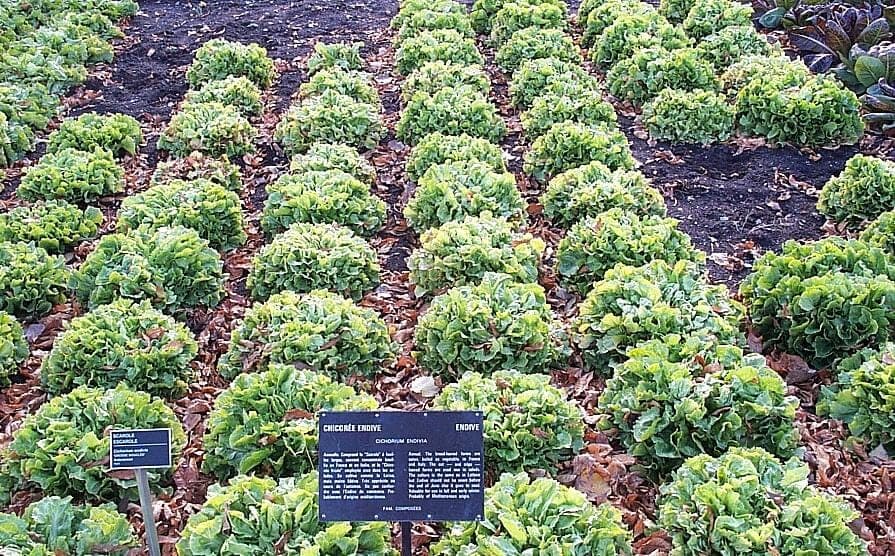
Montréalais / CC BY-SA 3.0, via Wikimedia Commons
Endive: complete guide
Cichorium endivia
Want to see Endive: complete guide in your garden?
1 minute, no credit card
Overview
Endive (Cichorium endivia) is a resilient and flavorful leafy vegetable that thrives in temperate gardens across the UK, North America, and Western Europe. Belonging to the Asteraceae family, it's closely related to chicory and radicchio. Native to Egypt and Palestine, endive has adapted well to cooler climates and is particularly valued for its crisp texture and slightly bitter, complex taste - perfect for autumn and winter salads.
There are two main types: curly endive (frisée) with jagged, frilly leaves, and escarole (broad-leaved endive), which has smoother, cup-shaped foliage. Both are edible and easy to grow, but differ in culinary use. Frisée holds dressings well and adds drama to salads, while escarole is milder and better suited for sautéing or soups.
Endive is more than just food - it adds visual interest to your garden layout. The fine, textured leaves contrast beautifully against bold-leaved plants. On gardenworld.app, you can design a planting scheme that highlights these contrasts while optimizing light and spacing for healthy growth.
Appearance & bloom cycle
Endive forms a tight rosette of pale to deep green leaves, reaching 25–40 cm in height and up to 30 cm in spread. The curly type has deeply cut, fern-like foliage with a pronounced central rib, while escarole features broad, wavy leaves that curl inward.
In its second year, endive may bolt and produce flowering stalks from June to August. The flowers are delicate, pale blue, and appear on stiff stems up to 100 cm tall. While attractive to pollinators, flowering is best avoided if you're growing for leaves - it increases bitterness and toughens the foliage. Pinch off flower buds early if they appear.
Ideal location
Endive thrives in full sun, rated 8 out of 10 for light needs. Aim for 6–8 hours of direct sunlight daily. In hotter regions, afternoon shade can prevent leaf scorch and bolting. In the UK or northern US (USDA zones 6–9), a south or southeast-facing spot maximizes light exposure.
It grows well in raised beds, containers (minimum 25 cm deep), or mixed vegetable plots. If you're tight on space, balcony gardening works too. Use gardenworld.app to simulate sun patterns on your terrace and plan where to place your endive for optimal growth.
Soil requirements
Endive prefers a neutral to slightly alkaline soil, with a pH of 7.0–7.5. It grows best in fertile, well-drained loam or clay-loam rich in organic matter. Heavy soils should be amended with compost or aged manure to improve drainage.
Avoid waterlogged areas - root rot is a real risk. A 2 cm layer of organic mulch helps retain moisture and suppress weeds. Steer clear of overly rich soils high in nitrogen, which can lead to excessive leaf growth at the expense of flavor.
Free design
Want to see Endive: complete guide in your garden? Make a free design now.
Watering
Consistent moisture is key. Water endive 2–3 times per week, more during dry spells. Always water at the base to keep foliage dry and reduce fungal diseases like powdery mildew.
Drought stress causes bitterness and premature bolting. If using tap water, let it sit for 24 hours to reduce chlorine and lime content. Rainwater is ideal.
Pruning
Endive doesn't require pruning in the traditional sense, but you should harvest outer leaves regularly to encourage continuous growth. Start picking when leaves reach 15 cm in length, leaving the inner rosette intact.
For blanched, tender hearts (especially in Belgium endive production), cover the plant with a pot or bucket after 6 weeks. This exclusion of light softens the leaves and reduces bitterness. Commercial growers force roots in darkness, but home gardeners can mimic this with minimal effort.
Maintenance calendar
- Feb–Mar: Start seeds indoors at 15–20 °C
- Apr–May: Transplant outdoors after last frost (late Apr in milder zones, late May in colder areas)
- Jun–Jul: Water consistently; begin leaf harvesting
- Aug–Sep: Monitor for aphids and slugs; keep soil moist
- Oct–Nov: Final harvest; remove spent plants or allow flowering for pollinators
- Dec–Jan: Dormant period; protect rosettes with fleece in zone 7 and above
Winter hardiness
Endive is semi-hardy (USDA zones 6–9). In mild winters, young rosettes survive under mulch or frost cloth. In colder areas, the top growth dies back, but roots may regrow in spring.
For winter harvests, try forcing: dig up roots in November, pack them in damp sand in a dark, cool space (8–10 °C), and within 3 weeks you'll have crisp, pale chicons.
Companion plants
Good companions include carrots, radishes, and herbs like thyme and dill, which repel aphids. Avoid planting near beans or peas - their nitrogen-fixing action can make endive leaves too lush and less flavorful.
Cucumbers and zucchini are acceptable if spaced well for airflow. Crowding increases humidity and disease risk.
Closing
Endive is a low-maintenance, high-reward plant for any vegetable garden. Whether you're after gourmet salad greens or a cold-tolerant crop, it delivers. With proper light, soil, and moisture, you'll enjoy harvests from late summer through early winter.
Beginners will appreciate its resilience, while experienced growers can experiment with forcing or blanching. Buy seeds or seedlings from trusted garden centres, or online retailers. And remember - gardenworld.app helps you plan companion layouts, track planting dates, and optimize your garden's microclimate for endive and other crops.
Want to see Endive: complete guide in your garden? Make a free design now.
Upload a photo, pick a style, and get a photorealistic design with plant list in under a minute.
No credit card required


Similar plants
Calendula stellata: complete guide
Calendula stellata
Complete guide to Calendula stellata, the star-flowered marigold from Sicily: location, soil, watering and companion planting tips.
Korean chrysanthemum: complete guide
Chrysanthemum x rubellum
Chrysanthemum x rubellum is a hardy autumn perennial with single pink to copper flowers from August to November. Care and combinations.
Helianthus divaricatus: complete guide
Helianthus divaricatus
Helianthus divaricatus is a North American woodland sunflower with yellow summer blooms, ideal for naturalistic borders and shady edges.