
Richtid / CC BY-SA 3.0, via Wikimedia Commons
Opposite-leaved golden saxifrage: complete guide
Chrysosplenium oppositifolium
Want to see Opposite-leaved golden saxifrage: complete guide in your garden?
1 minute, no credit card
Overview
Opposite-leaved golden saxifrage (Chrysosplenium oppositifolium) is a quiet yet compelling perennial that thrives in cool, damp corners of the garden. Native across Western and Central Europe - including the UK, Ireland, France, and Germany - this plant naturally colonises stream banks, wet woodlands, and forest margins. It's not flashy, but its subtle charm and early presence make it a favourite among gardeners who appreciate understated beauty and ecological planting.
On gardenworld.app, you can design a planting scheme that integrates Opposite-leaved golden saxifrage into a shaded, moisture-rich area of your garden. Its low, creeping habit works well as ground cover in spots where few other plants survive, especially under dense tree canopies.
Appearance & bloom cycle
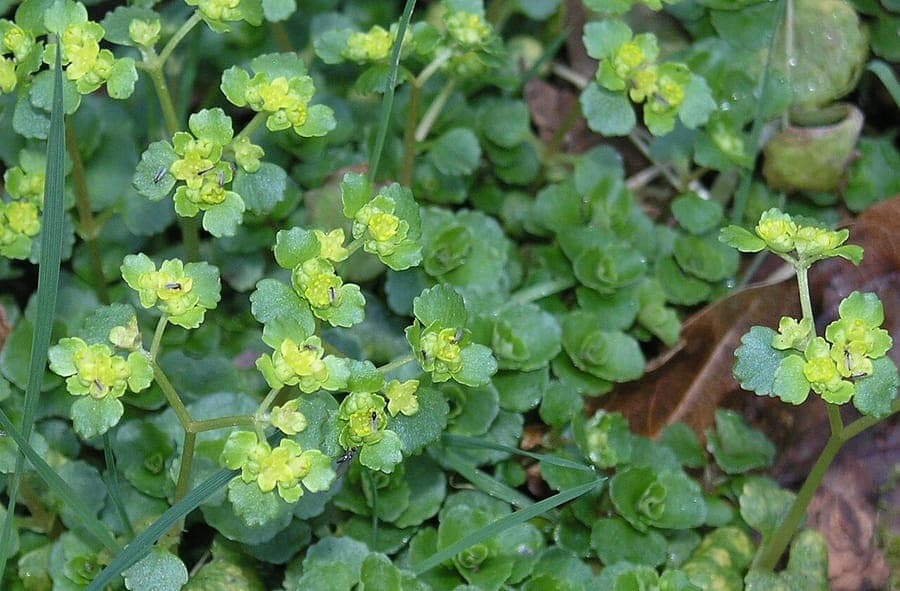
The leaves of this plant are glossy, round to kidney-shaped, and arranged in opposite pairs along the stem - hence the name. Each leaf measures 1 to 3 cm across and has shallowly toothed edges. The plant stays compact, reaching only 10–15 cm in height, making it ideal for front-of-border planting or between stepping stones in damp paths.
From March through June, it produces clusters of tiny yellow flowers at the stem tips. The blooms lack true petals; instead, they consist of four to five yellow-green sepals. While not showy from a distance, up close they shimmer in soft light, creating a delicate honeyed glow in early spring. The flowering period is long and staggered, ensuring visual interest over several months.
Ideal location
This saxifrage prefers dappled to full shade - around a light level of 4 out of 10. Avoid hot, direct sun, which will scorch the foliage and dry out the plant rapidly. The best spots are under deciduous trees, beside shaded water features, or in north-facing borders with consistent moisture.
It performs well in naturalistic planting schemes, particularly in woodland gardens or boggy areas. Pair it with mosses, ferns, or other moisture-loving plants for a layered, textured effect. Using gardenworld.app, you can map out shade patterns in your garden and pinpoint the ideal microclimate for this plant before purchasing.
Soil requirements
Opposite-leaved golden saxifrage thrives in moist, humus-rich soil with a neutral to slightly alkaline pH of 7.0–7.5. It tolerates clay and loam soils as long as they retain moisture without becoming waterlogged. Sandy soils are unsuitable unless heavily amended with organic matter.
Incorporate leaf mould or well-rotted compost into the planting hole to boost water retention and provide nutrients. A thin mulch of organic material in spring helps keep roots cool and moist during warmer months.
Free design
Want to see Opposite-leaved golden saxifrage: complete guide in your garden? Make a free design now.
Watering
Consistent moisture is critical. Water regularly from March to June, especially during dry spells. Check soil moisture daily in spring - the top layer should never dry out completely. This plant has shallow roots, so frequent light watering is better than infrequent deep soaking.
Use rainwater when possible, as it's free of chlorine and salts. During prolonged dry periods, increase watering frequency and consider applying a light mulch to reduce evaporation. Never let the plant sit in stagnant water, though - good drainage is still essential.
Pruning
Pruning is rarely needed. After flowering, you can trim back any leggy or discoloured stems to maintain a neat appearance, but this is optional. The plant often dies back slightly in summer heat but may re-emerge in autumn with cooler, wetter weather.
Leave dead foliage in place over winter - it protects new growth and provides habitat for beneficial insects. No hard cutback is required; nature manages the cycle just fine.
Maintenance calendar
- Jan: Check for green foliage; leave old leaves as mulch.
- Feb: Watch for early growth, especially in mild winters.
- Mar: Remove any damaged leaves; ensure soil stays moist.
- Apr: Peak bloom begins; maintain consistent watering.
- May: Continue flowering; monitor for stress in warmer spots.
- Jun: Final bloom month; reduce watering slightly as flowers fade.
- Jul: Plant may go dormant; keep soil damp.
- Aug: No growth expected; avoid fertilising.
- Sep: Possible regrowth if conditions improve; leave undisturbed.
- Oct: Let all plant material remain; it insulates roots.
- Nov: Check for pooling water; improve drainage if needed.
- Dec: Plant remains evergreen; minimal care required.
Winter hardiness
This plant is fully hardy down to -20°C (USDA zone 5). It stays evergreen through winter, offering valuable texture in an otherwise bare garden. A light layer of leaf litter or pine needles can help protect shallow roots during freeze-thaw cycles without smothering the plant.
Companion plants
Pair Opposite-leaved golden saxifrage with other shade and moisture lovers: Yellow archangel (Lamiastrum galeobdolon), Wood anemone (Anemone nemorosa), or Ferns like Male fern (Dryopteris filix-mas). Avoid invasive ground covers like creeping thyme or ivy that may overwhelm it.
For structure: plant in front with ferns behind and spring bulbs like snowdrops weaving through. This creates depth and seasonal interest without overcrowding.
Closing
Opposite-leaved golden saxifrage won't grab attention, but it earns quiet admiration from gardeners who value resilience and quiet beauty. It asks for moisture and shade - nothing more, nothing less. If you can provide that, it will return year after year with a soft, glowing display in early spring.
You can find this plant at garden centres across the UK and Europe. Look for established clumps at independent nurseries or larger retailers. Be patient - it grows slowly at first but spreads steadily under the right conditions. Plan ahead: use gardenworld.app to visualise how it fits into your shade garden's ecosystem before planting.
Want to see Opposite-leaved golden saxifrage: complete guide in your garden? Make a free design now.
Upload a photo, pick a style, and get a photorealistic design with plant list in under a minute.
No credit card required


Similar plants
Korean astilbe: complete guide
Astilbe grandis
Discover Korean astilbe (Astilbe grandis): a tall shade plant with elegant flower plumes for pond edges and borders.
Heuchera pilosissima: complete guide to seaside alumroot
Heuchera pilosissima
Seaside alumroot (Heuchera pilosissima), an elegant North American dwarf perennial with hairy red-tinged foliage and red flower spikes.
Starry saxifrage: complete guide
Micranthes stellaris
Full guide to Micranthes stellaris, the starry saxifrage: location, soil, blooming and garden use. A tough alpine plant for moist, shady rock faces and pond margins.