
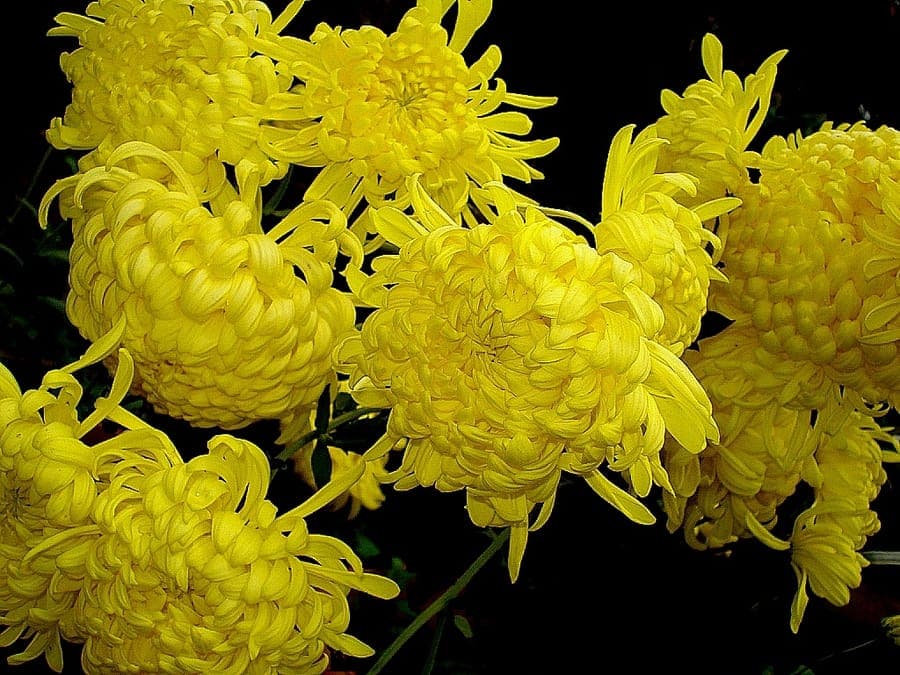
Aruna at Malayalam Wikipedia / CC BY-SA 3.0, via Wikimedia Commons
Garden Chrysanthemum: complete guide
Chrysanthemum morifolium
Want to see Garden Chrysanthemum: complete guide in your garden?
1 minute, no credit card
Overview
Garden Chrysanthemum, scientifically Chrysanthemum morifolium, is a stunning autumn flower originally from Asia. This plant is also called Florist's Chrysanthemum and forms an important part of fall gardens worldwide. The flower distinguishes itself through its rich, diverse bloom forms and colors ranging from yellow, red, pink to white.
In modern gardens, this plant material is heavily used for seasonal impact. It reaches 30-120 centimeters tall depending on variety. This is a very low-maintenance perennial that provides years of return once established. For gardenworld.app, this is a classic autumn choice combining reliability with beauty.
Appearance & Bloom
Garden Chrysanthemum grows as a compact to medium-sized shrub with fine-leaved, green foliage. The leaves are articulate and finely divided, creating very attractive foliage. Overall height varies greatly per cultivar.
Flowers are extremely diverse in form and size. Some are fully double with very many petals, others are semi-double or single. Flower size ranges from tiny pompoms to blooms 10 centimeters across. The blooming period runs from August through November depending on variety and climate. This plant is truly a laboratory of flower variation.
Ideal Location
Choose a location with full sun. At least six hours of direct sunlight daily is essential for good bloom. The plant grows best in open sites with good air circulation. Protection from late summer autumn winds is beneficial.
In borders, container culture, cutting gardens, and container arrangements, this plant feels at home. For container growing, larger pots allow very ornamental growth. The plant accepts diverse garden ecologies.
Soil
Garden Chrysanthemum prefers well-draining, fertile soil. A mixture of garden loam with compost works well. Soil pH can be neutral to slightly acidic. For pot culture, use quality potting mix with added compost for better nutrient supply.
The plant benefits from regular organic additions. Heavy, wet soils are not ideal. The plant must not grow in waterlogged conditions. Annually working in compost or leaf mold improves soil structure.
Free design
Want to see Garden Chrysanthemum: complete guide in your garden? Make a free design now.
Watering
During growth and blooming period, water regularly when the top centimeter of soil feels dry. In-ground planting may mean two to three times weekly. In containers, adjust watering based on pot size.
The plant tolerates short dry periods, but blooming suffers from lack of water. In autumn, gradually reduce watering. In winter, water rarely but do not let soil completely dry. Preventing water pooling is crucial for health.
Pruning
Regular pinching or topping of young plants encourages fuller shape. Until May-June, regularly pinch back for more branching. For cut flowers, cut very low above leaves.
After the blooming period, the plant can be cut back hard. Removing dead or damaged material improves next season growth. For retention as a perennial, annual rigorous pruning is recommended.
Maintenance Calendar
May-June: Pinch young plant tips for branching. July-August: Feed, water regularly. Begin preblooming formation. September-October: Bloom peak. Continue watering, remove spent flowers. November-December: Blooming diminishes, reduce watering. Cut plant back hard.
Winter Hardiness
This chrysanthemum is moderately hardy, depending on cultivar. Many forms tolerate to -10 to -15°C without protection. In northern climates or very cold winters, protection or indoor storage is beneficial.
In milder climates, many forms overwinter outdoors in dry, protected spots. Mulching plant material helps. Very wet winters are more damaging than frost. Young plants are more frost-sensitive than mature specimens.
Companion Plants
Garden Chrysanthemum combines well with autumn bloomers. Group with Aster, Salvia, Rudbeckia, and Echinacea. In containers it pairs well with autumn-blooming Colchicum and Sedum.
In borders, it adds much color to support Dahlias and late Sunflowers. Green or gray-foliaged plants like Artemisia and Heuchera provide nice contrast. For extended bloom, combine with early chrysanthemums.
Closing
Garden Chrysanthemum is a classic, reliable choice for autumn atmosphere in gardens. With attention to sunlight, feeding, and watering, you'll enjoy this colorful plant for years. For cut flowers it is indispensable. Available at major garden centers and plant shops. Visit gardenworld.app for more autumn plant guides. This is also a strong autumn choice for Belgian gardens that gardenworld.app recommends.
Want to see Garden Chrysanthemum: complete guide in your garden? Make a free design now.
Upload a photo, pick a style, and get a photorealistic design with plant list in under a minute.
No credit card required


Similar plants
Calendula stellata: complete guide
Calendula stellata
Complete guide to Calendula stellata, the star-flowered marigold from Sicily: location, soil, watering and companion planting tips.
Korean chrysanthemum: complete guide
Chrysanthemum x rubellum
Chrysanthemum x rubellum is a hardy autumn perennial with single pink to copper flowers from August to November. Care and combinations.
Helianthus divaricatus: complete guide
Helianthus divaricatus
Helianthus divaricatus is a North American woodland sunflower with yellow summer blooms, ideal for naturalistic borders and shady edges.