
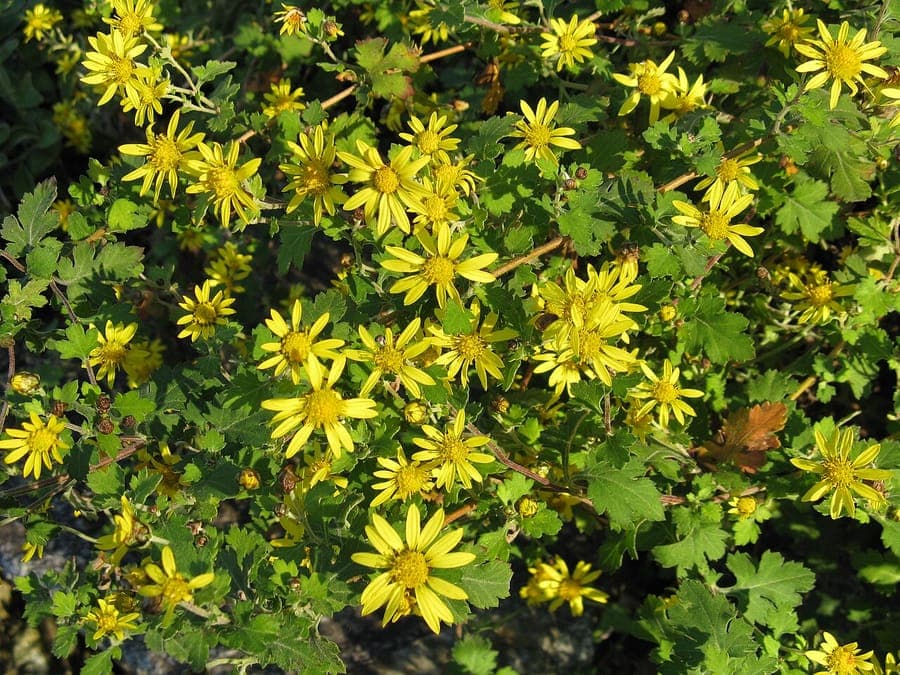
KENPEI / CC BY-SA 3.0, via Wikimedia Commons
Indian chrysanthemum: complete guide
Chrysanthemum indicum
Want to see Indian chrysanthemum: complete guide in your garden?
1 minute, no credit card
Overview
Chrysanthemum indicum, commonly known as Indian chrysanthemum, is a resilient perennial that brings a burst of colour to gardens when most other plants are winding down. Native to regions across China, Japan, Korea and the eastern Himalayas, this plant has been cultivated for centuries, both for ornamental use and traditional medicine. In Western gardens, it's prized for its late-season performance and ability to thrive in a range of conditions.
Hardy in USDA zones 7 to 9, this chrysanthemum grows 60–90 cm tall and spreads 45–60 cm wide, forming bushy clumps that bloom from late September through November. Unlike florist mums often treated as annuals, C. indicum is a true garden perennial when given proper care. It's perfect for borders, cottage gardens or container displays.
On gardenworld.app, you can design a planting scheme that highlights the autumn glow of Indian chrysanthemums. Pair them with dark heucheras or ornamental grasses for contrast. The app helps you space plants correctly - aim for 40 cm between specimens to allow airflow and prevent mildew.
Appearance & bloom cycle
Indian chrysanthemum produces daisy-like flower heads with tightly curled or spoon-shaped petals in shades of golden yellow, cream, rose, and deep crimson. Each bloom measures 4–7 cm across and appears in clusters atop sturdy, branching stems. The foliage is aromatic, deeply lobed, and dark green, helping deter pests like aphids and slugs.
Flowering begins in late September, peaks in October, and can continue into late November in mild autumns. The plant remains attractive even after rain, thanks to its weather-resistant blooms. Deadheading isn't essential but will encourage a tidier look and may extend blooming by a week or two.
Ideal location
For best results, plant in full sun - at least 6 hours of direct sunlight daily. A south- or southeast-facing border works perfectly. While it tolerates partial shade, flowering will be reduced and stems may stretch, leading to flopping.
Choose a sheltered spot to protect from strong winds, which can damage the flower heads. Avoid low-lying areas where water pools, as soggy soil leads to root rot. Elevated beds or sloped ground are ideal.
Soil requirements
Indian chrysanthemum thrives in fertile, well-drained soil rich in organic matter. Ideal pH ranges from 6.0 to 7.0. Amend heavy clay with compost and grit to improve drainage; for sandy soils, add compost to increase moisture retention.
Plant in spring, from April to early June, to establish strong roots before autumn. Space plants 40 cm apart. Most garden centres sell them in 9–11 cm pots starting in late summer, but planting in spring gives the best long-term performance.
Free design
Want to see Indian chrysanthemum: complete guide in your garden? Make a free design now.
Watering
Keep soil consistently moist during the first growing season. Water deeply once or twice a week, depending on rainfall and temperature. After establishment, the plant is moderately drought-tolerant but performs best with regular moisture.
Avoid overhead watering to reduce the risk of powdery mildew. Water at the base, especially in humid conditions. Mulch with compost or bark in spring to retain moisture and suppress weeds.
Pruning
Pinch back young stems in late spring to encourage bushiness. Starting in May, pinch 5 cm from the tips of each stem when they reach 15–20 cm. Repeat in June, then stop by late July to allow flower buds to form.
In early spring, cut back last year's growth to 10 cm above ground. This removes dead wood and promotes fresh, vigorous shoots. Leave stems intact over winter in milder zones to protect the crown.
Maintenance calendar
- Jan: Check for crown damage
- Feb: Prepare tools for spring work
- Mar: Cut back old growth to 10 cm
- Apr: Plant new specimens, begin pinching
- May: First round of pinching, apply balanced fertiliser
- Jun: Second pinching, monitor for pests
- Jul: Stop pinching, let buds develop
- Aug: Water during dry spells, watch for mildew
- Sep: Blooms begin, reduce fertiliser
- Oct: Peak bloom, take garden photos
- Nov: Remove spent flowers, leave stems
- Dec: Minimal care, mulch if needed
Winter hardiness
Hardy in USDA zones 7–9 (-15°C to -10°C). In zone 7, apply a light mulch of straw or leaf mould in December to protect the crown from freeze-thaw cycles. Avoid heavy mulch, which can trap moisture and cause rot.
In colder zones, grow in containers and move to an unheated garage or cold frame for winter. Ensure soil stays just moist, not wet.
Companion plants
Pair with other autumn stars: Aster novae-angliae, Sedum 'Autumn Joy', and ornamental grasses like Panicum virgatum. The contrast between spiky chrysanthemum petals and fluffy asters creates visual depth. Avoid invasive spreaders like mint, which can choke out slower growers.
On gardenworld.app, use the garden planner to visualise planting combos. Test different layouts with Indian chrysanthemum as a focal point, and get instant feedback on spacing and seasonal colour flow.
Closing
Chrysanthemum indicum is a dependable, low-maintenance perennial that delivers vibrant colour when it's needed most. With proper siting, spring pruning, and good drainage, it will return year after year. Available at garden centres in late summer, but best planted in spring for longevity. Whether in borders or pots, this chrysanthemum earns its place in any autumn garden.
Want to see Indian chrysanthemum: complete guide in your garden? Make a free design now.
Upload a photo, pick a style, and get a photorealistic design with plant list in under a minute.
No credit card required


Similar plants
Calendula stellata: complete guide
Calendula stellata
Complete guide to Calendula stellata, the star-flowered marigold from Sicily: location, soil, watering and companion planting tips.
Korean chrysanthemum: complete guide
Chrysanthemum x rubellum
Chrysanthemum x rubellum is a hardy autumn perennial with single pink to copper flowers from August to November. Care and combinations.
Helianthus divaricatus: complete guide
Helianthus divaricatus
Helianthus divaricatus is a North American woodland sunflower with yellow summer blooms, ideal for naturalistic borders and shady edges.