
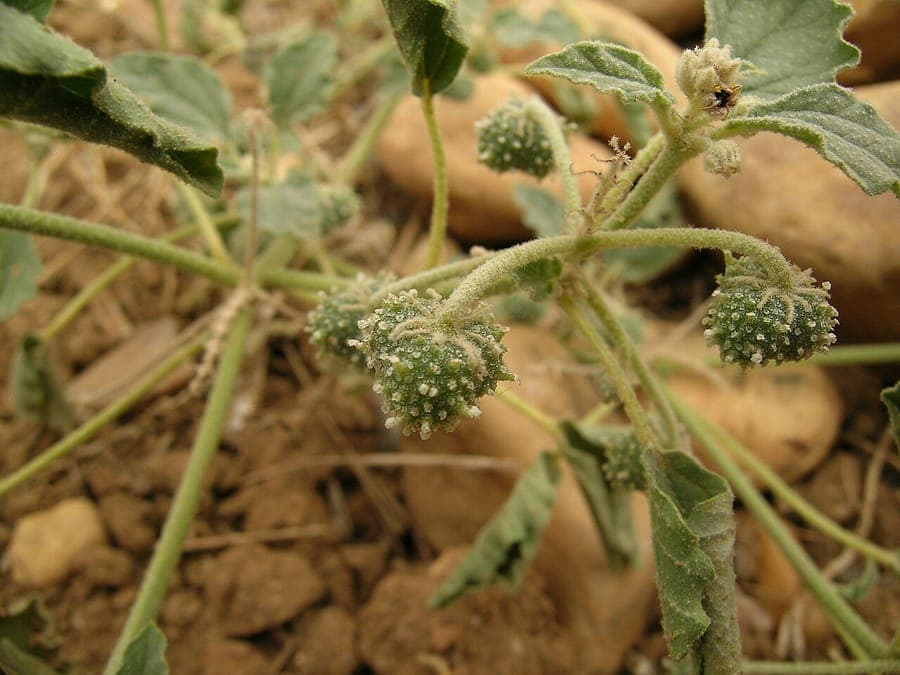
Solanum / CC BY-SA 3.0, via Wikimedia Commons
Chrozophora tinctoria: complete guide
Chrozophora tinctoria
Want to see Chrozophora tinctoria: complete guide in your garden?
1 minute, no credit card
Overview
Chrozophora tinctoria, also known as Dyer's litmus or Turnasol, is a fascinating heirloom plant from the Mediterranean and Central Asia. This plant has long been celebrated for its ability to produce an intense blue dye that was used in traditional textile dyeing. With its silvery hairy leaves and inconspicuous yellow flowers, it is a subtly attractive addition to dry, sunny rocks and Mediterranean gardens. The plant is simple to grow and extremely drought-tolerant.
Appearance & Bloom
Chrozophora tinctoria is an annual to short-lived perennial plant that typically reaches 20-40 centimeters in height. The leaves are light green to grey-green with a distinctive silvery hairy covering that gives the entire plant a soft, velvety appearance. The flowers are small, approximately 0.5-1 centimeter, yellow in color, and clustered in small groups. They appear from June to September in continuous waves. The flowers are followed by capsule-shaped fruits that carry important seeds for the next season.
Ideal Location
Chrozophora tinctoria prefers full sun with at least 6-8 hours of direct sunlight daily. The plant grows best in warm, well-drained locations where the soil can warm up considerably in summer. A southern exposure in rocks or raised beds is ideal. Although the plant can theoretically grow with partial shade (4-6 hours of light), plants will be thinner and less productive.
Soil
The dyer's litmus plant grows in practically any soil type, as long as it drains well. Sandy, sandy loam, and even stony soil are well tolerated. The plant is very adaptable to calcareous soils, making it suitable for many Dutch gardens. Do not add extra nutrition - the plant truly thrives best on poor, dry soils without fertilizer.
Free design
Want to see Chrozophora tinctoria: complete guide in your garden? Make a free design now.
Watering
Once established, Chrozophora tinctoria is extremely drought-tolerant and requires practically no supplemental watering. In the first growing period after sowing or planting, water regularly until the roots are well established (4-6 weeks). After that, water is only needed during exceptional drought periods. Excessive water can cause root rot.
Pruning
The dyer's litmus plant requires minimal pruning. You can pinch the shoot tips in August to make the plant denser, although this is not essential. Leave the seed pods undisturbed if you want it to self-seed next season. Otherwise, pull the plant out after seed setting.
Maintenance Calendar
May-June: Sow directly in the ground where the plant should grow. July-August: Full growth; the plant forms itself. September-October: Flowering reaches peak; seed formation begins; plant starts to decline. November-December: Plant dies after seed setting; seeds are dispersed.
Winter Hardiness
Chrozophora tinctoria is not winter hardy in the Netherlands as an annual plant. However, in very mild winters in southern Netherlands, planted specimens might survive. Typically, the plant is treated as an annual. Resow each spring for best results.
Companion Plants
The dyer's litmus plant combines well with other drought-tolerant, mid-sized plants from the same ecological zone. Try planting it together with Papaver rhoeas (corn poppy), Centaurea cyanus (cornflower), Salvia sclarea (clary sage), and grasses like Avena sterilis (wild oats). This combination creates a natural, Mediterranean wildflower appearance.
Closing
Chrozophora tinctoria is a historically fascinating plant with both botanical and cultural significance. With its unique silvery foliage, modest flowers, and ability to produce intense dye, it adds an extra dimension to any dry front garden space. Sow it fresh each year and enjoy this heirloom plant in your own garden.
Want to see Chrozophora tinctoria: complete guide in your garden? Make a free design now.
Upload a photo, pick a style, and get a photorealistic design with plant list in under a minute.
No credit card required


Similar plants
Woolly mercury: complete guide
Mercurialis tomentosa
All about Mercurialis tomentosa, the woolly mercury from southwestern Europe: site, soil, watering, care and garden design tips.
Shurur: complete guide
Euphorbia fruticosa
Everything about Shurur: cultivation in dry climates, xeriscaping, care and tips for drought-resistant gardens in warm climates
Glary spurge: complete guide
Euphorbia glareosa
Everything about glary spurge: cultivation, maintenance, frost hardiness and use in Mediterranean and mountain-inspired gardens