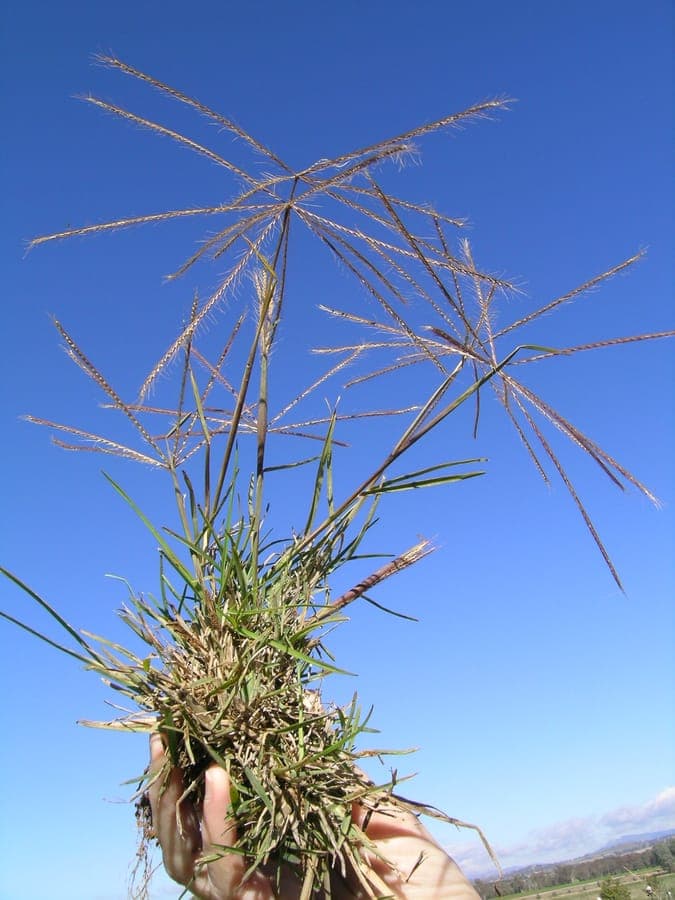
Macleay Grass Man / CC BY 2.0, via Wikimedia Commons
Australian fingergrass: complete guide
Chloris truncata
Want to see Australian fingergrass: complete guide in your garden?
Full design in HD: €7.99
Look after your Australian fingergrass with the GardenWorld app
Identify plants with your camera and get a care calendar with reminders for this plant.


Overview
Australian fingergrass (Chloris truncata), also called windmill grass, is an ornamental grass native to Australia and other semi-arid regions. This grass is renowned for its distinctive inflorescences resembling spread fingers, hence the common name. With drought tolerance and movement appeal, Australian fingergrass makes an excellent addition to contemporary, water-conscious gardens.
In its native habitat, this grass grows in dry to semi-arid environments across Australia, indicating its remarkable drought resilience.
Appearance and bloom
Australian fingergrass grows as an upright, loosely-formed grass reaching approximately 30-60 centimetres in height. The stems are thin and lightweight, with narrow, linear foliage.
Flowerheads emerge from July through October, consisting of 5-10 long, thin spikes radiating from a central point like fingers of a hand. These are golden to brown-tinted and give the grass striking visual appeal. The inflorescences persist long on the plant, providing structure and movement for months.
Ideal location
Australian fingergrass thrives in full sun locations receiving at least 6-8 hours of direct daily sunlight. The grass tolerates light shade but becomes less dense and vigorous.
Ensure well-drained soil and good moisture drainage. This grass excels in dry borders, gravel gardens, and Mediterranean schemes.
Soil
Australian fingergrass is highly adaptable to soil types, thriving even in poor, stony soils. The grass performs best in well-draining soils with sand or gravel content.
Avoid heavy, wet soils. The plant is highly salt-tolerant and can grow in seaside environments. pH is less important; the grass grows across many pH ranges.
Watering
Once established, Australian fingergrass is extremely drought-tolerant. Young plants require regular moisture until well-rooted. Mature plants can sustain themselves without supplementary water.
Avoid overwatering, especially in winter. The grass prefers well-drained soils with minimal moisture retention. Mulch can be applied but moisture retention must be avoided.
Free preview
Want to see Australian fingergrass: complete guide in your garden? Make a free preview of your design.
Pruning
Australian fingergrass requires minimal pruning. In late winter or early spring, cut the grass to ground level to remove old growth and encourage new emergence.
Avoid pruning during growing season, which disrupts flowering. Spent flowerheads can be removed for tidiness, though many gardeners leave them for winter interest.
Maintenance calendar
January-February: Enjoy winter structure and cut grass back to ground level.
March-April: New growth emerges; minimal water needed.
May-June: Growth completes; minimal care required.
July-October: Flowering period; enjoy movement and form; no water needed.
November-December: Winter period; grass provides dry-season structure; no maintenance required.
Winter hardiness
Australian fingergrass is frost-sensitive in severe winters. In temperate regions (zones 9-10), the grass survives normal winters without protection. In colder areas (zone 8 and colder), severe frost may kill the plant.
In colder regions, the grass can be grown as an annual or mulching considered for winter protection. In mild climates, the grass is evergreen, providing year-round structure.
Companion plants
Australian fingergrass pairs well with other drought-tolerant ornamental grasses and groundcovers. Sedum, euphorbia, and other dry border plants make good companion plantings.
The grass also combines well with low-growing shrubs and other xeric plants in water-conscious gardens.
Closing remarks
Australian fingergrass is a remarkable drought-tolerant grass species adding movement and texture to contemporary gardens. With its unmistakable inflorescences and low water requirements, this grass deserves greater recognition in dry gardens. Find this grass at specialized garden centres or online suppliers. Consult gardenworld.app for more grass recommendations and dry garden designs that save water and maintenance.
Frequently asked questions about Australian fingergrass
Is Australian fingergrass winter hardy?
Australian fingergrass is frost-sensitive in severe winters. In temperate regions (zones 9-10), the grass survives normal winters without protection.
When and how do you prune Australian fingergrass?
Australian fingergrass requires minimal pruning. In late winter or early spring, cut the grass to ground level to remove old growth and encourage new emergence.
How much water does Australian fingergrass need?
Once established, Australian fingergrass is extremely drought-tolerant. Young plants require regular moisture until well-rooted.
Where does Australian fingergrass grow best?
Australian fingergrass thrives in full sun locations receiving at least 6-8 hours of direct daily sunlight. The grass tolerates light shade but becomes less dense and vigorous.
What soil does Australian fingergrass need?
Australian fingergrass is highly adaptable to soil types, thriving even in poor, stony soils. The grass performs best in well-draining soils with sand or gravel content.

See it in your garden
See Australian fingergrass in your garden
One photo of your garden and a few questions. You see the result in about a minute.
Try it with a photoIdentify this plant in your own garden. Identify a plant
Similar plants
Pheasant's tail grass (Anemanthele lessoniana): a guide
Anemanthele lessoniana
Pheasant's tail grass (Anemanthele lessoniana) is an evergreen New Zealand grass with orange-streaked leaves and airy summer flower heads. Siting, soil, care and hardiness.
Korean feather reed grass (Calamagrostis brachytricha): guide
Calamagrostis brachytricha
Everything about Korean feather reed grass (Calamagrostis brachytricha): position, soil, cutting back and planting partners for its glistening autumn plumes.
Northern sea oats (Chasmanthium latifolium): growing guide
Chasmanthium latifolium
Northern sea oats (Chasmanthium latifolium) carries flat, dangling spikelets and thrives in part shade. Learn how to site, water, cut back and partner it.
