
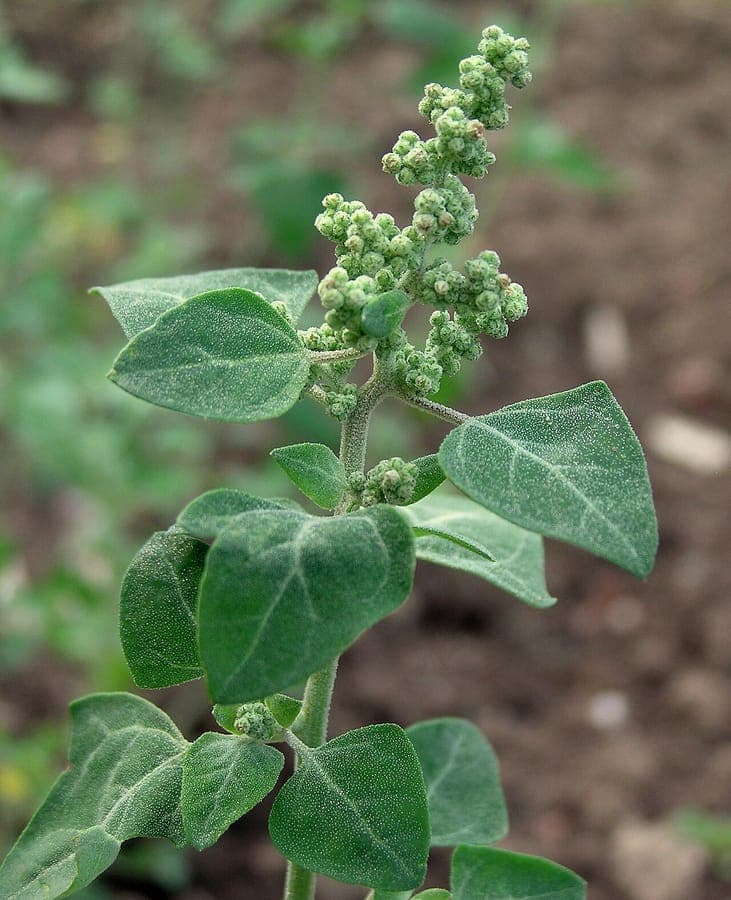
Ulf Schmitz / CC BY-SA 3.0, via Wikimedia Commons
Arrach: complete guide
Chenopodium vulvaria
Want to see Arrach: complete guide in your garden?
1 minute, no credit card
Overview
Arrach, or Chenopodium vulvaria, isn't a plant you'd typically pick up at garden centres. It's not flashy, fragrant, or particularly ornamental. But this annual herb from the Amaranthaceae family has a quiet resilience and ecological role that makes it worth knowing. Native across parts of Europe and Western Asia, it often pops up uninvited in damp, neglected corners-along old walls, compost heaps, or at the edge of overgrown paths.
Though its pungent, goat-like odour keeps most gardeners at a distance, arrach supports micro-insects and provides seed food for small birds in late summer. It's not a showpiece, but in a wild garden or naturalistic planting scheme, it holds its own. On gardenworld.app, you can design a low-effort, ecologically balanced garden that includes overlooked species like arrach.
Appearance & bloom cycle
Arrach grows between 30 and 80 cm tall, with upright, branching stems covered in fine, mealy hairs. The leaves are alternate, deeply toothed, and dark green on top with a soft, greyish underside. When crushed, they emit a strong, unpleasant smell-often compared to stale urine or wet goat. It's this scent that deters most humans but attracts certain flies and beetles.
From July to September, small, greenish-black flower clusters form at the stem tips. These inconspicuous blooms don't need pollinators; they self-fertilise and produce thousands of tiny, black seeds. These seeds can remain viable in the soil for years, germinating when conditions are right-usually from March onward when soil temperatures exceed 10°C.
Ideal location
This plant thrives in partial shade to full shade, especially in cool, moist spots. Think north-facing walls, under shrubs, or along damp fence lines. While it can survive in full sun, it tends to dry out faster and smell stronger. If you're growing it intentionally, keep it away from seating areas, vegetable beds, or herb patches.
On gardenworld.app, you can map your garden's microclimates to see if you have a suitable niche for arrach-especially if you're aiming for a self-sustaining, wildlife-friendly space.
Soil requirements
Arrach isn't fussy. It grows well in loamy, clay, or sandy soils as long as there's some moisture retention. The ideal pH range is 6.0 to 7.5. It prefers rich, nitrogen-heavy soils-common near compost bins or manure piles. Poor drainage isn't a dealbreaker, though prolonged waterlogging may slow growth.
Be cautious with store-bought compost: sometimes arrach seeds hitchhike in it, leading to surprise appearances. If you want to avoid it, source compost from trusted suppliers or heat-treat it before use.
Free design
Want to see Arrach: complete guide in your garden? Make a free design now.
Watering
In most UK and northern European climates, arrach needs no supplemental watering. Rainfall is sufficient, especially since it often grows in naturally damp areas. During extended dry spells in June or July, young plants may benefit from a light soak. Mature plants are surprisingly drought-tolerant once established.
If you do water, use rainwater and avoid wetting the foliage to reduce fungal risks. Overwatering can intensify the smell, so moderation is key.
Pruning
Pruning isn't necessary, but if you want to limit seed spread or reduce odour, cut off flower heads before they ripen. Wear gloves when handling-oils from the plant can linger on skin. Use clean, sharp shears from trusted garden centres to prevent disease transfer.
To remove the plant entirely, pull it up by the roots before seed set. Dispose of flowering stems in general waste, not compost, to avoid reseeding.
Maintenance calendar
- January: Dormant. Check for lingering debris.
- February: Prepare soil in potential zones; no active care needed.
- March: Soil warms; watch for seedlings in damp areas.
- April: Identify young plants by smell and leaf shape.
- May: Growth accelerates; monitor moisture in dry spells.
- June: Plant reaches mid-height; pinch early blooms if controlling spread.
- July: Peak flowering; odour is strongest. Ideal time for removal if unwanted.
- August: Seeds begin to form; insects active around blooms.
- September: Seeds mature; cut or pull plants to prevent self-seeding.
- October: Above-ground parts die back; clear remnants.
- November: Soil prep for next season; test pH if planning changes.
- December: Rest period. Plan your wildlife garden on gardenworld.app.
Winter hardiness
As an annual, arrach doesn't survive winter as a mature plant. However, its seeds overwinter reliably in the soil and germinate the following spring. It's rated for USDA zones 6 to 9, meaning it returns year after year in most temperate regions through self-seeding.
Companion plants
Due to its strong odour, arrach doesn't play well with culinary herbs like basil, dill, or thyme. Keep it separate from vegetable plots to avoid scent contamination. Instead, pair it with hardy, wild species like nettles, yarrow, or teasel in a rewilded corner.
It fits naturally in a cottage garden's less managed zones, near Echinacea or Rudbeckia, where its presence won't offend. Just ensure it's not overshadowing more desirable plants.
Closing
Arrach won't win any beauty contests, and its smell will turn some gardeners away. But for those embracing a more natural garden style, it's a resilient, low-input plant that supports biodiversity. It asks for little and gives back in quiet ways-shelter for insects, food for birds, and a sign of a living soil.
Whether you're removing it or making space for it, gardenworld.app helps you visualise how arrach fits into your garden's bigger picture.
Want to see Arrach: complete guide in your garden? Make a free design now.
Upload a photo, pick a style, and get a photorealistic design with plant list in under a minute.
No credit card required


Similar plants
Bassia laniflora (woolly summer-cypress): complete guide
Bassia laniflora
Full guide to Bassia laniflora: origin, appearance, ideal location, soil, watering and care for this drought-tolerant annual.
Suaeda spicata: complete guide
Suaeda spicata
Everything about Suaeda spicata (spiked seablite): a rare salt-tolerant coastal succulent from the western Mediterranean and Macaronesia.
California amaranth: complete guide
Amaranthus californicus
Full guide to California amaranth (Amaranthus californicus): growing tips, ideal location, soil needs, watering, and garden design ideas.