
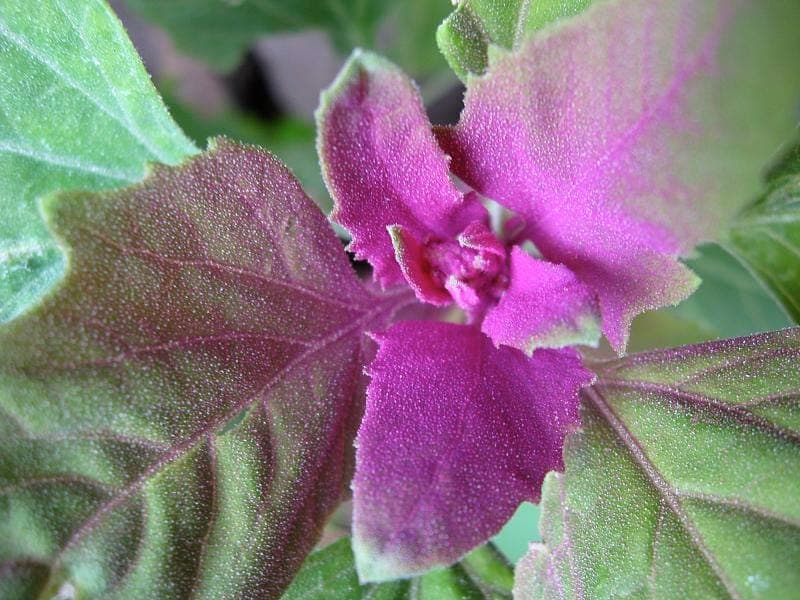
Zoey Kroll / edibleoffice / CC BY-SA 3.0, via Wikimedia Commons
Tree spinach: complete guide
Chenopodium giganteum
Want to see Tree spinach: complete guide in your garden?
1 minute, no credit card
Overview
Tree spinach (Chenopodium giganteum) is a bold annual that brings instant height and texture to any garden. Native to regions across China, Tibet, and the Himalayas, this plant can shoot up to 2 meters in a single season - sometimes even 2.5 meters in rich, warm conditions. Despite being related to common spinach and goosefoot weeds, it stands out with its upright, almost architectural form. The young leaves are edible, tasting similar to amaranth or mild chard, and can be used raw in salads or cooked like spinach. Mature leaves become tougher, so harvest early for best results.
Gardeners often grow tree spinach not just for food, but for its striking presence. It works well as a backdrop in mixed borders, a temporary screen along fences, or a vertical element in permaculture designs. Because it's an annual, it won't persist year-round, but it self-seeds readily, often popping up in unexpected spots the next spring. On gardenworld.app, you can map out a seasonal design that accounts for its height and naturalizing habit.
Appearance & bloom cycle
Tree spinach has large, triangular to diamond-shaped leaves up to 20 cm long. The foliage is deep green above, paler underneath, with a fine, mealy coating typical of Chenopodium species. Stems are thick, angular, and can develop a purplish tinge in full sun. From June through October, dense flower spikes emerge - initially greenish, turning pale yellow to white as they mature. The blooms aren't showy like dahlias, but they add texture and movement, especially when swaying in the wind.
By late summer, seeds begin to form, giving the plant a soft, silvery appearance. The seeds are small, black, and highly viable, often dropping and germinating the following year. The plant's lifecycle ends with the first hard frost, usually in November in USDA zones 7–8.
Ideal location
Tree spinach thrives in full sun - aim for a light level of 8 or higher on a 10-point scale. It can tolerate light shade, but growth will be leggy and slower. Plant in groups of 3–5, spaced 60–80 cm apart, to create a cohesive vertical mass. Avoid planting too close to shorter perennials that might get shaded out.
Best used in the back of borders, along pathways, or as a seasonal hedge. In smaller gardens, position it where its height won't block views. For visual planning, use gardenworld.app to simulate mature plant heights and spacing before you plant.
Soil requirements
This plant isn't fussy, but it grows best in loamy or sandy loam soils with a pH between 7.5 and 8.0. It tolerates poor soils but performs best with moderate fertility. Avoid acid soils below pH 7, as this can limit nutrient uptake. A light application of compost in May gives a helpful boost.
Drainage is important - while tree spinach enjoys consistent moisture, it won't survive in waterlogged soil. If you have heavy clay, amend with grit or compost to improve structure.
Free design
Want to see Tree spinach: complete guide in your garden? Make a free design now.
Watering
Keep soil evenly moist, especially during establishment in May and June. Aim for 2–3 cm of water per week, either from rain or irrigation. Water at the base to prevent fungal issues on leaves. During dry spells in July and August, increase frequency to prevent premature flowering and seed set.
Once established, tree spinach shows moderate drought tolerance, but prolonged dryness leads to reduced leaf quality and early dieback.
Pruning
No formal pruning is needed, but you can pinch back the tips in early June to encourage bushier growth. This also delays flowering slightly, extending the harvest window for young leaves. Remove lower leaves if they yellow or show signs of mildew, improving airflow.
Cut stems for kitchen use - just avoid taking more than one-third of the plant at once. Use clean, sharp shears to prevent disease transmission.
Maintenance calendar
- March–April: Start seeds indoors in pots.
- May: Transplant outdoors after last frost; space 60–80 cm apart.
- June: Pinch tips, begin harvesting leaves, water regularly.
- July–August: Monitor for aphids; keep soil moist.
- September: Allow flowering; collect seeds if desired.
- October: Let plants stand for visual interest or cut back.
- November: Clear debris after frost; leave some seeds for self-sowing.
Winter hardiness
Tree spinach is not winter-hardy. It dies completely at first frost (below 0°C). However, seeds can survive in the soil over winter, especially under leaf litter or mulch. In milder climates (USDA zones 7–8), volunteer seedlings often appear in April or May.
Companion plants
Pair with sun-loving annuals like Zinnia elegans, Amaranthus, or Cosmos bipinnatus for bold color contrasts. It also works well with tall herbs like dill or fennel. In vegetable gardens, plant it near corn or squash, where it can serve as a temporary windbreak without competing heavily for nutrients.
Avoid aggressive spreaders like mint or bindweed that could overwhelm it. Also keep distance from shallow-rooted vegetables that dislike root disturbance.
Closing
Tree spinach is a powerhouse annual - fast, tall, and useful. It fills vertical space quickly, provides edible greens, and adds architectural interest. With minimal care, it delivers big results. Buy seeds from local garden centres or online suppliers, and plan your layout early. For precise spacing and seasonal visualization, try the design tools on gardenworld.app.
Want to see Tree spinach: complete guide in your garden? Make a free design now.
Upload a photo, pick a style, and get a photorealistic design with plant list in under a minute.
No credit card required


Similar plants
Bassia laniflora (woolly summer-cypress): complete guide
Bassia laniflora
Full guide to Bassia laniflora: origin, appearance, ideal location, soil, watering and care for this drought-tolerant annual.
Suaeda spicata: complete guide
Suaeda spicata
Everything about Suaeda spicata (spiked seablite): a rare salt-tolerant coastal succulent from the western Mediterranean and Macaronesia.
California amaranth: complete guide
Amaranthus californicus
Full guide to California amaranth (Amaranthus californicus): growing tips, ideal location, soil needs, watering, and garden design ideas.