
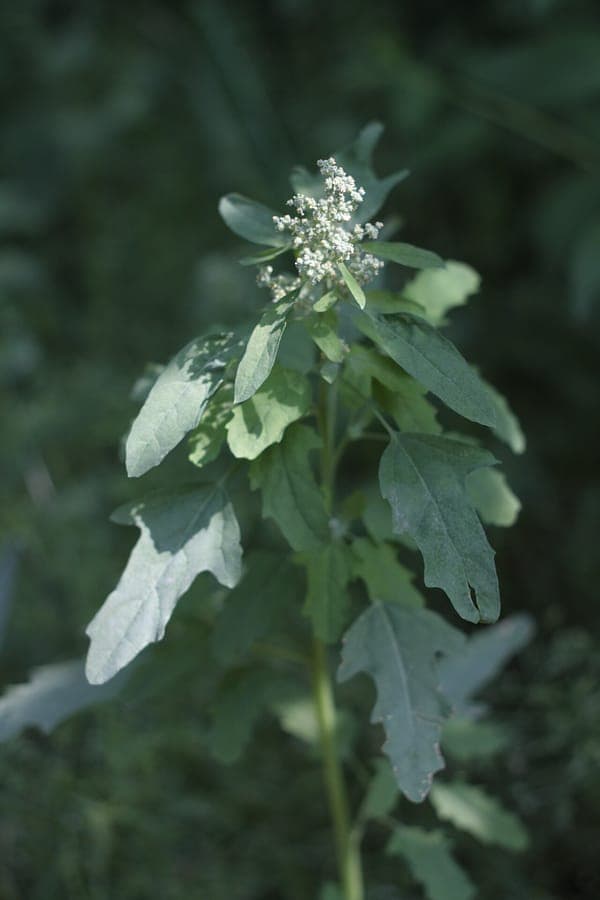
Dalgial / CC BY-SA 3.0, via Wikimedia Commons
Fig-leaf goosefoot: complete guide
Chenopodium ficifolium
Want to see Fig-leaf goosefoot: complete guide in your garden?
1 minute, no credit card
Overview
Fig-leaf goosefoot, or Chenopodium ficifolium, is a quiet achiever in the garden. It's not flashy, but it brings a unique texture and reliable structure to borders. Native to parts of Central and Eastern Europe, as well as regions in China and Russia, this herbaceous forb has adapted well to temperate climates like those across the UK and northern Europe. It belongs to the Amaranthaceae family, sharing traits with amaranth and spinach-tough, upright growth and minimal fuss.
If you're planning a relaxed, naturalistic planting scheme, this plant fits right in. On gardenworld.app, you can design a layout where Fig-leaf goosefoot acts as a vertical accent among softer perennials or grasses. It thrives in full sun to light shade, scoring a solid 7 out of 10 on the light scale, making south- or east-facing spots ideal.
Appearance & bloom cycle
This plant stands 80 to 120 cm tall with a spread of about 40 cm, forming slender, branching stems. The leaves are its most distinctive feature-deeply divided into five lobes, resembling fig leaves, hence the name. They're dark green above, lighter underneath, and slightly hairy to the touch. From July to September, small, inconspicuous white flowers appear in dense, spike-like clusters along the stems. While not showy, they attract beneficial insects like hoverflies and parasitic wasps.
After flowering, tiny black seeds form. These can be self-sown, which is great for a wilder look, but keep an eye on spread if you prefer a tidier border.
Ideal location
Plant Fig-leaf goosefoot where it gets at least 7 hours of direct or dappled sunlight. A sunny border, the edge of a woodland garden, or a large container all work well. It's excellent as a mid- to back-border plant due to its height. In urban gardens or patios, use a pot at least 30 cm deep with drainage holes. Avoid crowded spots-this plant likes airflow to prevent mildew.
For gardeners mixing textures, pair it with fine-leaved plants like Gaura or airy stems of Verbena bonariensis. You can test these combinations visually on gardenworld.app before planting.
Soil requirements
It prefers well-drained soil with a pH between 5.5 and 6.5. Heavy clay can work if amended with grit or compost to improve drainage. Avoid waterlogged conditions-root rot is a risk. A sandy loam or loamy soil is ideal. While it tolerates average fertility, enriching the soil slightly with compost at planting time gives it a good start. Don't over-fertilize; this plant thrives in modest conditions.
Free design
Want to see Fig-leaf goosefoot: complete guide in your garden? Make a free design now.
Watering
During the growing season (May to September), water weekly during dry spells, especially in containers. Check the top 2–3 cm of soil-if dry, it's time to water. Deep, infrequent watering encourages strong roots. Reduce frequency in autumn, and stop supplemental watering once dormancy sets in. Potted plants may need winter protection from excessive moisture.
Pruning
Pruning isn't essential but helps maintain shape and vigor. In early June, pinch out the growing tips to encourage bushier growth. Remove any damaged or diseased foliage as needed. After flowering, cut back stems to about 20 cm above ground to tidy up and prepare for next year. If you want to prevent self-seeding, deadhead before seeds mature.
Maintenance calendar
- Jan: Check crown for rot, ensure mulch is in place
- Feb: No action needed
- Mar: Cut back old stems, prepare for new growth
- Apr: Apply light feed when new shoots emerge
- May: Water regularly, start liquid feed every 4 weeks
- Jun: Tip-prune for bushiness
- Jul: Flowers appear, monitor for drought stress
- Aug: Continue watering during dry periods
- Sep: Flowering ends, prevent seeding if desired
- Oct: Cut back to 20 cm, transplant seedlings
- Nov: Apply organic mulch around base
- Dec: Dormant period, minimal care
Winter hardiness
Fig-leaf goosefoot is hardy in USDA zones 6 to 8. In the UK and similar climates, it typically survives winter with little to no protection. The top growth dies back, but the roots remain alive and resprout in spring. In colder zones or exposed areas, a light mulch of compost or leaf mould in November helps insulate the crown.
Companion plants
Its upright form pairs well with mounding plants like Achillea, Nepeta, or Sedum. Try it with see-through plants like Verbena bonariensis for depth. Avoid aggressive spreaders like mint or bindweed that can overwhelm it. It also works in cottage garden schemes or naturalistic meadow edges.
Closing
Fig-leaf goosefoot is a dependable, low-maintenance plant that adds quiet structure to the summer garden. It won't steal the spotlight, but it holds the frame together. You can find seeds or plants at garden centres across the UK, or order online. For design inspiration and planting advice, visit gardenworld.app to see how this plant integrates into your existing layout. With the right spot and basic care, it'll return year after year-no drama, just steady presence.
Want to see Fig-leaf goosefoot: complete guide in your garden? Make a free design now.
Upload a photo, pick a style, and get a photorealistic design with plant list in under a minute.
No credit card required


Similar plants
Bassia laniflora (woolly summer-cypress): complete guide
Bassia laniflora
Full guide to Bassia laniflora: origin, appearance, ideal location, soil, watering and care for this drought-tolerant annual.
Suaeda spicata: complete guide
Suaeda spicata
Everything about Suaeda spicata (spiked seablite): a rare salt-tolerant coastal succulent from the western Mediterranean and Macaronesia.
California amaranth: complete guide
Amaranthus californicus
Full guide to California amaranth (Amaranthus californicus): growing tips, ideal location, soil needs, watering, and garden design ideas.