
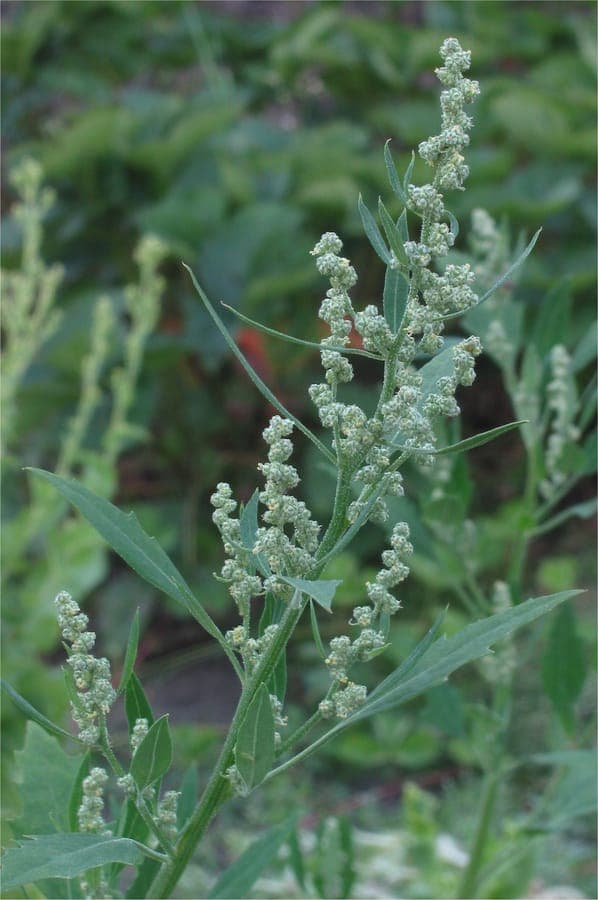
Rasbak / CC BY-SA 3.0, via Wikimedia Commons
Fat-hen: complete guide
Chenopodium album
Want to see Fat-hen: complete guide in your garden?
1 minute, no credit card
Overview
Fat-hen, or Chenopodium album, is one of those plants that shows up uninvited but often stays welcome once you get to know it. Native to regions stretching from Afghanistan to the Azores, this fast-growing annual has naturalized across temperate zones worldwide. Often dismissed as a weed, Fat-hen is actually a powerhouse in the garden - improving soil, feeding pollinators, and even providing nutritious greens for the kitchen. It's especially common in disturbed soils, along pathways, and in garden borders where nutrients are abundant. On gardenworld.app, you can design a layout that integrates useful plants like Fat-hen into functional garden zones, balancing aesthetics with productivity.
Appearance & bloom cycle
Fat-hen typically reaches 30 to 120 cm in height, depending on growing conditions. It has erect, branching stems that are green to purplish-green, often coated with a fine, mealy white bloom - hence the name "album," meaning white. The leaves are triangular, coarsely toothed, and gray-green above with a distinctly mealy, whitish underside. From July to September, small green flowers form in dense, spike-like clusters at stem tips. These inconspicuous blooms mature into tiny, black-brown seeds that disperse easily by wind and birds, ensuring next year's crop.
Ideal location
Fat-hen thrives in full sun, scoring an 8/10 on the light scale - that means at least 6 hours of direct sunlight daily. It tolerates partial shade but becomes leggy and less productive. Choose open garden beds, compost edges, or fallow patches for best results. It's particularly useful as a nurse crop or dynamic accumulator in regenerative beds. Avoid heavily shaded areas under dense tree canopies. In urban gardens, it does well in raised beds with southern exposure.
Soil requirements
This plant isn't picky, but it grows fastest in loose, well-drained soil with a pH between 5.5 and 6.5. Rich, loamy soils with high organic matter yield lush foliage. Fat-hen can handle compacted or degraded soils, making it ideal for reclaiming neglected spaces. However, it struggles in highly acidic conditions below pH 5.5. Before planting, use gardenworld.app to generate a soil analysis map that helps you assess pH, compaction, and nutrient levels across your plot.
Watering
Once established, Fat-hen is drought-tolerant. Young plants need watering about once a week during dry spells. Use the 2-cm rule: if the top 2 cm of soil feels dry, it's time to water. Mature plants access deeper moisture and rarely need supplemental irrigation unless facing prolonged drought. Overwatering leads to root rot and weak growth - less is more with this resilient species.
Free design
Want to see Fat-hen: complete guide in your garden? Make a free design now.
Pruning
Pruning isn't essential but cutting back the top 5–7 cm from June to August promotes bushier growth and continuous leaf production. Use the tender tips in salads or lightly steamed as a spinach substitute. Avoid heavy pruning in late summer if you're saving seeds. Snip with clean shears to prevent disease spread, and compost the trimmings to return nutrients to the soil.
Maintenance calendar
- January: Dormant. Monitor for early seed germination in mild zones.
- February: Prepare seedbeds by lightly forking soil.
- March: Start seeds indoors or in a greenhouse at 15–20°C.
- April: Transplant outdoors after last frost (typically mid to late April in USDA zones 7–9).
- May: Thin seedlings to 20 cm apart. Water during dry weeks.
- June: Begin tip pruning. Watch for aphids and slugs.
- July: Flowers appear. Maintain airflow to prevent mildew.
- August: Peak leaf harvest. Repeat pruning for tender growth.
- September: Allow some plants to flower and set seed.
- October: Collect seeds or let them self-sow.
- November: Cut back dead foliage or leave as mulch.
- December: Rest period. Plan next season's planting zones.
Winter hardiness
As an annual, Fat-hen doesn't survive winter as a plant, but its seeds are cold-hardy down to -15°C. They remain viable in soil for years, germinating in spring when soil temps hit 10°C. In USDA zones 7 and higher, seeds often self-sow reliably. A light mulch helps protect seed banks from erosion and extreme freeze-thaw cycles.
Companion plants
Fat-hen works well as a companion to vegetables like tomatoes, cucumbers, and beans. Its broad leaves provide light shade and reduce soil moisture loss. It attracts beneficial insects such as hoverflies and parasitic wasps that prey on aphids. However, keep it away from salad greens that attract slugs, as Fat-hen can harbor them. Pair with aromatic herbs like oregano or thyme to deter pests and diversify your planting scheme.
Closing
Fat-hen deserves a second look. Far from being just a weed, it's a dynamic, multifunctional plant that supports soil health, biodiversity, and even your dinner plate. Whether you sow it intentionally or let it pop up naturally, it's a low-effort, high-reward addition to any garden. Seeds are available at garden centres across the UK and North America. By integrating Fat-hen into your planting plan, you're building a more resilient, self-sustaining garden. For layout ideas and companion planting tools, visit gardenworld.app - where practical design meets real-world gardening.
Want to see Fat-hen: complete guide in your garden? Make a free design now.
Upload a photo, pick a style, and get a photorealistic design with plant list in under a minute.
No credit card required


Similar plants
Bassia laniflora (woolly summer-cypress): complete guide
Bassia laniflora
Full guide to Bassia laniflora: origin, appearance, ideal location, soil, watering and care for this drought-tolerant annual.
Suaeda spicata: complete guide
Suaeda spicata
Everything about Suaeda spicata (spiked seablite): a rare salt-tolerant coastal succulent from the western Mediterranean and Macaronesia.
California amaranth: complete guide
Amaranthus californicus
Full guide to California amaranth (Amaranthus californicus): growing tips, ideal location, soil needs, watering, and garden design ideas.