
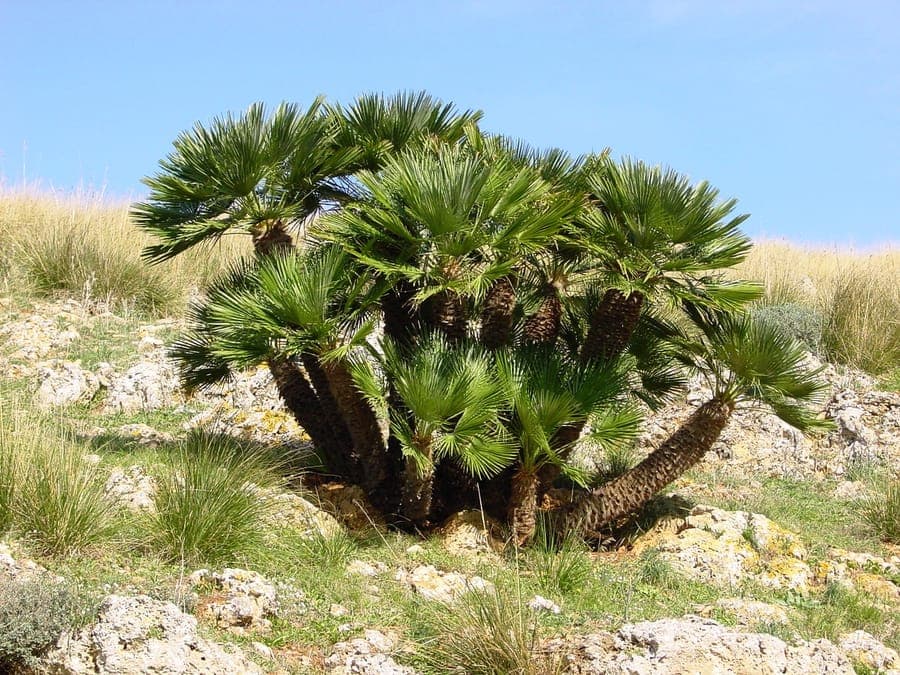
tato grasso / CC BY-SA 2.5, via Wikimedia Commons
European fan palm: complete guide
Chamaerops humilis
Want to see European fan palm: complete guide in your garden?
1 minute, no credit card
Overview
Chamaerops humilis, commonly known as the European fan palm, is the only true palm native to continental Europe and one of the most cold-tolerant species you can grow in temperate climates. It's a slow-growing, clump-forming shrub that develops multiple stems over time, creating a dense, jungle-like effect even in modest garden spaces. Native to coastal regions of southern Europe and North Africa - including Spain, Italy, Morocco and Algeria - this palm thrives in sunny, well-drained spots and handles coastal winds with ease. It's become increasingly popular in UK and northern European gardens thanks to its rugged charm and resilience. On gardenworld.app, you can design a layout that highlights its architectural form and ensures proper spacing for air circulation and winter protection.
Appearance & bloom cycle
The European fan palm features stiff, palmate (fan-shaped) leaves that range from bright green to blue-green, depending on the cultivar. Each leaf can reach up to 60 cm in diameter and is supported by spiny leaf stalks - a natural defense mechanism. From late spring into early summer (typically June), it produces tall, branched flower spikes with small yellow to greenish-yellow flowers. These aren't particularly showy but are visited by bees and other pollinators. After pollination, round, olive-green fruits develop and ripen over 2–3 years, eventually turning brown. While not edible for humans, they provide late-season food for birds.
Ideal location
This palm thrives in full sun - aim for a light rating of 8, meaning at least 6–8 hours of direct sunlight daily. It tolerates light shade, especially in hotter inland climates, but full sun promotes denser growth and better hardiness. Plant it against a south- or southwest-facing wall to benefit from radiant heat and wind protection. Urban courtyards, coastal gardens and sheltered patios are ideal. If growing in a container, use a large pot (minimum 40 cm diameter) and move it close to the house in winter. On gardenworld.app, use the microclimate mapper to pinpoint the warmest zones in your garden for optimal palm placement.
Soil requirements
Chamaerops humilis prefers well-drained, slightly acidic to neutral soil (pH 5.5–6.5). It dislikes waterlogged conditions, so avoid heavy clay unless amended with grit or horticultural sand. When planting in the ground, mix in coarse sand and compost to improve drainage. In pots, use a blend of loam-based compost (like John Innes No. 3), perlite and sharp sand. Always include a 5 cm layer of drainage material at the pot's base. Raised beds work well in wetter regions.
Free design
Want to see European fan palm: complete guide in your garden? Make a free design now.
Watering
Water deeply but infrequently during the growing season (April–October), allowing the top 2–3 cm of soil to dry between waterings. Overwatering is a common cause of root rot. In winter, reduce watering to once every few weeks - only when the soil is completely dry. Rainwater is preferable, especially in areas with hard tap water that can raise soil pH over time.
Pruning
Pruning is minimal. Remove only dead, damaged or brown leaves by cutting close to the base, taking care not to harm the central bud. Never cut green fronds - they feed the plant. Wear thick gloves due to the spiny petioles. Avoid removing too many leaves at once, as this stresses the palm. Fruit stalks can be left unless they become unsightly.
Maintenance calendar
- Jan: Check for frost damage; water sparingly
- Feb: Clear dead foliage if accessible
- Mar: Inspect for new growth; start light feeding
- Apr: Resume regular watering; move containers outdoors after frost risk
- May: Monitor for pests (scale, mealybugs); ensure good airflow
- Jun: Flowering begins; maintain consistent moisture
- Jul: Peak growth; protect from drought stress
- Aug: Continue watering; avoid pruning
- Sep: Gradually reduce watering
- Oct: Stop feeding; prepare for winter
- Nov: Protect young plants with horticultural fleece
- Dec: Keep dry; shelter container-grown palms
Winter hardiness
This palm is hardy to USDA zone 8b (-12°C), with younger plants surviving to zone 9 (-7°C). In the UK (zones 8–9), mature specimens often survive unprotected, but young or container-grown palms need winter care. Wrap the crown with fleece or burlap during prolonged cold spells. In colder areas, move pots to a cool, bright greenhouse or against a heated wall. Snow accumulation can damage leaves - brush off gently.
Companion plants
Pair with drought-tolerant, Mediterranean companions: Phlomis, Echinacea, Santolina, or ornamental grasses like Stipa gigantea. Lavender and rosemary add fragrance and texture contrast. Avoid invasive spreaders like bamboo or mint. The palm's bold form works well as a focal point among softer perennials.
Closing
Chamaerops humilis brings a touch of the Mediterranean to northern gardens with minimal fuss. Its slow growth means patience, but a well-established clump can last decades. For best results, buy larger specimens from reputable garden centres like those found at local nurseries or online retailers. Remember, a 60 cm tall palm may already be 5–7 years old. With proper siting and winter care, this palm becomes a living sculpture in your garden for years to come.
Want to see European fan palm: complete guide in your garden? Make a free design now.
Upload a photo, pick a style, and get a photorealistic design with plant list in under a minute.
No credit card required


Similar plants
Needle palm: complete guide
Rhapidophyllum hystrix
Everything about the needle palm: the world's hardiest palm, suitable for gardens in temperate climates down to USDA zone 7b.
Saw palmetto: complete guide
Serenoa repens
A complete guide to saw palmetto (Serenoa repens), the iconic fan palm from Florida and the southeastern United States, prized for its toughness.
Puerto Rican hat palm: complete guide
Sabal causiarum
Grow Puerto Rican hat palm successfully. A majestic fan palm with tropical presence suited to sheltered Mediterranean-style gardens.