
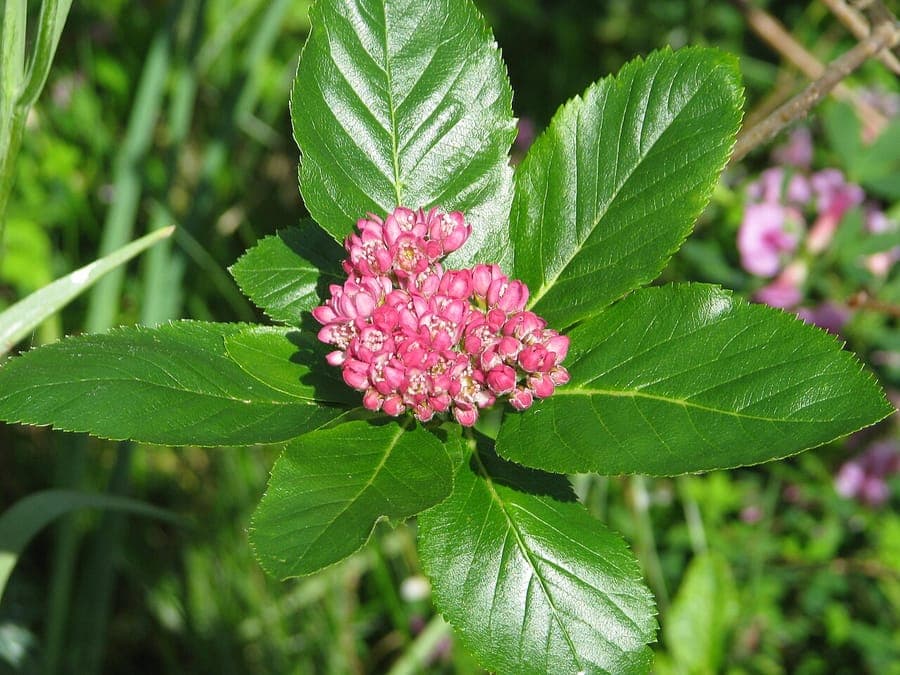
peganum from Henfield, England / CC BY-SA 2.0, via Wikimedia Commons
False-medlar: complete guide
Chamaemespilus alpina
Want to see False-medlar: complete guide in your garden?
1 minute, no credit card
Overview
Chamaemespilus alpina, commonly known as False-medlar, is a hardy, low-growing shrub that brings quiet charm to alpine and cottage-style gardens. Native to mountainous regions across Central and Southern Europe - from the Alps to the Balkans - it thrives in tough conditions where other plants might struggle. Belonging to the Rosaceae family, it shares traits with hawthorns and serviceberries, but stands out for its compact size and early-season floral display. Reaching only 30–50 cm in height but spreading 60–80 cm wide, it's ideal for small gardens or tight spaces where visual impact matters.
If you're sketching a new rock garden or redesigning a front border, gardenworld.app offers smart layout tools to help you position False-medlar alongside other low-maintenance perennials. Its subtle presence works especially well when paired with plants of contrasting texture and height.
Appearance & bloom cycle
This deciduous shrub forms a dense, spreading mound of slender green stems. In late spring - typically from mid-May to early June - it produces clusters of small, star-shaped flowers, about 1.5 cm across. Each bloom has five pale pink to white petals with a cluster of golden-yellow stamens in the center, creating a cheerful, pollinator-friendly display. The flowering period lasts roughly three weeks.
The leaves are oval to lanceolate, 2–4 cm long, with finely serrated edges. They emerge bright green in spring, darken in summer, and may turn bronze or reddish in autumn, especially in sunnier spots. The plant rarely produces fruit - small, inedible brown pomes about 8 mm in diameter - but when it does, they persist into early winter, adding subtle interest.
Ideal location
Plant in full sun for the best flowering and tightest growth. In hotter regions (USDA zones 7 and above), light afternoon shade helps prevent stress. A sloped or raised bed is ideal, as it ensures quick drainage. Use False-medlar as an edging plant, in rock gardens, or as a soft groundcover beneath taller shrubs. Avoid planting in deep shade or under dense tree canopies where light and airflow are limited.
For layout inspiration and spacing recommendations, visit gardenworld.app. Their visual planner helps you calculate how many plants you'll need for full coverage at 30 cm spacing.
Soil requirements
Well-drained soil is non-negotiable. Heavy clay or waterlogged ground leads to root rot. Amend planting holes with coarse sand, gravel, or perlite to improve drainage. A pH range of 5.5 to 7.0 suits it best. While not particularly nutrient-hungry, a light top dressing of compost in early spring supports healthy growth. Avoid rich, heavily amended soils - they encourage leggy growth.
Free design
Want to see False-medlar: complete guide in your garden? Make a free design now.
Watering
Water regularly during the first growing season, about 5–10 liters per plant weekly, depending on rainfall. Once established, Chamaemespilus alpina is drought-tolerant and rarely needs supplemental watering, except during prolonged dry spells in summer. When watering, do so deeply every 10–14 days rather than daily sprinkling, which only wets the surface.
Pruning
Pruning is rarely required. The plant maintains a neat, natural form. If needed, trim straggly stems in early spring (March) to encourage bushiness. Cut back no more than 10 cm and avoid cutting into old wood. Never prune during flowering - you'll sacrifice the bloom display.
Maintenance calendar
- January: Check for winter damage.
- February: Prepare for spring; apply light compost if desired.
- March: Light pruning if needed; remove dead wood.
- April: Mulch with 2 cm of compost to retain moisture.
- May: Peak bloom - avoid pruning. Monitor for dry spells.
- June: Watch for aphids or fungal spots.
- July: Water only if drought persists.
- August: No action needed unless extreme heat.
- September: Fruits may appear; foliage starts to change.
- October: Clear fallen leaves and debris.
- November: Plant enters dormancy.
- December: Protect young plants with straw mulch in zone 5.
Winter hardiness
Hardy in USDA zones 5–8 (-20°C to -12°C). In zone 5, a light mulch helps protect young roots during extended freezes. Established plants typically survive without care. Avoid watering when the ground is frozen - instead, water on sunny winter days if it's dry and above freezing.
Companion plants
Pair with low-growing companions like creeping thyme (Thymus serpyllum), blue fescue (Festuca glauca), or dwarf iris (Iris pumila). It also works well in front of taller shrubs like juniper or dwarf conifers. Avoid aggressive spreaders like ivy or mint, which can overwhelm it. For visual contrast, plant near silver-foliaged species like Artemisia or Santolina.
Closing
Chamaemespilus alpina is a quiet performer that earns its place in any garden seeking resilience and seasonal interest. It asks for little and gives back in texture, bloom, and structure. You can find it at garden centres in spring, especially those specializing in alpine or rock garden plants. Check availability at major retailers or use gardenworld.app to track seasonal stock and plan your layout. With minimal input, it becomes a dependable feature year after year.
Want to see False-medlar: complete guide in your garden? Make a free design now.
Upload a photo, pick a style, and get a photorealistic design with plant list in under a minute.
No credit card required


Similar plants
Siberian crab apple: complete guide
Malus x robusta
Complete guide to the Siberian crab apple (Malus x robusta): location, soil, pruning, winter hardiness and the best companion plants for your garden.
Chinese flowering crabapple (Malus x spectabilis): complete guide
Malus x spectabilis
Meet the Chinese flowering crabapple (Malus x spectabilis): a classic spring bloomer with carmine buds and pink blossom.
Potentilla crassinervia: complete guide
Potentilla crassinervia
Potentilla crassinervia, the Corsican cinquefoil, grows wild on Corsica and Sardinia's peaks. Discover how to grow this hardy alpine rock garden gem.