
Oceancetaceen - Alice Chodura / Public domain, via Wikimedia Commons
Roman chamomile: complete guide
Chamaemelum nobile
Want to see Roman chamomile: complete guide in your garden?
1 minute, no credit card
Overview
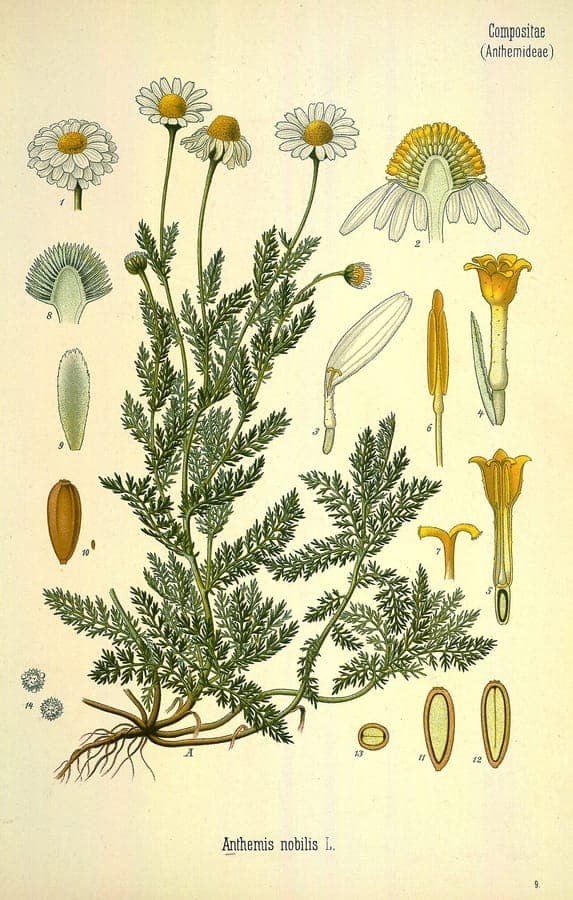
Roman chamomile (Chamaemelum nobile) is a resilient, aromatic herb that thrives in sunny spots with well-drained soil. Native to southwestern Europe and parts of North Africa, it's fully hardy in USDA zones 7 to 10, making it a reliable choice for UK and Irish gardens, as well as milder parts of continental Europe. Growing to about 15–25 cm tall with a spread of up to 40 cm, it forms a soft, fragrant mat that doubles as ground cover and garden charm. Its apple-scented foliage and cheerful white-and-yellow daisy-like blooms have made it a favorite for centuries. Whether you're planting for looks or utility, Roman chamomile offers both. On gardenworld.app, you can design a planting scheme that highlights its low-growing, spreading habit.
Appearance & bloom cycle
This herbaceous perennial grows in a creeping habit, forming dense mats over time. It sends up small, daisy-like flowers from late spring through summer-typically May to August. The blooms are about 2–3 cm across, with white ray florets and a prominent golden-yellow disc. The foliage is finely divided and feather-like, with a soft green hue and a distinctive sweet, apple-like aroma when brushed or crushed. After flowering, the plant may self-seed gently in suitable conditions, though it's not invasive. For best flowering, ensure it receives at least 6–8 hours of direct sunlight daily. The bloom display is more abundant when the plant is grown in optimal conditions with minimal competition.
Ideal location
Roman chamomile loves full sun (light level 8/10), so choose a south- or southwest-facing spot in your garden. It tolerates light shade but flowers less and may become leggy. Good air circulation is essential to prevent fungal issues, especially in humid climates. Avoid low-lying, damp areas where water collects. It performs beautifully in rock gardens, between pavers, or in raised beds. If you're working with a small garden or container, consider placing it near a sunny patio or herb spiral. Try visualizing your layout on gardenworld.app to see how this plant integrates with other sun-lovers like thyme or lavender.
Soil requirements
The ideal soil is light, sandy, or loamy with excellent drainage and a slightly acidic pH between 5.0 and 5.5. Avoid heavy clay or water-retentive soils, which can lead to root rot. Before planting, amend the soil with grit or coarse sand to improve drainage. A thin layer of compost can help, but don't over-enrich the soil-this plant prefers modest fertility. In containers, use a high-quality potting mix with added perlite. Ensure pots have drainage holes and avoid letting them sit in saucers full of water.
Free design
Want to see Roman chamomile: complete guide in your garden? Make a free design now.
Watering
Once established, Roman chamomile is drought-tolerant. Water newly planted specimens regularly during the first growing season to help roots settle. After that, rely on rainfall unless you experience prolonged dry spells. In summer, water deeply but infrequently-about once a week during droughts. Always water at the base to keep foliage dry and reduce disease risk. Overwatering is the most common mistake; soggy soil kills more chamomile than cold. Use a finger test: if the top 2–3 cm of soil is dry, it's time to water.
Pruning
Pruning isn't essential, but it keeps the plant tidy and encourages denser growth. After the main flowering flush in early summer, trim back the stems by about one-third. This promotes bushiness and prevents the center from becoming woody or bare. Use clean, sharp shears and avoid cutting into old wood. Regular light trimming also increases fragrance release-great for sensory gardens. Save the clippings for tea; just make sure they're dry and free of pests.
Maintenance calendar
- January: Dormant period. Check for frost damage.
- February: Prepare soil; add light compost if needed.
- March: Begin monitoring for new growth.
- April: Plant new specimens; water if dry.
- May: First blooms; increase watering during dry spells.
- June–July: Peak flowering; deadhead lightly.
- August: Post-flowering trim; reduce watering.
- September: Allow some seed heads to remain for self-sowing.
- October: Let fallen leaves act as natural mulch.
- November: Minimal care needed.
- December: Protect container plants from hard freezes.
Winter hardiness
Hardy in USDA zones 7–10, Roman chamomile typically survives UK winters without issue. In colder regions or wet winters, mulch lightly with gravel or straw to protect the crown from rot. Avoid organic mulches that retain moisture. In containers, move pots to a sheltered spot or wrap them to prevent root damage from freeze-thaw cycles. Established plants are more resilient, but young ones benefit from a little extra care.
Companion plants
Pair Roman chamomile with other sun-loving, drought-tolerant herbs: thyme, oregano, lavender, or sage. It also works well with yarrow, sedum, or catmint. Avoid overly vigorous plants that might smother it. In herb gardens, it complements chives, parsley, or lemon balm. Its low height makes it ideal for edging paths or softening stone walls. For a balanced design, sketch your plan on gardenworld.app and test companion combinations.
Closing
Roman chamomile is a low-maintenance, versatile plant that brings beauty and utility to any garden. Whether you're brewing tea, designing a calming courtyard, or filling gaps between stepping stones, it delivers. Buy healthy plants from reputable garden centres or nurseries. With the right location and minimal care, it will return year after year. And remember: a quick preview on gardenworld.app can save you time and effort when planning your next planting.
Want to see Roman chamomile: complete guide in your garden? Make a free design now.
Upload a photo, pick a style, and get a photorealistic design with plant list in under a minute.
No credit card required


Similar plants
Calendula stellata: complete guide
Calendula stellata
Complete guide to Calendula stellata, the star-flowered marigold from Sicily: location, soil, watering and companion planting tips.
Korean chrysanthemum: complete guide
Chrysanthemum x rubellum
Chrysanthemum x rubellum is a hardy autumn perennial with single pink to copper flowers from August to November. Care and combinations.
Helianthus divaricatus: complete guide
Helianthus divaricatus
Helianthus divaricatus is a North American woodland sunflower with yellow summer blooms, ideal for naturalistic borders and shady edges.