
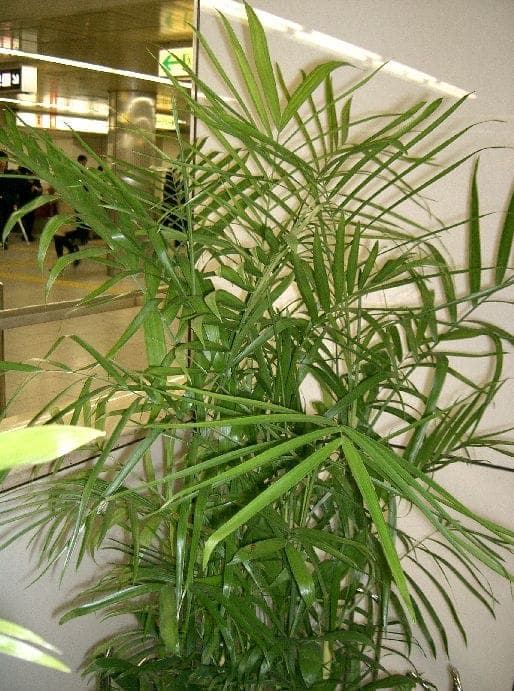
KENPEI / CC BY-SA 3.0, via Wikimedia Commons
Chamaedorea seifrizii: complete guide
Chamaedorea seifrizii
Want to see Chamaedorea seifrizii: complete guide in your garden?
1 minute, no credit card
Overview
Chamaedorea seifrizii, commonly known as bamboo palm or reed palm, is an elegant, compact palm from the Arecaceae family. Native to tropical rainforests from southeastern Mexico to Honduras, this plant has become popular as a houseplant and patio specimen due to its graceful appearance and modest growth rate.
Despite its tropical origins, bamboo palm surprises with remarkable tolerance and longevity as a houseplant. The slender, upright stems indeed resemble bamboo, hence the common name. The plant rarely exceeds two meters in height and grows slowly in cultivation.
Appearance and bloom
Bamboo palm displays graceful, dark green pinnate fronds that arrange in one row along the leaf stem. The individual leaflets measure approximately 20-30 centimeters long, giving the plant an elegant, refined appearance. The trunk is slender and smooth, gray in color.
Under favorable warmth and humidity, small discrete yellow flowers appear in clusters, followed by decorative red berries. As a houseplant, however, this palm rarely flowers. The fruits remain ornamental and persist on the plant for extended periods.
Ideal location
Place bamboo palm where it receives indirect light, such as near a window with sheer curtains. Although the plant tolerates direct sun, foliage sometimes suffers scorch in intense afternoon exposure. East or west-facing window positions are ideal.
The plant integrates beautifully into interiors beside furniture and as an accent in corners. Outdoors, the palm can occupy a protected patio during summer but benefits from relocation indoors before winter.
Soil
Use light, well-draining potting medium rich in organic matter. A mixture of coco peat, potting soil, and perlite works excellently. Ensure pots have drainage holes at least 3-4 centimeters diameter. The plant cannot tolerate heavy, compacted clay-based substrates.
Avoid using dense soils. Top-dress annually with fresh compost.
Free design
Want to see Chamaedorea seifrizii: complete guide in your garden? Make a free design now.
Watering
Keep the growing medium moderately moist but never waterlogged. The plant prefers regular water during the growing season (April through September), but allow the top 2-3 centimeters of soil to dry between waterings. In autumn and winter, reduce watering considerably.
Use lukewarm water and ensure adequate pot drainage. Overwatering leads to root rot, the primary threat to bamboo palm health.
Pruning
Bamboo palm requires minimal pruning. Remove only dead or damaged fronds. Older fronds may yellow - carefully remove these by cutting close to the base. Never cut healthy green fronds, as this damages the plant.
Clearing accumulated dead frond material promotes air circulation.
Maintenance calendar
March: Check plant health, remove dead fronds. April-September: Regular watering, monthly fertilization. October-February: Reduce watering, cease fertilization. June: Move outdoors to protected location during warm weather. October-November: Relocate indoors before winter cold.
Winter hardiness
Bamboo palm tolerates cold poorly. Below 10 degrees Celsius, growth nearly ceases. Exposure to frost proves fatal. This is a plant for warm living spaces and protected patios. In warmer zones (10+), outdoor cultivation becomes viable.
Companion plants
Combine bamboo palm with other greenery such as ficus and pothos. Anthurium and Spathiphyllum create elegant combinations. Zamioculcas or Sansevieria underplantings provide textural contrast.
In tropical gardens, bamboo palm pairs beautifully with other palms and large-leaved specimens.
Conclusion
Bamboo palm offers elegant tropical ambiance without demanding extensive growth management. With regular watering and minimal care, this palm remains attractive and healthy for years.
Online plant retailers routinely stock bamboo palm. For interior design inspiration, consult gardenworld.app.
Want to see Chamaedorea seifrizii: complete guide in your garden? Make a free design now.
Upload a photo, pick a style, and get a photorealistic design with plant list in under a minute.
No credit card required


Similar plants
Needle palm: complete guide
Rhapidophyllum hystrix
Everything about the needle palm: the world's hardiest palm, suitable for gardens in temperate climates down to USDA zone 7b.
Saw palmetto: complete guide
Serenoa repens
A complete guide to saw palmetto (Serenoa repens), the iconic fan palm from Florida and the southeastern United States, prized for its toughness.
Puerto Rican hat palm: complete guide
Sabal causiarum
Grow Puerto Rican hat palm successfully. A majestic fan palm with tropical presence suited to sheltered Mediterranean-style gardens.