
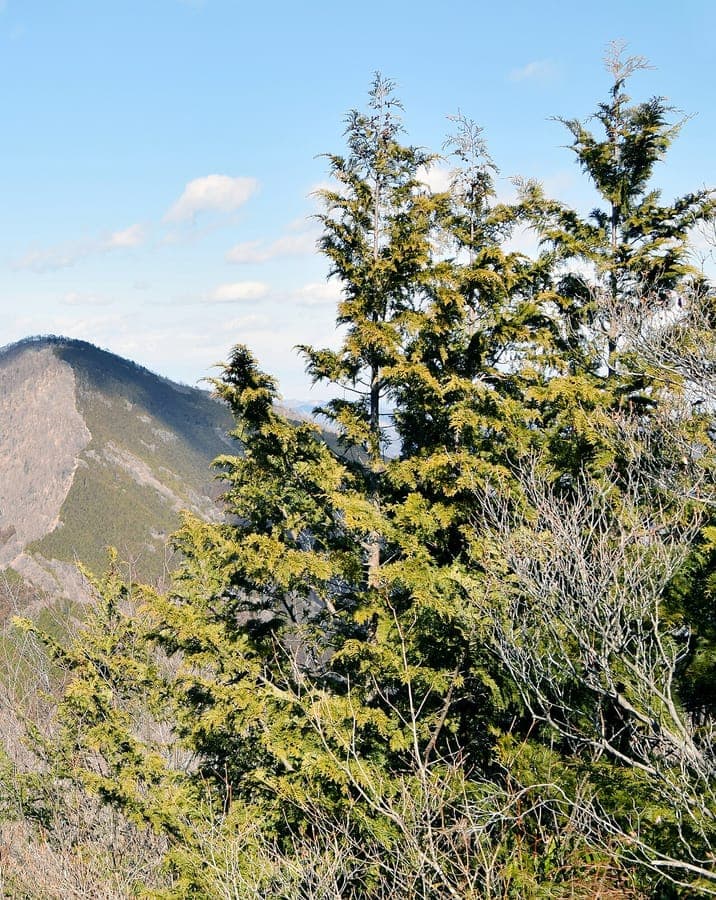
Original: Raita Futo from Tokyo, Japan; this edit: User:MPF / CC BY 2.0, via Wikimedia Commons
Sawara-cypress: complete guide
Chamaecyparis pisifera
Want to see Sawara-cypress: complete guide in your garden?
1 minute, no credit card
Overview
The Sawara-cypress (Chamaecyparis pisifera) is a graceful evergreen conifer native to the forests of Japan. Widely grown in temperate gardens, it's prized for its soft, feathery foliage, diverse cultivars, and adaptability to different garden styles. Whether you're planting a specimen tree or designing a privacy screen, this cypress brings year-round interest and structure. Thanks to its slow to moderate growth rate, it fits well in medium to large gardens, and with minimal pruning, it maintains its elegant shape for decades. On gardenworld.app, you can visualize how this tree integrates into your garden layout, testing different cultivars and placement options before planting.
Mature specimens typically reach 5 to 20 meters in height, depending on the variety, with a spread of 2 to 5 meters. Young trees have a narrowly conical form, gradually developing a more open, spreading habit with age. The foliage is scale-like, densely packed along the stems, giving the branches a lush, textured appearance. Cultivars range from compact globes like 'Squarrosa' to weeping forms such as 'Filifera' and golden selections like 'Boulevard Gold'.
Appearance & bloom cycle
This tree rarely flowers in cultivation, and its ornamental value lies almost entirely in its foliage and form. The tiny scale leaves create a soft, plume-like effect, often in shades of green, blue-green, golden yellow, or even bronze-purple. In autumn, small, round seed cones appear - the source of its species name pisifera, meaning 'pea-bearing'. These start green and mature to brown, but they're inconspicuous and don't impact the tree's visual appeal.
New growth emerges in spring, typically in brighter tones, which deepen as the season progresses. Some cultivars exhibit seasonal color changes, making them valuable for multi-season interest. Unlike many conifers, Sawara-cypress retains its soft texture even in winter, resisting snow damage better than stiff-needled evergreens.
Ideal location
Choose a site in full sun to light shade. Full sun enhances foliage color and density, while too much shade leads to thin, leggy growth. The tree tolerates urban conditions and coastal exposure but performs best in sheltered spots, especially in regions with harsh winter winds. Young trees are vulnerable to desiccation in cold, dry winter air, so a location protected from strong north or east winds is ideal.
For hedges, space plants 80 cm to 1 meter apart, depending on the cultivar's mature width. Allow at least 1.5 meters from structures to prevent root competition and ensure air circulation. Solitary specimens should be placed where their form can be appreciated from multiple angles - near a lawn, along a pathway, or as a focal point in a mixed border.
Soil requirements
Sawara-cypress thrives in moist, well-drained soil rich in organic matter. It prefers loamy or sandy loam textures and struggles in heavy clay or waterlogged conditions, which can lead to root rot. A pH between 5.5 and 7.0 is optimal. If planting in clay, amend the soil with compost or coarse sand to improve drainage. In sandy soils, incorporate organic matter to increase moisture retention.
For container planting, use a quality potting mix designed for conifers, with good drainage. Add a layer of gravel or broken pottery at the base. Repot every 3–5 years or top-dress with fresh mix annually.
Free design
Want to see Sawara-cypress: complete guide in your garden? Make a free design now.
Watering
Water regularly during the first growing season - at least once a week unless rain is sufficient. Deep watering encourages strong root development. After establishment, the tree is moderately drought-tolerant but benefits from supplemental watering during prolonged dry spells, especially in full sun.
Avoid overhead watering to prevent fungal issues like tip blight. Use a soaker hose or water at the base. Rainwater is preferable, as tap water with high lime content can cause yellowing or browning of foliage over time.
Pruning
Prune minimally and only when necessary. The best time is late spring to early summer (June in USDA zones 5–7), before new growth hardens. Avoid pruning in late summer or fall, as this may stimulate tender growth vulnerable to winter kill.
Never cut into old, leafless wood - Sawara-cypress does not reliably regenerate from bare stems. Trim only the green, actively growing tips. For hedges, light shaping once a year maintains density. Use sharp, clean shears to prevent disease transmission.
Maintenance calendar
- January: Check for winter burn. Do not water if soil is frozen.
- February: Inspect for pests like bagworms or scale.
- March: Apply balanced fertilizer if needed. Remove winter protection.
- April: Monitor for new growth and spider mites in dry weather.
- May: Finalize pruning plans. Ideal time for light shaping.
- June: Prune if needed. Watch for fungal spots in wet conditions.
- July: Maintain consistent moisture. Avoid fertilizing.
- August: Continue watering during droughts.
- September: Stop fertilizing. Mulch lightly around the base.
- October: Clean up fallen debris to reduce disease risk.
- November: Protect young trees from rodents with tree guards.
- December: Ensure adequate moisture before ground freezes.
Winter hardiness
Hardy in USDA zones 4 to 8. In zone 4, young trees may need burlap wrapping to prevent winter desiccation. Mature trees tolerate temperatures down to -30°C when well-established. Avoid planting in frost pockets or exposed ridges. Container-grown plants are less hardy - move to a sheltered area or insulate pots.
Companion plants
Pair with other acid-loving evergreens like Rhododendron or dwarf conifers. Use contrasting textures: ornamental grasses like Carex or Hakonechloa, or broadleaf perennials such as Heuchera and Hosta. Ferns work well in shaded areas beneath the canopy. For a modern look, combine with architectural plants like Yucca or ornamental sedge.
Avoid invasive groundcovers or plants with aggressive root systems that compete for moisture.
Closing
The Sawara-cypress is a versatile, long-lived conifer that brings elegance and structure to any garden. With proper siting and care in the early years, it demands little maintenance and delivers decades of beauty. Purchase healthy specimens from reputable garden centres, where you can inspect root balls and foliage quality. When planning your planting, use gardenworld.app to simulate growth patterns and companion arrangements, ensuring your design evolves beautifully over time.
Want to see Sawara-cypress: complete guide in your garden? Make a free design now.
Upload a photo, pick a style, and get a photorealistic design with plant list in under a minute.
No credit card required


Similar plants
Cupressus macnabiana: complete guide
Cupressus macnabiana
The Fragrant Cypress offers elegant growth with fine, aromatic foliage. Perfect for temperate climates and as specimen trees in contemporary gardens.
Cupressus guadalupensis: complete guide
Cupressus guadalupensis
The Guadalupe cypress: an elegant conifer for gardens. Complete cultivation guide for this Mexican cypress. Information about care, location, form and maintenance.
Austrocedrus chilensis: complete guide
Austrocedrus chilensis
Discover Austrocedrus chilensis, the Chilean Cedar ornamental conifer. Elegant specimen with fine foliage and columnar form for permanent structure.