
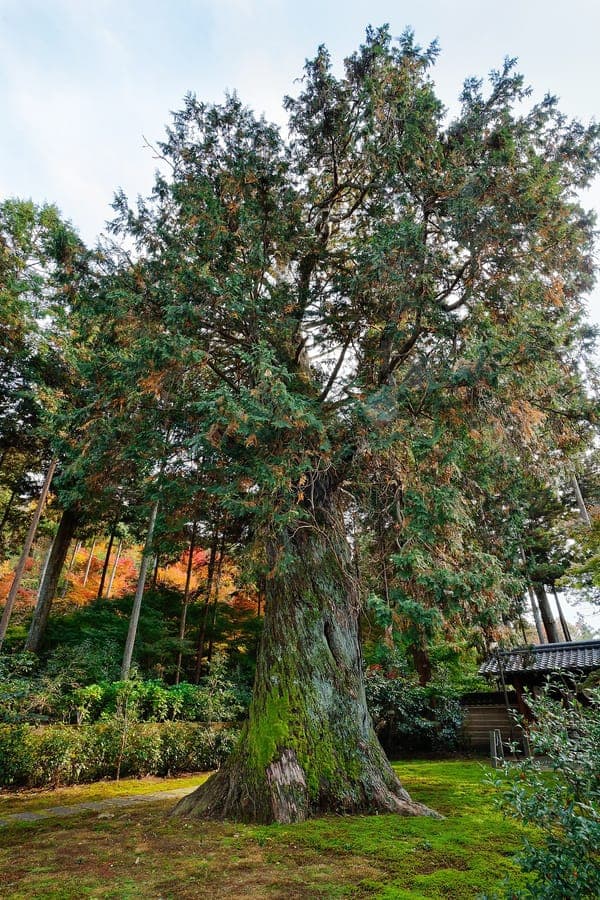
杉山宣嗣 / CC BY-SA 4.0, via Wikimedia Commons
Hinoki false cypress: complete guide
Chamaecyparis obtusa
Want to see Hinoki false cypress: complete guide in your garden?
1 minute, no credit card
Overview
Chamaecyparis obtusa, commonly known as Hinoki false cypress, is a standout evergreen tree that brings year-round structure and elegance to gardens across USDA zones 5–8. Native to Japan and parts of Taiwan, this slow-growing conifer reaches 10–15 meters tall over decades, with a spread of up to 4 meters. It grows at a modest pace of 20–30 cm per year, making it manageable for medium to large gardens. Compact cultivars like 'Nana Gracilis' stay under 1.5 meters and thrive in containers or rock gardens.
On gardenworld.app, you can visualise how a Hinoki false cypress fits into your current layout, especially if you're planning for height and density over time.
Appearance & bloom cycle
This tree forms a narrow conical to pyramidal shape, with tiered, slightly drooping branches that create a graceful, layered effect. The foliage is scale-like, soft to the touch, and ranges from lime-green in spring to rich green in summer, sometimes taking on bronze tones in winter. It doesn't flower, but produces small, round seed cones about 5–8 mm wide that mature in autumn.
The fine texture and subtle colour shifts offer visual interest all year. Cultivars vary widely - 'Crippsii' develops golden highlights, while 'Temple of Heaven' has a tight, upright habit ideal for tight spaces.
Ideal location
Hinoki false cypress thrives in full sun to light shade. For the densest growth and best colour, aim for at least 6 hours of direct sunlight daily. In hotter climates (zones 7–8), afternoon shade helps prevent foliage scorch. Avoid exposed, windy sites - strong winds can damage the delicate branches and dry out the foliage.
Plant it where it won't compete with large tree roots. On gardenworld.app, use the shade mapper tool to find spots that balance sun exposure and protection, especially in urban gardens.
Soil requirements
It prefers moist, well-drained, slightly acidic to neutral soil (pH 5.5–7.0). Heavy clay soils need amending with compost or pine bark to improve drainage. Poor drainage leads to root rot, a common issue with this species. For container planting, use a mix of loam-based compost and perlite or grit (70:30).
Mulch with pine needles or shredded bark (5 cm deep) to retain moisture and suppress weeds. Keep mulch a few cm away from the trunk to avoid collar rot.
Watering
Water deeply and regularly during the first two growing seasons - at least once a week, increasing during dry spells. Mature trees are somewhat drought-tolerant but perform best with consistent moisture. Water at the base, applying 10–15 litres per session for young trees.
Avoid overhead watering to reduce fungal risk. In containers, check soil moisture down to 5 cm; if dry, water thoroughly until it drains from the bottom.
Free design
Want to see Hinoki false cypress: complete guide in your garden? Make a free design now.
Pruning
Pruning isn't required for health, but light shaping is possible. The best time is late winter to early spring (February–March), just before new growth emerges. Never cut into old wood without green foliage - it won't regenerate. Use sharp, clean shears to trim only the soft tips.
For hedges or topiary forms, a second light trim in early June keeps shape without stressing the plant. Avoid pruning after midsummer, as new growth may not harden before winter.
Maintenance calendar
- Jan: Inspect for pests and winter damage
- Feb: Light pruning of broken branches
- Mar: Apply slow-release fertiliser if needed
- Apr: Begin regular watering, check for scale insects
- May: Monitor for browning foliage - could indicate drought or poor drainage
- Jun: Optional light trim for shape
- Jul: Deep water during dry periods
- Aug: Hold off on pruning and feeding
- Sep: Final pest check, ensure good airflow around plant
- Oct: Replenish mulch, remove fallen cones
- Nov: Protect container-grown plants from freezing roots
- Dec: Watch for snow load on branches; gently shake off heavy accumulations
Winter hardiness
Hardy in USDA zones 5–8 (-23°C to -12°C), Hinoki false cypress survives most UK and US winters. However, young trees and potted specimens benefit from protection. Wrap young trunks with burlap in zones 5–6 during harsh winters. Potted plants should be moved to a sheltered spot or insulated with bubble wrap.
Avoid planting in frost pockets or areas with strong winter sun and wind, which can cause desiccation.
Companion plants
Pair with shade- and moisture-tolerant plants like Hosta, ferns, Japanese maple (Acer palmatum), and dwarf rhododendrons. Avoid aggressive spreaders like mint or bamboo. Good ground covers include Pachysandra and Ajuga, which help retain moisture without competing for space.
Closing
With its elegant form and low upkeep, the Hinoki false cypress earns its place in any thoughtful garden design. Whether used as a specimen, in a container, or as part of a Japanese-inspired layout, it adds timeless appeal. Just give it space, good soil, and consistent moisture - then stand back.
You'll find quality specimens at local garden centres in spring, especially at independent nurseries. For design ideas, visit gardenworld.app and build a planting plan that includes companion shrubs and seasonal accents.
Want to see Hinoki false cypress: complete guide in your garden? Make a free design now.
Upload a photo, pick a style, and get a photorealistic design with plant list in under a minute.
No credit card required


Similar plants
Cupressus macnabiana: complete guide
Cupressus macnabiana
The Fragrant Cypress offers elegant growth with fine, aromatic foliage. Perfect for temperate climates and as specimen trees in contemporary gardens.
Cupressus guadalupensis: complete guide
Cupressus guadalupensis
The Guadalupe cypress: an elegant conifer for gardens. Complete cultivation guide for this Mexican cypress. Information about care, location, form and maintenance.
Austrocedrus chilensis: complete guide
Austrocedrus chilensis
Discover Austrocedrus chilensis, the Chilean Cedar ornamental conifer. Elegant specimen with fine foliage and columnar form for permanent structure.