
Wikimedia Commons / CC BY-SA 3.0, via Wikimedia Commons
Hairy chervil: complete guide
Chaerophyllum hirsutum
Want to see Hairy chervil: complete guide in your garden?
1 minute, no credit card
Overview
Hairy chervil (Chaerophyllum hirsutum) is a resilient, clump-forming perennial native to mountainous regions across Central and Southern Europe – from Austria and Germany down to Greece and Bulgaria. Standing 60 to 90 cm tall, it brings airy elegance to mid-border positions without dominating. As a member of the Apiaceae family, it shares structural traits with fennel and cow parsley but with a neater, more upright habit. It's perfect for gardeners who appreciate plants with a natural, wild look but still want reliability. In the UK and North America, it's gaining popularity in cottage-style and prairie-inspired gardens. You can use gardenworld.app to design a planting scheme where Hairy chervil fits seamlessly with complementary textures and heights.
Appearance & bloom cycle
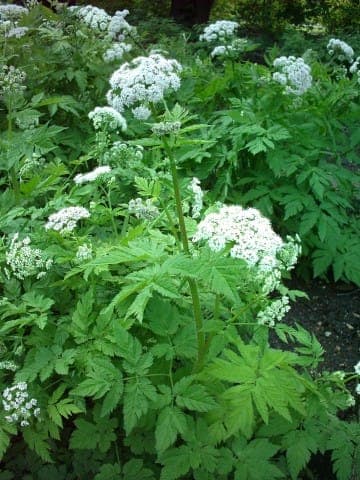
From May to July, Hairy chervil produces large, domed umbels of creamy-white flowers. These can reach up to 15 cm across and float above the foliage on sturdy, slightly hairy stems. The buds often carry a soft pink or purple tinge, adding subtle depth before opening fully. The leaves are finely divided, dark green, and softly bristly – hence the name. The overall effect is light and open, making it ideal for planting in drifts. Bloom time lasts about five to six weeks, depending on climate. After flowering, the seed heads remain upright and add winter interest, especially when coated in frost.
Ideal location
This plant thrives in full sun (light level 8/10), meaning at least 6 hours of direct sunlight daily. It can tolerate light shade, but flowering reduces and stems may stretch. South- or southwest-facing borders are ideal. In hotter zones (USDA 7-8), afternoon shade helps prevent scorching and prolongs bloom. Avoid overcrowding; give each plant 40-50 cm of space to develop fully. Use gardenworld.app's sun-mapping tool to spot the best sunny zones in your garden before planting.
Soil requirements
Hairy chervil prefers well-drained, moderately fertile soil with a neutral to slightly alkaline pH (7.0–7.5). It handles calcareous soils well and even performs better in them. Heavy clay soils should be amended with grit or composted bark to improve drainage. Avoid overly rich, nitrogen-heavy composts – they encourage weak growth and flopping stems. A light mulch of compost in early spring supports steady growth without overstimulating.
Watering
Once established, Hairy chervil is fairly drought-tolerant. During the first growing season, especially in spring and early summer, water weekly if rainfall is below 2.5 cm. Water at the base to keep foliage dry and prevent fungal issues. Deep, infrequent watering encourages strong root development. After the first year, supplemental watering is rarely needed except in prolonged dry spells.
Free design
Want to see Hairy chervil: complete guide in your garden? Make a free design now.
Pruning
Pruning isn't essential, but cutting back spent flower stems can encourage a second, lighter flush of blooms in late summer, particularly in younger plants. Deadheading also prevents excessive self-seeding, which can be vigorous in ideal conditions. For winter structure, leave the dried stems standing until early spring, then cut back to ground level before new growth emerges.
Maintenance calendar
- January: Dormant. No action required.
- February: Check for damaged stems. Lightly clear debris if needed.
- March: Remove old foliage. Apply a light top dressing of compost.
- April: Plant new specimens. Water if dry. Watch for slugs on emerging shoots.
- May: Bloom begins. Monitor for aphids on new growth.
- June: Peak flowering. Ensure adequate moisture in dry spells.
- July: Flowers fade. Cut back for possible rebloom or leave for seed.
- August: Minimal care. Avoid fertilizing.
- September: Allow seed heads to mature for wildlife or collect for sowing.
- October: Leave stems for winter texture.
- November: Prepare for dormancy. No feeding.
- December: Dormant. Protect young clumps with a thin mulch in harsh winters.
Winter hardiness
Hairy chervil is hardy in USDA zones 5 to 8. In zones 5 and 6, a light mulch of straw or leaf litter helps protect the crown during freeze-thaw cycles. Established plants reliably return each spring. The foliage dies back in autumn, but the root system remains viable. No winter protection is needed in milder regions (zone 7-8).
Companion plants
Pair Hairy chervil with upright perennials like Salvia 'Caradonna' or Agastache foeniculum for vertical contrast. It blends beautifully with grasses such as Calamagrostis x acutiflora 'Karl Foerster' or Molinia caerulea. Try it with Echinacea, Rudbeckia, or tall Alliums for a dynamic late-spring to midsummer display. Its airy structure softens bolder forms and adds movement. Avoid aggressive spreaders like mint or ground-covering ivy that might smother it.
Closing
Hairy chervil is a quiet achiever in the perennial border – not flashy, but full of grace and resilience. It brings height, texture, and pollinator appeal with minimal fuss. Once established, it asks for little and delivers season-long interest. You'll find it at garden centres across the UK and US, including major retailers and independent nurseries. Look for potted plants in spring or sow seeds directly in May. For visual planning, gardenworld.app lets you preview how Hairy chervil layers with other plants across seasons, helping you build a balanced, flowing design.
Want to see Hairy chervil: complete guide in your garden? Make a free design now.
Upload a photo, pick a style, and get a photorealistic design with plant list in under a minute.
No credit card required


Similar plants
Whorled carrot: complete guide
Daucus involucratus
Daucus involucratus is a Mediterranean umbellifer with white flower heads framed by lacy bracts. Growing this gravel garden gem.
Daucus muricatus: complete guide
Daucus muricatus
Daucus muricatus, the spiny wild carrot, grows wild on Mediterranean coasts. Discover sowing, June-July bloom, and wildflower meadow use.
Daucus pumilus: complete guide
Daucus pumilus
Daucus pumilus is a dwarf wild carrot relative with white lacy umbels, thriving on dunes and coastal rock in poor, fast-draining soil.