
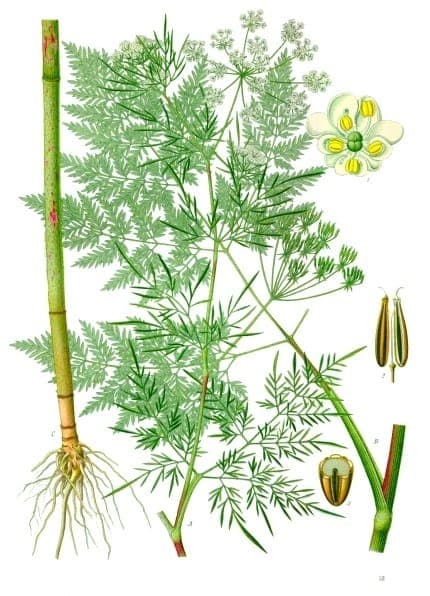
Franz Eugen Köhler, Köhler's Medizinal-Pflanzen / Public domain, via Wikimedia Commons
Turnip-root chervil: complete guide
Chaerophyllum bulbosum
Want to see Turnip-root chervil: complete guide in your garden?
1 minute, no credit card
Overview
Turnip-root chervil (Chaerophyllum bulbosum) is a little-known but rewarding biennial plant from the Apiaceae family. While it's not common in modern gardens, its rich-flavoured taproot and ornamental blooms are winning new fans. The root tastes subtly sweet and earthy, with hints of parsley and celery, making it a unique addition to soups and roasts. As a gardener, you'll appreciate its natural charm and low input needs. It grows in two stages: first year foliage, second year flowering and seeding. If you're designing a productive yet beautiful garden, gardenworld.app offers smart layouts that integrate turnip-root chervil seamlessly into mixed beds.
Appearance & bloom cycle
In its first year, turnip-root chervil forms a low rosette of finely divided, bright green leaves that resemble wild chervil or parsley. The foliage stays lush and aromatic all season. In the second year, it sends up a sturdy flowering stem reaching 80–120 cm tall. From June to July, flat clusters of tiny white flowers bloom in umbels up to 15 cm across. These attract a wide range of beneficial insects, including hoverflies and parasitic wasps, making it excellent for pollinator-friendly gardens. After flowering, the plant sets seed and typically dies, unless self-sown seedlings take over.
Ideal location
This plant thrives in full sun to light shade (light level 7/10). Choose a sunny edge of your vegetable plot or a naturalistic garden bed with minimal competition. Avoid heavily shaded or windy spots, as the flowering stems can snap in strong gusts. Give each plant at least 25 cm of space on all sides. Mark the spot in autumn so you don't accidentally dig up dormant roots in winter. For gardeners using gardenworld.app, the platform lets you map out planting zones that respect the plant's two-year cycle and mature height.
Soil requirements
Turnip-root chervil prefers deep, loose, well-drained soil with a pH between 7.5 and 8. It does best in sandy loam or light clay enriched with compost. Avoid compacted or acidic soils – roots won't swell properly below pH 6.8. Prepare the bed by forking deeply to at least 30 cm to allow unimpeded root growth. Add grit or sand if your soil is heavy. A slightly alkaline condition is ideal, so gardeners in limestone-rich areas may find it especially easy to grow.
Free design
Want to see Turnip-root chervil: complete guide in your garden? Make a free design now.
Watering
Water regularly during the first growing season, especially in dry spells. Once established, it's moderately drought-tolerant. Keep the soil consistently moist but not soggy. In hot summers, water deeply once or twice a week. Avoid overhead watering to reduce fungal risk. In winter, no watering is needed unless the ground stays dry for weeks. Mulching helps retain moisture and protect the developing root over winter.
Pruning
No pruning is required for healthy growth. You can remove older outer leaves for kitchen use, but avoid cutting into the crown. After flowering, if you don't want self-seeding, cut down the flower stems before seeds ripen. Otherwise, let them stand to support insects and allow natural reseeding. Deadhead only if you're managing plant density in a small garden.
Maintenance calendar
- Jan: Dormant; no action
- Feb: Prepare soil for sowing
- Mar: Sow seeds directly outdoors or in pots
- Apr: Thin seedlings to 20–25 cm apart
- May: Light compost side-dressing; watch for aphids
- Jun: Stems rise; flowering begins
- Jul: Peak bloom; monitor for seed formation
- Aug: Collect ripe seeds or cut stems to prevent spreading
- Sep: Early root harvest possible
- Oct: Best time to harvest roots
- Nov: Clear spent plants
- Dec: Mulch roots for winter protection
Winter hardiness
Hardy in USDA zones 5–8. The root tolerates frost down to -20°C if the soil is well-drained. In colder zones, a 5–10 cm layer of straw or leaf mulch offers extra protection. In wet winters, consider raised beds to prevent rot. The plant may reappear from self-sown seed, so control is key in small gardens.
Companion plants
Good companions include onions, lettuce, spinach, and leeks. Avoid planting near other Apiaceae like fennel or dill, which may cross-pollinate or compete. Garlic and chives help deter pests. For ornamental pairings, try lavender, yarrow, or marigolds. In a mixed border, position turnip-root chervil toward the back due to its height. Avoid shading shorter crops.
Closing
Turnip-root chervil deserves a comeback. It's a dual-purpose plant: delicious in the kitchen and beneficial in the ecosystem. With minimal care and a sunny spot, you can grow this historical vegetable successfully. Seeds are now available at garden centres across the UK and online specialty suppliers. Retailers like Truffaut and Jardiland in France, and local nurseries, often stock it seasonally. Whether you're restoring heritage crops or designing a wildlife-friendly garden, this plant delivers. Try gardenworld.app to visualise a layout where turnip-root chervil complements both function and form.
Want to see Turnip-root chervil: complete guide in your garden? Make a free design now.
Upload a photo, pick a style, and get a photorealistic design with plant list in under a minute.
No credit card required


Similar plants
Whorled carrot: complete guide
Daucus involucratus
Daucus involucratus is a Mediterranean umbellifer with white flower heads framed by lacy bracts. Growing this gravel garden gem.
Daucus muricatus: complete guide
Daucus muricatus
Daucus muricatus, the spiny wild carrot, grows wild on Mediterranean coasts. Discover sowing, June-July bloom, and wildflower meadow use.
Daucus pumilus: complete guide
Daucus pumilus
Daucus pumilus is a dwarf wild carrot relative with white lacy umbels, thriving on dunes and coastal rock in poor, fast-draining soil.