
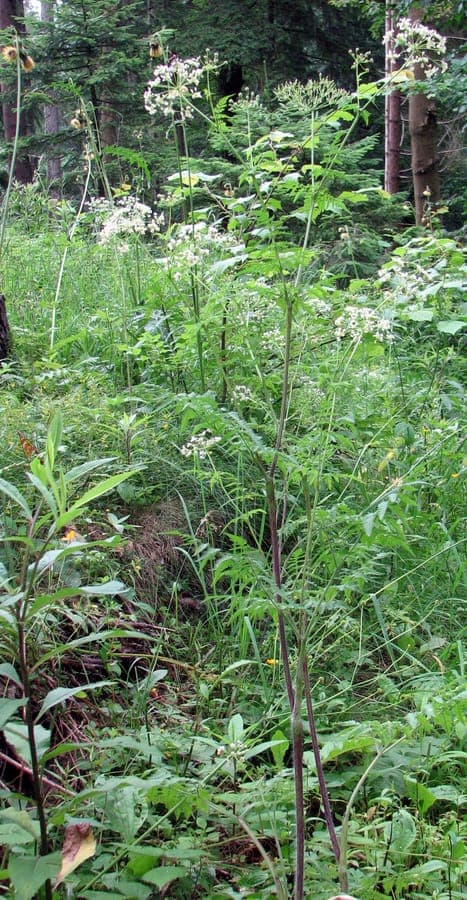
$Mathe94$ / CC BY-SA 3.0, via Wikimedia Commons
Golden-chervil: complete guide
Chaerophyllum aureum
Want to see Golden-chervil: complete guide in your garden?
1 minute, no credit card
Overview
Chaerophyllum aureum, commonly known as Golden-chervil, is a graceful, clump-forming perennial from the Apiaceae family. Native to southern and central Europe - including Austria, Greece, and Italy - it's adapted to dry, rocky slopes and limestone soils. Despite its origins, it thrives in temperate gardens across USDA zones 6 to 8, making it a solid choice for UK and North European climates. It's not flashy, but its airy presence and fine texture bring elegance to a border without demanding attention.
Reaching 60–80 cm in height, Golden-chervil has a relaxed, open habit. It's not invasive, but will self-seed modestly in the right conditions. The plant is valued for its long bloom time and resilience once established. If you're visualizing a drought-tolerant border, gardenworld.app lets you design a layout where Golden-chervil plays a structural role among silvery foliage and late-summer bloomers.
Appearance & bloom cycle
Golden-chervil blooms from June through August, producing large, flat umbels of tiny white flowers. Each flower cluster measures 5–8 cm across and glows faintly golden in full sun, hence the name. The foliage is finely dissected, fern-like, and grey-green, forming a soft mound that supports the airy flower stems.
The bloom is not just decorative - it's a magnet for hoverflies, bees, and small pollinators. After flowering, the seed heads dry slowly and remain attractive into autumn, adding winter interest. The plant dies back in late fall but returns reliably each spring. For a seasonal timeline that includes texture shifts and bloom overlap, check gardenworld.app to map out your planting sequence.
Ideal location
This plant needs at least 6 hours of direct sunlight daily (light level 6/10). It performs best in full sun to light shade. In too much shade, stems become leggy and flop, and flowering reduces significantly. A south- or west-facing border is ideal.
Golden-chervil works well in cottage gardens, gravel beds, or naturalistic plantings. Avoid damp, shaded corners. Pair it with upright plants for support, or let it float among drought-tolerant companions. It's not suited for heavy woodland gardens or wet meadow styles.
Soil requirements
The soil must be well-drained. Golden-chervil prefers alkaline conditions with a pH between 7.5 and 8.0. It thrives in chalky, sandy, or gravelly soils. Heavy clay should be amended with grit or sharp sand to improve drainage.
Avoid rich, compost-heavy soils - excess nutrients lead to weak, floppy growth. A lean soil encourages compact form and better flowering. If your soil is acidic, consider adding horticultural lime to raise the pH gradually. Raised beds or rock gardens are ideal settings.
Free design
Want to see Golden-chervil: complete guide in your garden? Make a free design now.
Watering
Water only during prolonged dry spells, especially in the first year. Once established, Golden-chervil is highly drought-tolerant thanks to its deep taproot. Overwatering is a bigger threat than under-watering - it can cause root rot, particularly in winter.
For young plants: water weekly during dry springs. Use rainwater if possible, especially in hard-water areas. Water at the base to prevent fungal issues on foliage. No irrigation needed in winter.
Pruning
Minimal pruning is required. After blooming, cut back flower stems if you want to tidy the plant or prevent excessive self-seeding. Alternatively, leave some seed heads for winter structure and bird food.
Remove any damaged or diseased foliage in autumn, but don't cut back entirely - the standing stems provide shelter for overwintering insects. The plant regrows from the base each spring.
Maintenance calendar
- March: Clear old debris, check for emerging shoots.
- April: Lightly loosen soil around the base. Watch for slugs.
- May: Water young plants if dry. No feeding needed.
- June–August: Peak bloom. Monitor for aphids on new growth.
- September: Cut back or leave seed heads.
- October–February: Leave standing. Protect only in extreme wet winters with gravel mulch.
Winter hardiness
Hardy in USDA zones 6–8. In zone 6, it may need light winter protection if the ground stays wet. The plant is herbaceous and dies to the ground in winter, re-emerging in April. Avoid mulching with organic matter that holds moisture - use gravel or crushed stone instead.
It's generally pest- and disease-resistant, though crown rot can occur in poorly drained soils. Ensure good air circulation and avoid overcrowding.
Companion plants
Choose companions with similar needs: sun, dry soil, low fertility. Great options include:
- Eryngium bourgatii: architectural form, blue spines
- Nepeta faassenii: grey foliage, purple spikes
- Verbascum olympicum: tall yellow towers
- Stachys byzantina: soft texture, silver leaves
Avoid moisture-lovers like Astilbe or Ligularia. Also steer clear of aggressive spreaders that might smother it.
Closing
Golden-chervil is a quiet achiever - not loud, but reliable and full of subtle charm. It fits perfectly in a low-maintenance, sun-baked border. Find it at garden centres in late spring, or search online retailers. When planning your space, use gardenworld.app to preview how Golden-chervil adds movement and light to your garden scheme. Its airy form bridges gaps between bold perennials, making it a smart, understated choice.
Want to see Golden-chervil: complete guide in your garden? Make a free design now.
Upload a photo, pick a style, and get a photorealistic design with plant list in under a minute.
No credit card required


Similar plants
Whorled carrot: complete guide
Daucus involucratus
Daucus involucratus is a Mediterranean umbellifer with white flower heads framed by lacy bracts. Growing this gravel garden gem.
Daucus muricatus: complete guide
Daucus muricatus
Daucus muricatus, the spiny wild carrot, grows wild on Mediterranean coasts. Discover sowing, June-July bloom, and wildflower meadow use.
Daucus pumilus: complete guide
Daucus pumilus
Daucus pumilus is a dwarf wild carrot relative with white lacy umbels, thriving on dunes and coastal rock in poor, fast-draining soil.