
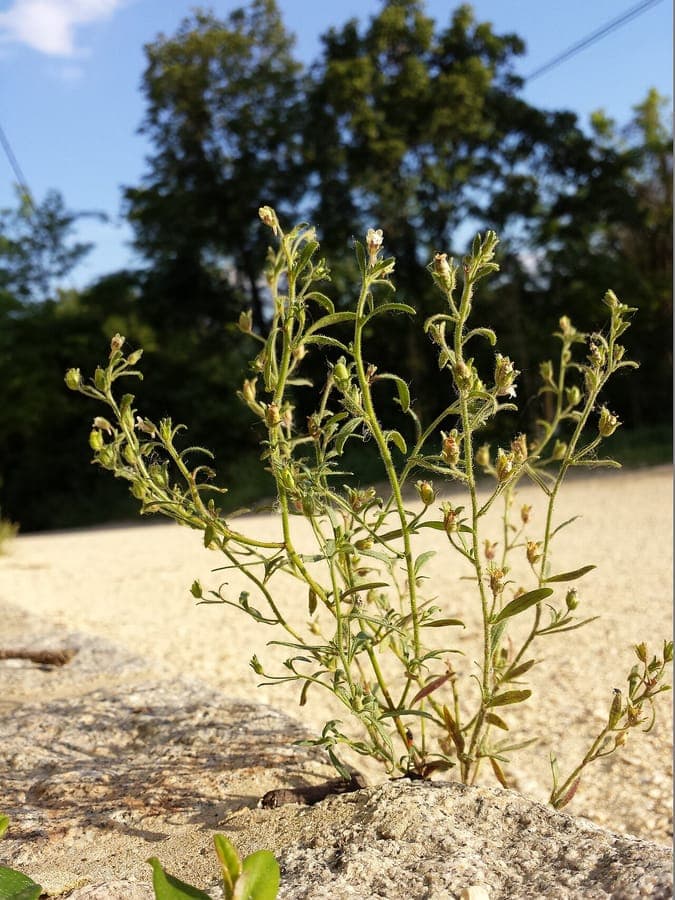
Stefan.lefnaer / CC BY-SA 4.0, via Wikimedia Commons
Dwarf-snapdragon: complete guide
Chaenorhinum minus
Want to see Dwarf-snapdragon: complete guide in your garden?
1 minute, no credit card
Overview
Chaenorhinum minus, commonly known as Dwarf-snapdragon, is a modest yet striking little herbaceous plant that thrives where many others struggle. Native to parts of Southern and Central Europe - including Albania, Austria, and Bulgaria - it's perfectly adapted to dry, sunny, and often poor soils. Standing just 10–20 cm tall with a spread of about 15 cm, it's ideal for the front of borders, rock gardens, or even narrow cracks between paving stones. Despite its size, it delivers a long bloom season and requires minimal care, making it a smart choice for low-maintenance gardens.
On gardenworld.app, you can design a planting scheme that highlights Dwarf-snapdragon's strengths, especially in gravel gardens or xeriscaped areas. It's not a showstopper from a distance, but up close, its intricate flowers and tidy habit make it a delightful surprise. It behaves as an annual or short-lived perennial, self-seeding reliably in the right conditions. If you're after a plant that fills gaps without taking over, this one fits the bill.
Appearance & bloom cycle
Dwarf-snapdragon has narrow, opposite leaves along slender green stems. The foliage is unremarkable on its own, but it sets the stage for the real attraction: the flowers. Each bloom is only about 1–1.5 cm long, shaped like a tiny snapdragon with a distinctive two-lipped mouth. Most wild types bloom in deep purple or magenta, often with a yellow throat, though cultivated varieties can lean toward pink or even pale lilac.
Flowering starts in June and can continue uninterrupted until the first hard frosts in October or November. In milder climates, you might even spot a few stragglers in early December. Deadheading isn't essential, but it does encourage more blooms and keeps the plant looking fresh. Because it self-seeds so freely, you'll often find new plants popping up in the same spot next year - just make sure the area stays sunny and well-drained.
Ideal location
Full sun is non-negotiable. Dwarf-snapdragon needs at least 6 hours of direct sunlight daily to bloom well. It loves heat and does best in spots that bake during the day - south-facing rock walls, dry retaining walls, or gravel pathways. Partial shade leads to leggy growth and fewer flowers.
This plant excels in tough conditions. It's perfect for urban gardens with compacted soil, gravel beds, or neglected corners that get baked by summer sun. If you're unsure whether your garden gets enough sun, use gardenworld.app to map light exposure across your space. That way, you'll know exactly where to place your Dwarf-snapdragons for peak performance.
Soil requirements
Drainage is key. Chaenorhinum minus prefers lean, gritty, and alkaline soils. Sandy or loamy soils with added gravel work best. Avoid heavy clay unless you amend it with sharp sand or pumice to improve flow. A pH between 6.5 and 8.0 is ideal.
Don't enrich the soil with compost or manure - this plant thrives on neglect. Too much fertility leads to lush foliage but fewer blooms. If your soil is poor, that's actually a good thing. This is one plant that doesn't need coddling.
Free design
Want to see Dwarf-snapdragon: complete guide in your garden? Make a free design now.
Watering
Once established, Dwarf-snapdragon is impressively drought-tolerant. It can survive weeks without rain, especially when grown in gravel or between stones where moisture evaporates quickly. Water only during prolonged dry spells, and then only at the base to avoid wetting the foliage, which can encourage fungal issues.
In summer, a deep watering every two weeks is usually enough. Use rainwater if possible, as tap water with high lime content can affect sensitive seedlings in soft-water areas.
Pruning
Pruning isn't required, but light trimming after the first flush of blooms can extend flowering into autumn. Simply snip off the top 2–3 cm of spent stems in late summer to encourage bushier growth and new buds. If you want natural reseeding, leave a few plants untrimmed in fall so they can drop seed.
Avoid heavy cutting back - the plant doesn't respond well to hard pruning and may not recover.
Maintenance calendar
- January: No action needed. Check for last year's seed heads.
- February: Start seeds indoors or in a greenhouse at 15–18°C.
- March: Sow directly outside if soil is workable. Protect from late frosts.
- April: Transplant seedlings. Weed around young plants.
- May: Watch for first flower buds. Water sparingly if dry.
- June to September: Deadhead regularly. Monitor for slugs on young plants.
- October: Allow some plants to set seed. Remove tired specimens.
- November to December: No care needed. Self-sown seedlings may appear next spring.
Winter hardiness
Dwarf-snapdragon is typically grown as an annual in temperate climates, though it can behave as a short-lived perennial in milder zones. It's hardy to USDA zones 6–9. In zone 6, young rosettes may survive light frosts down to -10°C if protected by dry mulch or leaf litter.
Seeds often overwinter in the soil and germinate when temperatures rise in spring. For best results, let some plants go to seed in autumn to ensure continuity.
Companion plants
Pair Dwarf-snapdragon with other drought-tolerant, low-growing species. Good companions include Thymus serpyllum, Sedum spurium, Arabis, and small ornamental grasses. It also works well with spring bulbs like Crocus or Tulipa humilis, which finish blooming before the snapdragon fills in.
Avoid aggressive spreaders like mint or Lamium, which can smother its delicate stems. Use it as a filler in crevices or as a soft edging plant.
Closing
Dwarf-snapdragon is a quiet achiever - not flashy, but dependable. It brings colour to difficult spots without demanding much in return. Sow seeds directly in spring or buy young plants from garden centres. Retailers like B&Q, Wyevale, or local independents often carry it in late spring.
Its ability to self-seed means you can enjoy it year after year with little effort. And if you're planning your borders, don't forget to sketch out a layout on gardenworld.app. It's the best way to see how this little plant fits into your overall garden design, especially when matching bloom times and textures.
Want to see Dwarf-snapdragon: complete guide in your garden? Make a free design now.
Upload a photo, pick a style, and get a photorealistic design with plant list in under a minute.
No credit card required


Similar plants
White Beardtongue: complete guide
Penstemon albidus
Discover white beardtongue (Penstemon albidus) - elegant perennial with white to cream flowers. Drought-resistant, perfect for prairie and dry gardens.
Longsepal Beardtongue: complete guide
Penstemon calycosus
Discover longsepal beardtongue (Penstemon calycosus) - beautiful perennial with lilac-blue flowers. For partial shade and moist soil. Ideal for naturalized.
Penstemon cusickii: complete guide
Penstemon cusickii
Discover Cusick's beardtongue, a compact alpine flowering plant with violet-pink blooms. Perfect choice for rock gardens and water-wise landscaping.