
Stan Shebs / CC BY-SA 3.0, via Wikimedia Commons
Orange Cestrum: complete guide
Cestrum aurantiacum
Want to see Orange Cestrum: complete guide in your garden?
1 minute, no credit card
Introduction
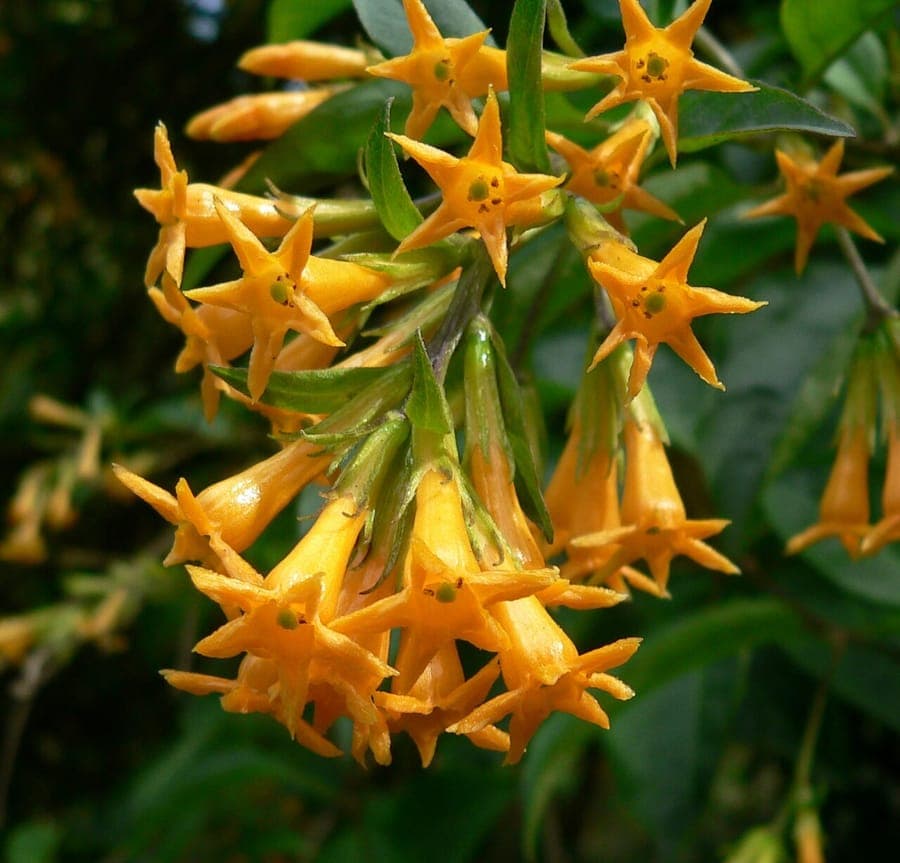
The Orange Cestrum (Cestrum aurantiacum), also called Orange Jessamine or Yellow Cestrum, is a refreshing semi-evergreen to evergreen shrub or small climber native to Mexico and Central America. This plant is famous for its continuous display of luminous, golden-orange flowers that appear throughout the growing season. In warmer climates, it can bloom almost year-round. The plant is fairly easy to grow and responds well to training as a wall or trellis feature.
Appearance and Characteristics
The Orange Cestrum grows as a semi-upright shrub reaching approximately 2-3 meters in ideal conditions, though it can also be trained as a climber. The leaves are slender, lance-shaped, and dull green. The flowers are the real attraction: compact clusters of tubular, golden-orange flowers that glow like lamps in sunlight. The flowers are also sweetly fragrant, especially in late afternoon. Small red berries follow the flowers.
Ideal Location
The Orange Cestrum thrives in full sun to light shade, with at least 5-6 hours of direct sunlight daily. In very hot climates, light afternoon shade would probably be welcome. The plant feels at home in sheltered, wind-free locations. Northern plantings would prefer southwest-facing spots to maximize warmth.
Soil
This plant thrives in well-draining soils with moderate fertility. It accepts both acidic and neutral soils. Heavy clay should be improved with compost and sand. The plant is not fussy about soils as long as drainage is good and nutrition is reasonable.
Free design
Want to see Orange Cestrum: complete guide in your garden? Make a free design now.
Watering
Water regularly during the growing period (spring and summer), especially if it's dry. Ensure the soil dries slightly between waterings. Much water is not needed once the plant is established. In winter, watering should be significantly reduced in cold climates.
Feeding
Feed monthly during the growing period with a balanced fertilizer to encourage more blooms. Cestrums are blooming machines and appreciate regular feeding.
Pruning
Pruning helps maintain a full shape and encourages branching. Pinch-back young plants to encourage bushier growth. After winter in colder areas, some trimming may be needed to remove dead wood.
Maintenance Calendar
Spring (April-May): Begin training/staking. Summer (June-August): Water regularly. Feed 1-2x monthly. Autumn (September-October): Taper feeding. Winter (November-March): Minimal care; possible pruning.
Winter Hardiness
The Orange Cestrum is only marginally hardy in USDA zone 9a+. In cold areas with freezing temperatures, it should be considered a pot plant overwintered indoors. Protective mulch helps young planted specimens in marginal zones.
Propagation
Propagate via semi-hardwood cuttings in spring or summer, or from seeds. Cuttings root easily in moist seed compost.
Companion Plants
Grows well with other heat-loving plants: clematis, bougainvillea, and other sun-lovers. Works well with soft-growing groundcovers beneath it.
Conclusion
The Orange Cestrum is an unparalleled choice for warmer gardens craving yellow-orange flowers and continuous interest. With its fragrance and long blooming period, it's a valuable addition. Available at garden centres throughout warm zones.
Want to see Orange Cestrum: complete guide in your garden? Make a free design now.
Upload a photo, pick a style, and get a photorealistic design with plant list in under a minute.
No credit card required


Similar plants
Solanum dolichosepalum: complete guide
Solanum dolichosepalum
Discover Solanum dolichosepalum, an Andean nightshade with striking long sepals. Growing tips, hardiness, and companion planting for your patio.
Solanum ripense: complete guide
Solanum ripense
Discover Solanum ripense, a moisture-loving Andean nightshade for pond edges and conservatories. Growing tips, hardiness, and companions.
Solanum tomentosum: complete guide
Solanum tomentosum
Discover Solanum tomentosum, a thorny South African nightshade with felted leaves. Growing tips, hardiness, and companion planting ideas.