
Zidat / CC BY-SA 4.0, via Wikimedia Commons
Greater honeywort: complete guide
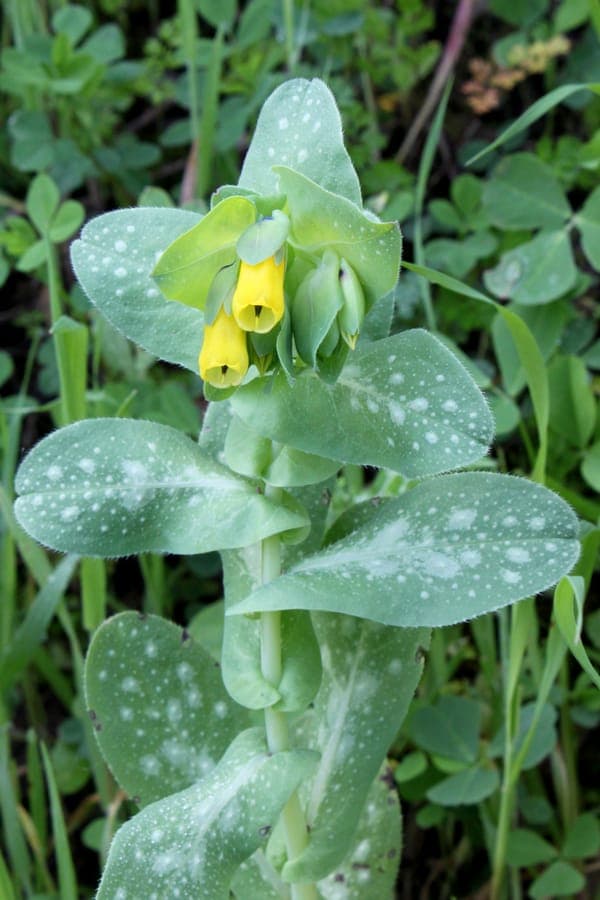
Cerinthe major
Want to see Greater honeywort: complete guide in your garden?
1 minute, no credit card
Overview
Cerinthe major, commonly known as Greater honeywort, is an annual herbaceous plant belonging to the Boraginaceae family. Native to Mediterranean regions including Greece, Italy, Morocco, and southern France, it thrives in rocky, well-drained soils under full sun. In gardens across the UK and northern Europe, it's gaining popularity for its unique, waxy flowers and low maintenance needs. Reaching heights of 30–50 cm, it's ideal for borders, containers, and cottage-style plantings.
One of the lesser-known perks? The flowers are edible. With a mild, slightly sweet taste, they make a beautiful garnish for salads or desserts. If you're planning a bee-friendly layout, gardenworld.app lets you design a garden that highlights pollinator-attracting plants like Greater honeywort. You can also use the platform to map out bloom times and companion pairings.
Appearance & bloom cycle
Greater honeywort forms upright clumps with rough, grey-green leaves that feel slightly hairy - a hallmark of the borage family. The real standout is the flower: held in terminal clusters, the bracts are glossy, cup-shaped, and display a stunning contrast of deep indigo-blue with golden-yellow tips. These bracts aren't the actual flowers but modified leaves that persist long after the small, true flowers have faded.
Blooming typically runs from May to July, depending on sowing time. In warmer zones (USDA 8+), self-seeded plants may appear earlier. The visual impact lasts weeks, making it a long-season performer in summer gardens.
Ideal location
This plant loves sun. Aim for a light level of 7 out of 10 - at least 6 hours of direct sunlight daily. A south- or west-facing spot works best. It performs well in rock gardens, dry borders, or in terracotta pots on patios. Avoid shady corners; insufficient light leads to leggy growth and fewer blooms.
Sow seeds indoors from late February to early March at 15–18°C, or direct-sow outdoors from mid-April once soil temperatures exceed 10°C. In containers, use pots at least 20 cm deep to allow for healthy root development.
Soil requirements
Well-drained soil is non-negotiable. Greater honeywort tolerates poor soils but hates waterlogged conditions. Ideal pH ranges from 7.0 to 7.5 - slightly alkaline, mimicking its native limestone habitats. Sandy or loamy soils work best.
For containers, mix 2 parts multipurpose compost, 1 part horticultural grit, and 1 part perlite. This ensures quick drainage while retaining some nutrients. If your garden has heavy clay, consider raised beds or grow bags. gardenworld.app offers soil-matching tools to help you adjust your mix based on local conditions.
Free design
Want to see Greater honeywort: complete guide in your garden? Make a free design now.
Watering
Once established, Greater honeywort is drought-tolerant. Water young plants weekly until they develop three to four sets of true leaves. After that, only water during prolonged dry spells - roughly every 10–14 days in summer. Overwatering is a bigger threat than underwatering; soggy soil invites root rot.
Use rainwater when possible, especially in containers. Tap water can raise pH over time, but since this plant tolerates mild alkalinity, it's less of a concern. Water at the base to avoid wetting foliage, which can lead to fungal issues.
Pruning
Pruning isn't essential, but deadheading spent blooms encourages new flower production and extends the blooming period by up to two weeks. Cut the stem just above a leaf node with clean secateurs. If you want the plant to self-seed, leave a few flower heads in late summer.
Seeds ripen in August - small, round, and dark brown. Collect them for next year or let them drop naturally in sheltered spots. Self-seeding is reliable in sunny, well-drained areas.
Maintenance calendar
- February–March: Start seeds indoors at 15–18°C in seed trays.
- April: Harden off and transplant outdoors after frost risk passes. Space plants 25 cm apart.
- May: Blooms begin. Apply a weak liquid feed every two weeks for potted plants.
- June: Peak bloom. Monitor for aphids or slugs.
- July: Flowering tapers. Deadhead to promote late blooms.
- August: Allow some plants to set seed. Collect or scatter for next season.
- September–January: No action needed. Annual lifecycle complete.
Winter hardiness
Cerinthe major is a true annual and won't survive winter frosts. In USDA zones 7 and below, it must be replanted each year. However, in milder zones (8–10), seeds may overwinter and germinate naturally in spring, especially in protected, sunny microclimates.
For reliable results in colder areas, start seeds under cover in late winter. This ensures strong, early plants ready for May display.
Companion plants
Pair Greater honeywort with other drought-tolerant, sun-loving plants: Lavandula (lavender), Echinacea (coneflower), Salvia officinalis (sage), and Nepeta (catmint). The blue-yellow bracts contrast beautifully with silvery foliage and purple blooms.
Avoid moisture-hungry companions like hostas or astilbes. In containers, combine with Sedum, Thymus, or dwarf ornamental grasses for texture. Seeds and young plants are widely available at garden centres across the UK in spring.
Closing
Greater honeywort is a quiet achiever - undemanding, long-blooming, and wildlife-friendly. Its waxy bracts stay fresh-looking even in heat, and the edible flowers add a gourmet touch to summer dishes. It's a standout in Mediterranean-themed schemes and gravel gardens.
If you're designing a low-maintenance, high-impact summer border, this plant deserves a spot. And with gardenworld.app, you can visualise exactly where it fits best - whether tucked between lavender spikes or front-and-centre in a terracotta pot.
Want to see Greater honeywort: complete guide in your garden? Make a free design now.
Upload a photo, pick a style, and get a photorealistic design with plant list in under a minute.
No credit card required


Similar plants
Western waterleaf: complete guide
Hydrophyllum occidentale
Full growing guide for western waterleaf (Hydrophyllum occidentale): shade tolerance, soil needs, watering, winter hardiness and naturalistic garden use.
Limestone phacelia (Phacelia affinis): complete guide
Phacelia affinis
Full guide to Phacelia affinis, the limestone phacelia: sowing tips, purple-blue bee flowers, drought tolerance and uses in dry or wildlife gardens.
Pyrenean viper's bugloss: complete guide
Echium asperrimum
Echium asperrimum is a striking biennial from the western Mediterranean with rough bristly stems and vivid blue flowers. A magnet for bees and a bold border plant.