
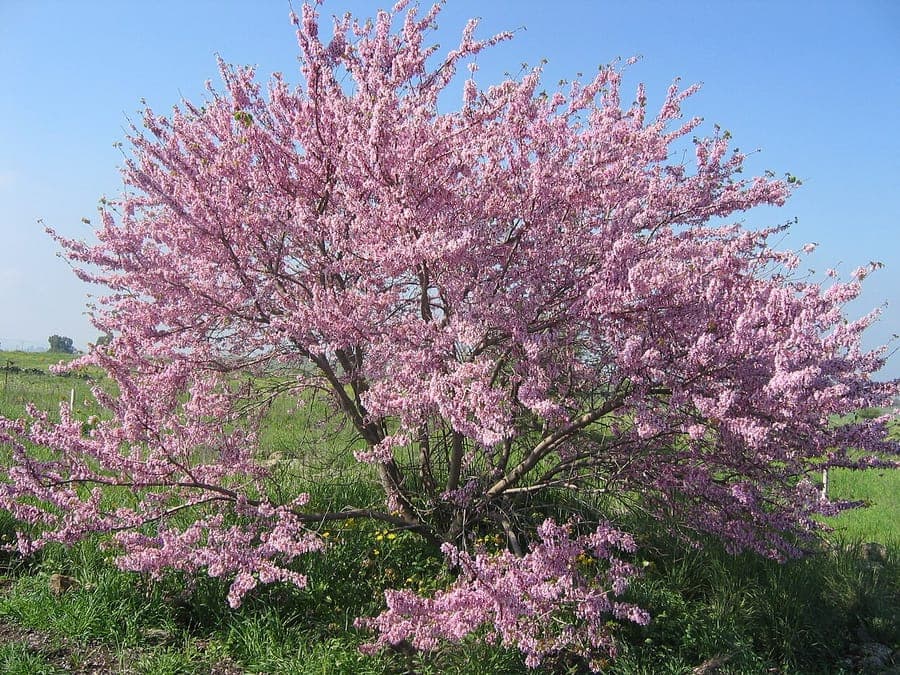
אורנה לוטן / CC BY 2.5, via Wikimedia Commons
Judas tree: complete guide
Cercis siliquastrum
Want to see Judas tree: complete guide in your garden?
1 minute, no credit card
Overview
The Judas tree (Cercis siliquastrum) is a stunning, medium-sized deciduous tree known for its breathtaking floral display in spring. Native to southern Europe and parts of western Asia, including Greece, Italy, and Iran, it thrives in warm, sheltered climates but adapts well to temperate zones when planted thoughtfully. Despite its dramatic name, the tree has no connection to the biblical figure-its nickname likely stems from regional folklore. In the garden, it's a graceful, slow-growing specimen that matures into a striking focal point over time.
On gardenworld.app, you can design a garden layout that highlights the Judas tree's unique form and seasonal interest. It typically reaches 6 to 10 meters in height and spreads 5 to 8 meters wide, making it suitable for medium to large gardens. It grows slowly, so don't expect rapid results, but the long-term payoff is a well-structured, shade-providing tree with year-round appeal.
Appearance & bloom cycle
The Judas tree steals the show in April and May, when clusters of pink to rosy-purple flowers emerge directly on the bare branches and even the trunk-a botanical trait called cauliflory. These pea-like blooms appear before the leaves, creating a dramatic, almost surreal effect. Each flower is about 1–2 cm long and densely packed, turning the tree into a living cloud of color.
After flowering, heart-shaped leaves unfurl-glossy, green, and up to 10 cm across. In autumn, they may turn yellow or golden, though this varies depending on climate and exposure. The tree produces flat, brown seed pods in summer, 5–10 cm long, which persist into winter and add visual texture when the tree is leafless.
Ideal location
Full sun is essential for abundant flowering. Aim for a spot that gets at least 6 hours of direct sunlight daily. South- or southwest-facing walls are ideal, especially in cooler regions, as they provide warmth and protection. The tree prefers shelter from strong winds, which can damage young branches and reduce blooming.
Avoid deep shade-this will severely limit or even prevent flowering. It's not a good fit for dense woodland edges or areas blocked by tall fences or evergreen hedges. Use gardenworld.app to map sun patterns in your garden and identify the best planting spot, especially if you're working with a tricky microclimate.
Soil requirements
Cercis siliquastrum is adaptable to a range of soils as long as drainage is good. It prefers sandy loam or well-drained clay loam with a neutral to slightly alkaline pH (6.5–7.5). Heavy, waterlogged soils are a no-go, particularly in winter, as they promote root rot.
Amend the planting hole with compost or coarse sand to improve drainage. Apply a 5–7 cm layer of organic mulch around the base-keeping it away from the trunk-to conserve moisture and suppress weeds.
Free design
Want to see Judas tree: complete guide in your garden? Make a free design now.
Watering
Young trees need consistent watering during their first two growing seasons, especially in dry spells. Water deeply once or twice a week rather than shallow daily sprinkles. Once established, the tree is moderately drought-tolerant but performs best with occasional deep watering during extended dry periods.
Overwatering is a common mistake. Soggy soil leads to root issues. Check soil moisture by inserting your finger 10 cm into the ground-water only if it feels dry at that depth.
Pruning
Pruning is rarely needed, but if you want to shape the tree or remove low branches for clearance, do it right after flowering. Pruning in winter or early spring risks cutting off flower buds formed the previous year.
Only remove dead, damaged, or crossing branches. Use clean, sharp tools to prevent disease. Avoid heavy pruning-this species doesn't respond well to drastic cuts and may fail to recover properly.
Maintenance calendar
- January–February: Inspect for winter damage; light pruning if necessary.
- March: Refresh mulch; prepare for spring growth.
- April–May: Peak bloom period; avoid pruning. Monitor for aphids.
- June–July: Water young trees during dry spells; keep soil moist.
- August–September: Reduce watering frequency. Watch for seed pod development.
- October–December: Leaf drop; clear fallen leaves to reduce fungal risk.
Winter hardiness
The Judas tree is hardy in USDA zones 6 to 9. In zone 6, young trees may suffer tip dieback in harsh winters. Protect the trunk with burlap or a tree wrap for the first few years. Mature trees are resilient but can be damaged by sudden late frosts after early warm spells.
In colder areas (below -20°C), plant near a south-facing wall or in a sheltered courtyard. Avoid frost pockets and ensure good air circulation to prevent ice buildup.
Companion plants
Pair the Judas tree with Mediterranean companions like lavender, rosemary, or olive trees. Underplant with shade-tolerant perennials such as hellebores, pulmonaria, or early tulips that bloom before the canopy fills in. Avoid aggressive groundcovers that compete for moisture and nutrients.
For visual harmony, combine with white alliums or purple salvias to echo the flower's soft pink tones. These pairings create a cohesive, seasonal rhythm in the garden.
Closing
The Judas tree isn't common in typical suburban gardens, but it deserves a place in any landscape seeking spring drama and architectural form. With minimal care, it becomes a long-lived centerpiece. Buy from reputable garden centres that stock healthy, well-rooted specimens. In the UK and US, look for it at local nurseries or online specialists. On gardenworld.app, you can simulate how this tree will grow over time, including canopy spread and seasonal changes, helping you plan a balanced, beautiful garden.
Want to see Judas tree: complete guide in your garden? Make a free design now.
Upload a photo, pick a style, and get a photorealistic design with plant list in under a minute.
No credit card required


Similar plants
Tall Silky Lupine: complete guide
Lupinus elatus
Tall silky lupine is a fast-growing Californian perennial with silvery foliage and blue-purple flower spikes, ideal for a prairie-style garden.
Garfield Lupine: complete guide
Lupinus garfieldensis
The Garfield lupine is a rare, fast-growing American perennial for alkaline, dry grassland gardens, with striking blue flower spikes.
Lupinus elegans: complete guide
Lupinus elegans
Lupinus elegans, the elegant lupine, is a spectacular blooming plant from Mexico with blue flower spikes. Care, cultivation and garden use.