
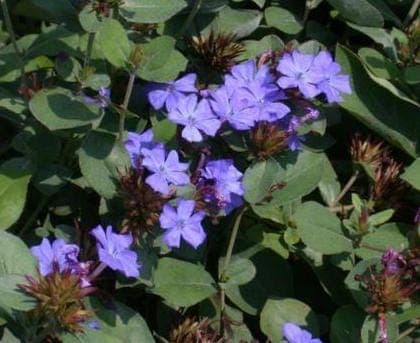
This photo was taken by Dave Whitinger / CC BY-SA 3.0, via Wikimedia Commons
Blue leadwood: complete guide
Ceratostigma plumbaginoides
Want to see Blue leadwood: complete guide in your garden?
1 minute, no credit card
Overview
Blue leadwood (Ceratostigma plumbaginoides) is one of those quiet performers that earns its keep in the garden through reliability and seasonal grace. Native to central and southeastern China, this semi-evergreen subshrub thrives in rocky, well-drained slopes and dry soils. In temperate gardens across USDA zones 6–9, it's become a go-to groundcover for late-season color and texture, especially where other plants struggle.
At maturity, it reaches 15–30 cm in height and spreads slowly to about 50 cm. It's not aggressive, but persistent, forming a low mat of dark green foliage that transforms in autumn. It's perfect for edging, rock gardens, or tucked between pavers where moisture control is key.
Many gardeners overlook it, planting it in rich, moist beds where it sags and rots. But place it right, and Blue leadwood rewards with years of dependable performance. On gardenworld.app, you can design a layout that highlights its strengths-sun exposure, soil type, and companion plants-all tailored to your space.
Appearance & bloom cycle
Blue leadwood has a clean, orderly look. Its narrow, lance-shaped leaves are glossy and deep green through spring and summer. From late August into October, it produces clusters of vivid cobalt-blue flowers-five-petaled, star-like blooms that open fully only in direct sun. On overcast days, they may stay partially closed, giving the plant a relaxed, sleepy look.
The real magic happens in autumn. As temperatures drop, the foliage shifts from green to rich shades of burgundy, crimson, and purple. This color change coincides with the final flush of blooms, creating a striking contrast that lasts until the first hard frost.
It's semi-evergreen in milder climates (zones 7–9), meaning some foliage may persist through winter. In colder zones, it dies back to the crown but reliably re-emerges in spring.
Ideal location
Full sun is best-six or more hours of direct light daily. It tolerates light shade, especially in hot afternoon climates, but blooming diminishes and stems stretch. For the tightest growth and most flowers, plant it where it gets morning and midday sun.
It excels in rock gardens, on slopes, or in raised beds with sharp drainage. It's also effective under open-canopy shrubs or as a low border along walkways. Avoid planting it near thirsty perennials or in low-lying, soggy areas.
If you're unsure about light levels in your yard, gardenworld.app offers sun-mapping tools to help place Blue leadwood where it'll thrive.
Free design
Want to see Blue leadwood: complete guide in your garden? Make a free design now.
Soil requirements
Well-drained soil is non-negotiable. Heavy clay or water-retentive loam will lead to root rot. Amend dense soils with coarse sand, gravel, or pumice to improve drainage. A pH between 6.0 and 7.5 is ideal, but it adapts to slightly alkaline conditions.
Avoid rich compost or manure-this promotes weak, leggy growth and fewer flowers. A thin layer of inorganic mulch like crushed stone or decomposed granite helps retain heat and keeps moisture away from the crown.
Watering
Water regularly during the first growing season-about once a week in dry spells-to establish roots. After that, Blue leadwood is highly drought tolerant. In average rainfall zones, it needs no supplemental watering.
Only irrigate during prolonged droughts (three weeks or more without rain), and then only lightly. Overwatering is a far bigger risk than underwatering. Let the soil dry completely between waterings.
Pruning
Pruning isn't required, but a light trim in early spring (February–March) keeps the plant tidy. Cut back old stems to just above new basal growth. This removes winter-damaged material and encourages denser, more compact growth.
Leave the stems intact over winter-they provide insulation and visual interest. Don't cut back in fall; wait until spring to avoid stimulating tender new growth before frost.
Maintenance calendar
- Jan: Dormant, no action needed
- Feb: Prepare for pruning
- Mar: Cut back old growth
- Apr: New shoots emerge
- May: Monitor for dryness, rare watering
- Jun: Minimal care, steady growth
- Jul: Prep for bloom
- Aug: Blooms begin, check for slumping
- Sep: Peak color, foliage starts turning
- Oct: Final blooms, full autumn color
- Nov: Leave standing for winter structure
- Dec: Dormancy begins
Winter hardiness
Hardy in USDA zones 6–9 (-20.5°C to -1°C). In zone 6, a light winter mulch of dry leaves or pine needles can help protect the crown. Avoid heavy organic mulch-it holds moisture and promotes rot.
In colder zones (5 and below), it may die back completely but can survive with protection. The roots often persist and resprout in spring if the site is well-drained.
Companion plants
Pair with plants that share its preferences: sun, dry soil, good drainage. Excellent companions include Sedum 'Autumn Joy', Thymus serpyllum, Eryngium, and ornamental grasses like Schizachyrium scoparium.
Avoid moisture-loving plants like hostas or astilbes. Also steer clear of aggressive spreaders that might overwhelm it. Use it as a foil for silver-foliaged plants like Artemisia or Stachys byzantina.
Closing
Blue leadwood doesn't shout, but it endures. It fills a niche few plants do-offering vivid color and texture when summer's over. It asks for little: sun, sharp drainage, and a hands-off approach.
You'll find it at garden centres across the UK and US, often near alpines or drought-tolerant perennials. Look for compact, healthy specimens without yellowing leaves. And remember-this plant thrives on neglect, not coddling.
Want to see Blue leadwood: complete guide in your garden? Make a free design now.
Upload a photo, pick a style, and get a photorealistic design with plant list in under a minute.
No credit card required


Similar plants
Limonium brassicifolium: complete guide
Limonium brassicifolium
Full guide to growing Limonium brassicifolium: ideal site, soil, watering and care tips for this rare Canary Islands sea lavender.
Many-headed Thrift: complete guide
Armeria multiceps
Full guide to Armeria multiceps, the Corsican many-headed thrift: pink globe flowers, dry rock garden culture, soil, care, and companion planting.
Spiny Thrift: complete guide
Armeria pungens
Everything about Armeria pungens: location, soil, care and planting combinations for this robust Mediterranean coastal plant.