
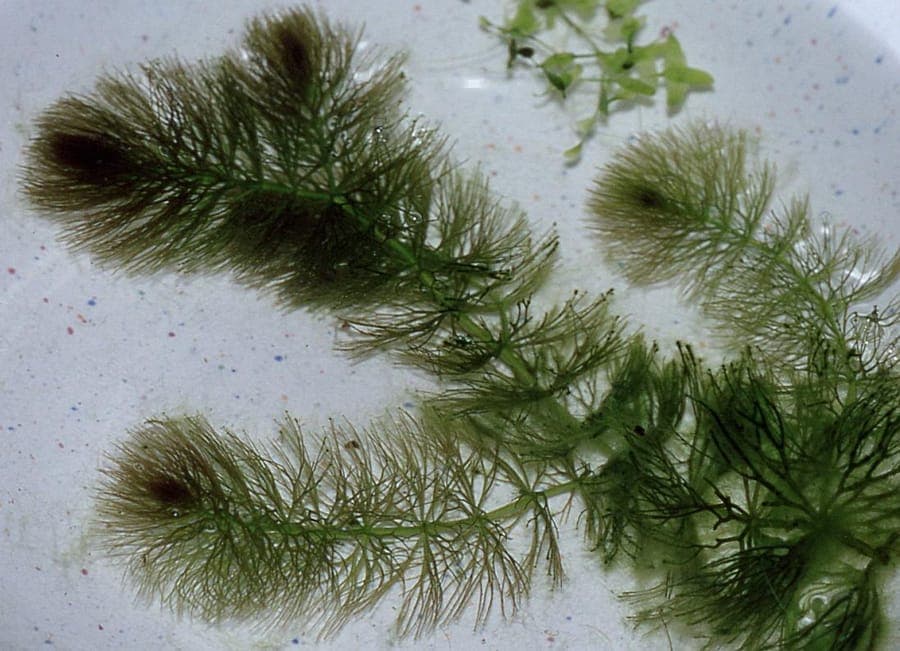
Wikimedia Commons / CC BY-SA 3.0, via Wikimedia Commons
Soft hornwort: complete guide
Ceratophyllum submersum
Want to see Soft hornwort: complete guide in your garden?
1 minute, no credit card
Overview
Soft hornwort (Ceratophyllum submersum) is a top-tier submerged aquatic plant for garden ponds, especially those aiming for a natural or balanced ecosystem. Native to slow-moving or still waters across Europe and parts of Asia and Africa, it thrives in temperate climates and is fully winter-hardy in USDA zones 6 to 10. Unlike rooted plants, it lacks true roots and instead floats freely or anchors loosely with rhizoids. This makes it incredibly adaptable and easy to position. It's a powerhouse oxygenator, helping to suppress algae and support healthy fish populations.
On gardenworld.app, you can generate a custom pond layout that includes Soft hornwort, with placement tips and plant compatibility checks based on your pond's depth and sunlight.
Appearance & bloom cycle
Soft hornwort features fine, bright to dark green foliage arranged in whorls along slender stems that can reach up to 100 cm in length. The leaves are deeply divided into thread-like segments, giving the plant its characteristic feathery look. It rarely flowers above water, and when it does, the blooms are tiny and inconspicuous-usually underwater and non-showy. Reproduction happens mainly through fragmentation; broken stem sections easily take root and grow into new plants. The peak growing season runs from May through September, with fastest growth in warm, sunny conditions.
Ideal location
Choose a spot with moderate to full sun (light level 6/10). Soft hornwort performs best at depths between 12 and 32 inches (30–80 cm). It benefits from some water movement, so placing it near a fountain or filter outlet improves circulation and nutrient uptake. Avoid heavily shaded areas under trees, as leaf litter can increase organic load and alter water chemistry. While it can tolerate partial shade, growth slows significantly. Keep it away from strong currents that might tear the delicate stems.
Soil requirements
Since this plant doesn't develop true roots, soil is less critical than for other pond plants. However, it grows more robustly when anchored in nutrient-rich substrates. Use a heavy loam or a commercial pond soil mix, optionally blended with clay. Avoid coarse gravel or pure sand, as they offer poor anchorage. If letting it float, no substrate is needed-just ensure it's weighted slightly to prevent rising to the surface. On gardenworld.app, use the substrate calculator to match your plant choices with the right base layer for stability and growth.
Free design
Want to see Soft hornwort: complete guide in your garden? Make a free design now.
Watering
As a fully submerged species, Soft hornwort requires constant immersion. The ideal pH range is slightly acidic to neutral: 5.5–6.5. Regular water testing with a quality kit is advised, especially if using well water or rainwater. Hard water with high calcium content can inhibit growth. Maintain water temperatures between 59–77°F (15–25°C) during the growing season. In winter, it survives down to 36°F (2°C) as long as the pond doesn't freeze solid. Perform partial water changes (10–15%) monthly to prevent nutrient buildup.
Pruning
Pruning is key to managing growth. From June to August, trim back 20–30% of the top growth monthly. Use sharp pond scissors to avoid crushing stems. Remove clippings from the pond to prevent decay and ammonia spikes. The cuttings can be reused-simply drop them into another part of the pond or share with fellow gardeners. Avoid pruning in winter when growth halts. Regular trimming encourages bushier, healthier plants.
Maintenance calendar
- January: Dormant; no action needed
- February: Check for rot, remove dead stems
- March: Prepare for growth, test pH
- April: Divide or reposition clumps
- May: Growth begins; monitor for algae
- June: First pruning; ensure good circulation
- July: Continue pruning; check water quality
- August: Second major trim; thin if overcrowded
- September: Growth slows; reduce pruning
- October: Minimal care; leave some debris for fish cover
- November: Dormancy starts; no feeding
- December: Fully dormant
Winter hardiness
Hardy in USDA zones 6–10, Soft hornwort survives winter outdoors in most of the UK, US, and central Europe. In zone 6, ensure it's planted at least 18 inches (45 cm) deep to avoid freeze damage. The top growth may die back, but the base remains alive. Keep a hole in the ice using a pond heater or bubbler to allow gas exchange. No additional protection is required.
Companion plants
Pair Soft hornwort with other oxygenators like Anacharis (Elodea) or Waterweed (Egeria densa). For surface contrast, add Water Lilies (Nymphaea) or Floating Heart (Nymphoides). Marginal plants such as Sweet Flag (Acorus) or Pickerel Rush (Pontederia) add vertical interest. Avoid invasive species like Parrot's Feather, which can outcompete it. gardenworld.app offers a companion planting tool that helps you mix submerged, floating, and marginal plants effectively.
Closing
Soft hornwort is a reliable, low-effort pond workhorse. It oxygenates, clarifies water, and shelters fish-all while asking for little in return. With proper depth, light, and seasonal upkeep, it thrives year after year. Buy healthy stock from trusted suppliers like local garden centres, and avoid wild harvesting to protect natural habitats. Plant it right, and it'll do the rest.
Want to see Soft hornwort: complete guide in your garden? Make a free design now.
Upload a photo, pick a style, and get a photorealistic design with plant list in under a minute.
No credit card required


Similar plants
Acer pycnanthum: complete guide
Acer pycnanthum
Acer pycnanthum, the Japanese swamp maple, is a fast-growing tree with early red flowers and brilliant autumn color, ideal for damp garden settings.
Freeman maple: complete guide
Acer × freemanii
Everything about the Freeman maple (Acer x freemanii): a fast-growing shade tree with spectacular autumn colour for large gardens.
Silver vine: complete guide
Actinidia polygama
Discover silver vine (Actinidia polygama): a hardy climbing plant with silvery foliage, loved by gardeners and cats alike.