
Nevit Dilmen (talk) / CC BY-SA 3.0, via Wikimedia Commons
Carob: complete guide
Ceratonia siliqua
Want to see Carob: complete guide in your garden?
1 minute, no credit card
Overview
Ceratonia siliqua, commonly known as carob, is a tough, evergreen tree native to the Mediterranean basin. While it thrives in warm, dry climates, it can be grown in cooler regions with proper protection. In the UK and northern Europe, it's often cultivated in containers and moved under cover during winter. Reaching heights of 10–15 meters with a broad, rounded crown, the carob tree brings architectural presence to any garden. It's slow-growing, but once established, it requires minimal care. On gardenworld.app, you can design a layout that highlights the carob's bold form alongside complementary drought-resistant plants.
Appearance & bloom cycle
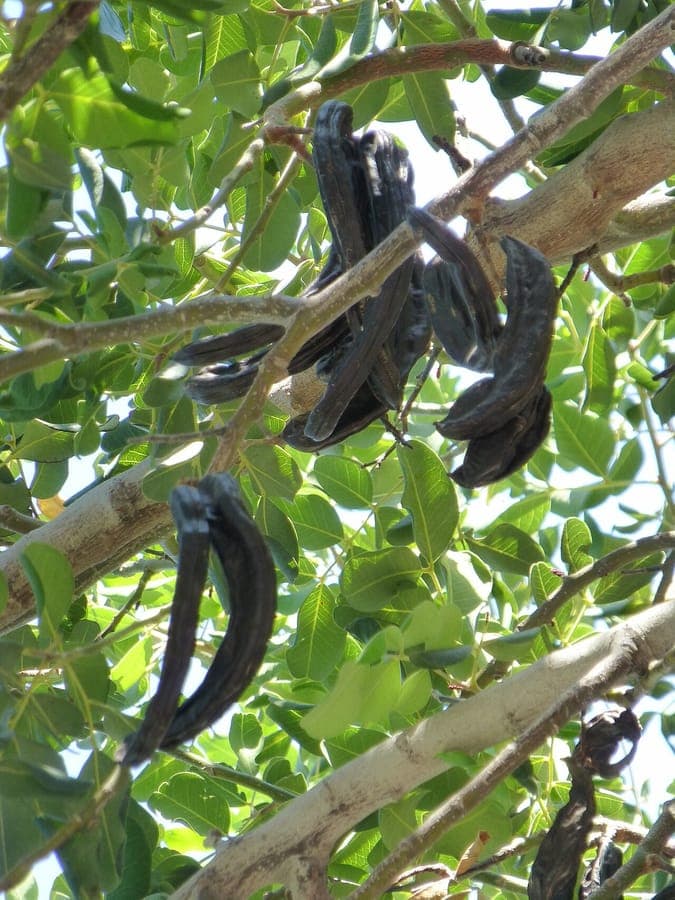
The carob tree has pinnate, glossy dark green leaves made up of 6–10 pairs of leathery leaflets. These remain on the tree year-round, offering constant visual interest. From August through October, small, inconspicuous greenish-brown flowers appear along the branches and trunk-this is called cauliflory. The flowers are either male or female, and only female trees produce pods when pollinated (usually by wind or insects). The resulting seed pods are 10–20 cm long, thick, and curved, turning from green to deep brown as they mature. They can stay on the tree for over a year, adding ornamental value. In cooler climates, full ripening may not occur, but the pods still contribute to the tree's unique character.
Ideal location
Carob trees need full sun-at least an 8 out of 10 on the light scale. Plant in a south- or southwest-facing spot where it receives direct sunlight all day. Young trees benefit from a sheltered location, protected from cold winds and extreme frost. Mature trees tolerate some wind but grow best when shielded. If you're growing in a container, ensure the pot is large (minimum 60 cm diameter) and place it in a sunny patio or against a warm wall. Consider your garden's microclimate-urban gardens often provide enough warmth. Use gardenworld.app to assess whether your garden's sun exposure and space are suitable for a carob tree.
Soil requirements
The carob is adaptable to various soil types but prefers well-drained, sandy or loamy soils. A pH between 6.5 and 7 is ideal. Avoid heavy clay that retains water, as this can lead to root rot. If your soil is dense, mix in grit or perlite to improve drainage. The tree tolerates alkaline conditions and even coastal salt spray, making it a good choice for seaside gardens. It does not require rich soil-overly fertile conditions can encourage leafy growth at the expense of flowering.
Free design
Want to see Carob: complete guide in your garden? Make a free design now.
Watering
Water young trees regularly during the first two growing seasons to help them establish deep roots. Once mature, carob trees are highly drought-tolerant and need watering only during prolonged dry spells (over 4 weeks without rain). In containers, check soil moisture weekly-let the top 5 cm dry out between waterings. Overwatering is a common mistake and can be fatal.
Pruning
Pruning is rarely needed. Remove dead, damaged, or crossing branches in early spring. If you want to train the tree into a single trunk or maintain a specific shape, start when the tree is young. Avoid heavy pruning-carob trees grow slowly and recover poorly from drastic cuts.
Maintenance calendar
- Jan: Check for frost damage, especially on potted specimens
- Feb: Protect young trees from late frosts
- Mar: Inspect for early growth; apply light organic feed if desired
- Apr: Monitor for pests; ensure good drainage
- May: Water during dry spells
- Jun: No major care needed
- Jul: Deep water if no rain for over 3 weeks
- Aug: Flowering begins; avoid disturbing the tree
- Sep: Peak bloom; pollination occurs
- Oct: Pods start to develop
- Nov: Reduce watering; prepare potted trees for shelter
- Dec: Keep container-grown trees in a cool, bright place above 0°C
Winter hardiness
Carob is hardy in USDA zones 9–11 (down to -7°C). In zone 8, it may survive mild winters, especially with protection. In colder areas, grow it in a large pot and overwinter in a greenhouse or conservatory. Young trees are more vulnerable-frost below -5°C can damage foliage and stems.
Companion plants
Pair carob with other Mediterranean species: olive (Olea europaea), rosemary (Rosmarinus officinalis), lavender (Lavandula spp.), and agave. These share similar sun and water needs. Add low-growing perennials like sedum or thyme to reduce soil evaporation and provide texture. Avoid moisture-loving plants such as hostas or ferns.
Closing
The carob tree is a striking, low-maintenance addition to sunny gardens. While it may not fruit reliably in cooler climates, its evergreen foliage and sculptural form make it a standout. Grow it in the ground in warm microclimates or in containers elsewhere. You can find young carob trees at garden centres across the UK, especially in specialist nurseries. With patience and the right conditions, this tree becomes a long-lived focal point in your landscape.
Want to see Carob: complete guide in your garden? Make a free design now.
Upload a photo, pick a style, and get a photorealistic design with plant list in under a minute.
No credit card required


Similar plants
Tall Silky Lupine: complete guide
Lupinus elatus
Tall silky lupine is a fast-growing Californian perennial with silvery foliage and blue-purple flower spikes, ideal for a prairie-style garden.
Garfield Lupine: complete guide
Lupinus garfieldensis
The Garfield lupine is a rare, fast-growing American perennial for alkaline, dry grassland gardens, with striking blue flower spikes.
Lupinus elegans: complete guide
Lupinus elegans
Lupinus elegans, the elegant lupine, is a spectacular blooming plant from Mexico with blue flower spikes. Care, cultivation and garden use.