
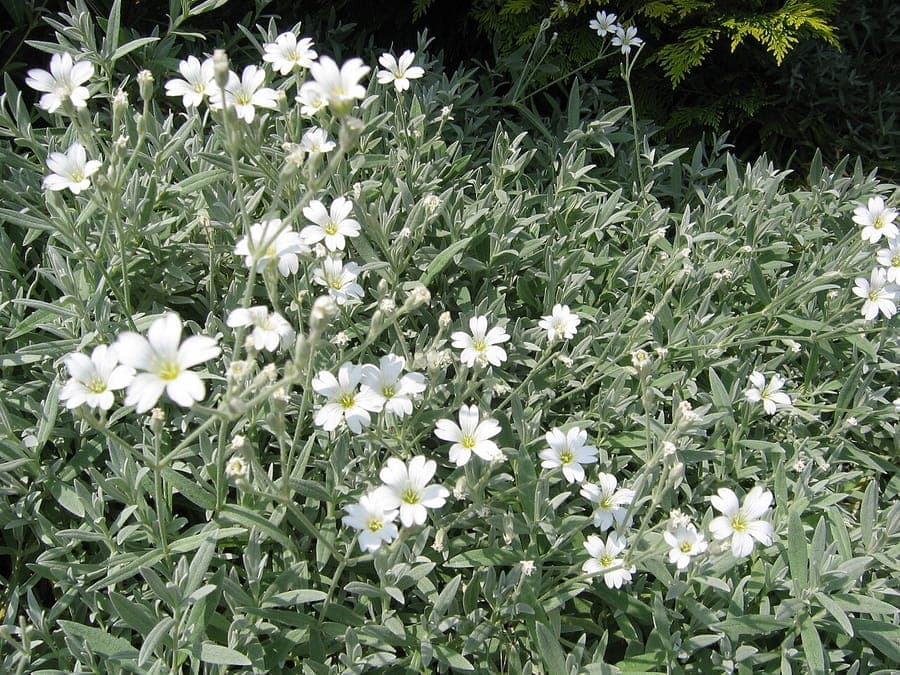
No machine-readable author provided. Heron2 assumed (based on copyright claims). / CC BY-SA 3.0, via Wikimedia Commons
Dusty-miller: complete guide
Cerastium tomentosum
Want to see Dusty-miller: complete guide in your garden?
1 minute, no credit card
Overview
Dusty-miller (Cerastium tomentosum) is a low-growing, mat-forming perennial native to Italy and Sicily. Despite the shared common name, it's not related to the silver-leaved bedding plant Senecio cineraria, which also goes by 'dusty-miller' - this one is a true gem for rock gardens, dry slopes, and edging paths. Belonging to the Caryophyllaceae family, it's known for its velvety, silvery-white foliage and cheerful spring blooms.
Typically reaching 10–15 cm in height but spreading up to 40 cm wide, it forms dense, woolly mats that suppress weeds and thrive in poor, well-drained soils. It's fully hardy down to USDA zone 3 and remains semi-evergreen through winter, though older foliage may flatten or brown slightly. It spreads slowly via stolons and self-seeding, but never invasively.
On gardenworld.app, you can design a garden layout that highlights the soft texture of Dusty-miller alongside stone features and drought-tolerant companions.
Appearance & bloom cycle
The leaves are densely covered in fine white hairs, giving them a felt-like texture and a striking silvery hue. They're lance-shaped, 2–3 cm long, and arranged in loose rosettes. From April to early June, starry white flowers with five notched petals appear in clusters. Each flower is about 1.5–2 cm across and lightly fragrant, attracting early pollinators like hoverflies, bees, and small butterflies.
After flowering, the stems often trail downward, rooting at nodes where they touch soil - a useful trait for stabilising slopes or spilling over retaining walls. The plant looks best when cut back after bloom, otherwise the centre can become bare and leggy by late summer.
Ideal location
Full sun is essential for compact growth and maximum flowering. In partial shade, the plant stretches, loses its silvery sheen, and blooms sparsely. A south- or west-facing slope, rock crevice, or gravel path edge provides the perfect microclimate. Good air circulation is key - stagnant, humid air increases the risk of fungal issues.
It thrives in urban gardens, green roofs, and modern xeriscapes. Plant it where it can cascade over walls or between stepping stones. Avoid low-lying, damp areas where cold air pools.
Soil requirements
This plant prefers lean, sharply drained soil. Rich, fertile soils encourage lush foliage at the expense of flowers and can lead to floppy growth. A sandy or gravelly mix with a pH between 6.0 and 7.5 works best. Heavy clay must be amended with grit or perlite to improve drainage.
In containers, use a mix of loam-based compost, sharp sand, and horticultural grit (2:1:1). Ensure pots have drainage holes. Potted plants dry out faster, so monitor moisture in hot spells.
Free design
Want to see Dusty-miller: complete guide in your garden? Make a free design now.
Watering
Once established, Dusty-miller is extremely drought-tolerant. Young plants need regular watering during their first growing season, especially in dry springs. Water deeply but infrequently, aiming at the base to avoid wetting the foliage.
In summer, a thorough soak every 10–14 days is usually enough. Avoid overhead watering. Overwatering is the most common cause of failure - soggy soil leads to root rot, especially in winter. Let the soil dry between waterings.
Pruning
Cut back the plant by about one-third immediately after flowering, typically in late June. Use sharp shears to trim spent stems and encourage bushy regrowth. This prevents the plant from becoming woody and maintains a neat appearance.
If the plant looks tired in late summer, a light second trim can rejuvenate it. Save cuttings - they root easily in gritty soil and make free new plants.
Maintenance calendar
- January: Inspect for winter damage. No action needed.
- February: Prepare soil for new plantings.
- March: Remove any winter dieback. Light tidying.
- April: Bloom begins. No feeding required.
- May: Peak flowering. Watch for dryness in young plants.
- June: Flowering ends. Prune back by one-third.
- July: Monitor for leggy growth. Optional second trim.
- August: Take cuttings for propagation.
- September: Plant new specimens.
- October: Loosen soil lightly around base.
- November: No maintenance. Plant enters dormancy.
- December: Fully hardy. Tolerates heavy frost and snow.
Winter hardiness
Hardy to USDA zone 3 (-35°C), Dusty-miller tolerates harsh winters with no protection. Foliage usually remains intact, though it may lie flat under snow. In wet winters, trapped moisture can cause rot, so good drainage is critical. Avoid mulching heavily over the crown.
It rebounds strongly in spring, even if parts appear damaged. No winter care is needed beyond site selection and drainage.
Companion plants
Pair Dusty-miller with other sun-loving, drought-tolerant perennials: Sedum 'Autumn Joy', Thymus vulgaris, Nepeta faassenii, or Echinacea. Its silver foliage contrasts beautifully with purple, yellow, or deep red blooms. It also works well with ornamental grasses like Festuca glauca or Helictotrichon sempervirens.
In gravel gardens or modern landscapes, combine it with stone, crushed rock, and architectural plants. For layout ideas, gardenworld.app offers visual tools to plan combinations that enhance texture and year-round interest.
Closing
Dusty-miller is a resilient, low-effort perennial that brings elegance and function to tough spots. It's perfect for beginners and seasoned gardeners alike who want reliable groundcover with charm. Use it on slopes, in crevices, or between pavers. Available at garden centres across the UK and online. Plant it right, prune it after bloom, and you'll enjoy its soft silver carpets for years.
Want to see Dusty-miller: complete guide in your garden? Make a free design now.
Upload a photo, pick a style, and get a photorealistic design with plant list in under a minute.
No credit card required


Similar plants
Dianthus karami: complete guide
Dianthus karami
Dianthus karami is a rare Lebanese mountain pink with fringed pink blooms on limestone cliffs, ideal for rock gardens and troughs.
Sicilian pink: complete guide
Dianthus siculus
Discover Dianthus siculus, an elegant purple bloomer from Sicily. Cultivation, June-September flowering and garden combinations.
Alpine mouse-ear chickweed: complete guide
Cerastium pedunculatum
Full growing guide for Cerastium pedunculatum: ideal location, soil, watering, winter hardiness, and companion plants for rock gardens.