
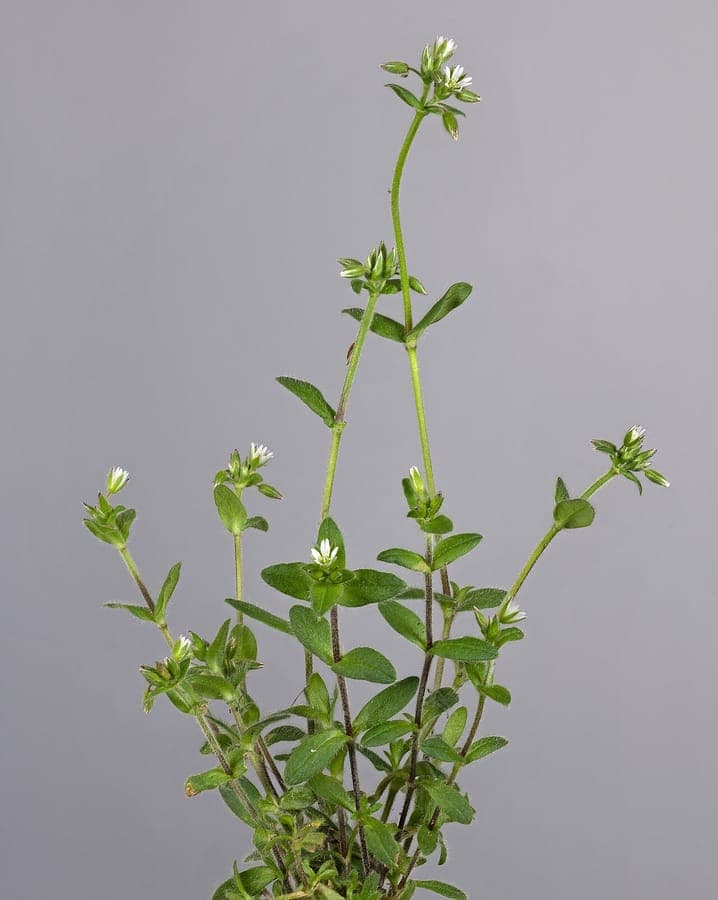
Didier Descouens / CC BY-SA 4.0, via Wikimedia Commons
Mouse-ear chickweed: complete guide
Cerastium glomeratum
Want to see Mouse-ear chickweed: complete guide in your garden?
1 minute, no credit card
Overview
Mouse-ear chickweed, or Cerast Newton glomeratum, is one of those plants gardeners either love or quickly pull out. But as a horticulturist, I've come to appreciate its quiet charm and ecological usefulness. This annual herb, part of the Caryophyllaceae family, thrives across temperate regions including the UK, US, and much of Europe. Standing 10–25 cm tall, it forms soft, moss-like mats with fuzzy, grey-green foliage and clusters of tiny white flowers. While often dismissed as a weed, it's actually a helpful pioneer species - stabilizing soil, attracting pollinators, and filling bare spots.
What's more, it's completely harmless and doesn't choke out other plants aggressively. In a low-maintenance or wildflower garden, it earns its place. On gardenworld.app, you can design a planting scheme where Mouse-ear chickweed complements native ground covers without taking over.
Appearance & bloom cycle
The plant grows in a spreading, tufted habit with hairy, lance-shaped leaves that feel like fine felt. These give it the 'mouse-ear' name. In spring, from April to June, it produces dense clusters of small white flowers, each about 8–10 mm wide, with five deeply notched petals that look like ten. They open fully in sunlight and close at night or on overcast days.
Flowering peaks in May, especially in zones 6–8. After blooming, seed capsules form and split open when dry, scattering seeds over a small radius. The plant dies back by late summer, leaving behind dormant seeds that germinate the following spring when soil temperatures reach 10–12°C. No second generation occurs in one season.
Ideal location
Mouse-ear chickweed prefers full sun to light shade - around level 7 on a 1–10 light scale. That means 5–6 hours of direct sunlight daily. In deep shade, it becomes leggy and sparse. The best spots are open garden beds, gravel paths, between pavers, or along the edges of lawns where foot traffic is low.
It's especially effective in cottage gardens, rockeries, or as a temporary ground cover in new beds before perennials establish. If your garden has patches of disturbed soil, this plant will likely appear on its own. Use gardenworld.app to map sun exposure and predict where it might naturally pop up.
Soil requirements
This plant isn't fussy. It grows in sandy, loamy, or clay soils as long as drainage is fair. The ideal pH is between 5.5 and 6.5 - slightly acidic to neutral. Avoid highly alkaline soils (above pH 7.5), as growth slows and leaves may yellow.
It doesn't need rich soil or added fertilizer. In fact, overly fertile ground encourages leafy growth at the expense of flowers. If your soil is heavy clay, mix in a bit of horticultural sand to improve aeration. Otherwise, just scratch the surface lightly and let nature do the rest.
Free design
Want to see Mouse-ear chickweed: complete guide in your garden? Make a free design now.
Watering
Once established, Mouse-ear chickweed is drought-tolerant. Young seedlings, however, need consistent moisture for the first 2–3 weeks. Water gently at soil level to avoid wetting foliage, which can lead to fungal issues.
In average UK or US climates, rainfall is usually sufficient. During dry spells lasting more than two weeks, give a light soak in the morning or evening. Avoid overhead watering in humid conditions. Overwatering leads to root rot, especially in compacted soils.
Pruning
Pruning isn't required, but cutting back by half after the main bloom in May can encourage a second flush in early summer. Use hand shears or pinch stems back to 5 cm above the ground. This also helps control spread if you don't want it seeding everywhere.
If you're happy with self-seeding, leave a few plants intact. Just keep an eye on density - too much can smother tiny seedlings of other species. Deadheading isn't necessary unless you're managing a formal border.
Maintenance calendar
- January–February: Dormant. No action.
- March: Watch for emerging seedlings. Protect from late frosts if needed.
- April: Growth accelerates. Keep soil moist for young plants.
- May: Peak bloom. Ideal time for light pruning.
- June: Seed development begins. Reduce watering.
- July: Plants start to yellow. Allow seed set or remove unwanted growth.
- August–December: Plant dies back. Seeds lie dormant in soil.
Winter hardiness
As an annual, Mouse-ear chickweed doesn't survive winter, but its seeds do. It's hardy in USDA zones 4–8. Seeds can withstand freezing temperatures (-20°C) when buried in soil or leaf litter. No mulch or protection is needed. Germination occurs when soil warms in spring, usually late March to mid-April.
Companion plants
Pair it with early bloomers like daisies, violets, or creeping thyme. It works well in mixed borders with plants that emerge later, such as salvias or rudbeckias, giving ground cover until they fill in. Avoid aggressive spreaders like mint, which will overwhelm it.
In vegetable gardens, it can act as a living mulch between rows, suppressing weeds and improving soil structure. Just keep it away from seedbeds where it might compete with tiny vegetable sprouts.
Closing
Mouse-ear chickweed is a humble but useful plant. It asks for little and gives back in texture, early-season interest, and habitat for small insects. You won't find it in every garden centre, but seeds are available online or at specialty suppliers. In the UK, check Triffic or Thompson & Morgan; in the US, try Strictly Medicinal Seeds.
Gardeners in the UK and US can also find it at general garden centres, especially in spring. Whether you let it volunteer or plant it on purpose, it's a low-effort way to add softness to your garden. Plan your layout on gardenworld.app to balance its self-seeding nature with more structured elements.
Want to see Mouse-ear chickweed: complete guide in your garden? Make a free design now.
Upload a photo, pick a style, and get a photorealistic design with plant list in under a minute.
No credit card required


Similar plants
Dianthus karami: complete guide
Dianthus karami
Dianthus karami is a rare Lebanese mountain pink with fringed pink blooms on limestone cliffs, ideal for rock gardens and troughs.
Sicilian pink: complete guide
Dianthus siculus
Discover Dianthus siculus, an elegant purple bloomer from Sicily. Cultivation, June-September flowering and garden combinations.
Alpine mouse-ear chickweed: complete guide
Cerastium pedunculatum
Full growing guide for Cerastium pedunculatum: ideal location, soil, watering, winter hardiness, and companion plants for rock gardens.