
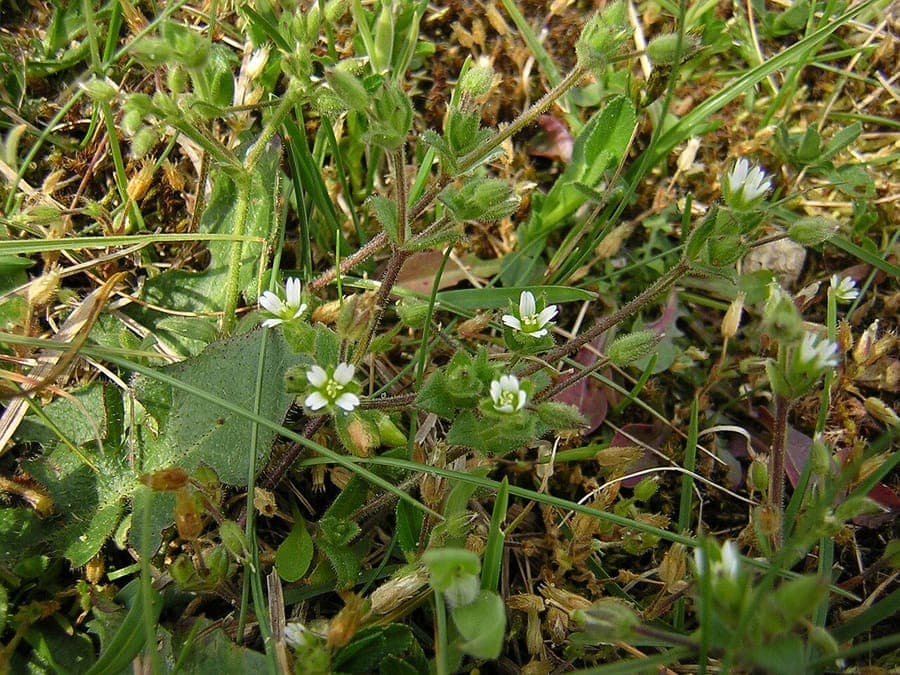
Aroche / CC BY-SA 3.0, via Wikimedia Commons
Fourstamen chickweed: complete guide
Cerastium diffusum
Want to see Fourstamen chickweed: complete guide in your garden?
1 minute, no credit card
Overview
Cerastium diffusum, commonly known as Fourstamen chickweed, is a modest but charming herbaceous forb that slips quietly into the garden scene. Native across much of western and northern Europe, including the UK, Ireland, and parts of Scandinavia, it thrives in cool, moist conditions and is often found along hedgerows, woodland margins, and old stone walls. While not flashy, it brings a delicate texture and early-season bloom that complements naturalistic planting schemes.
This is a plant for gardeners who appreciate understated beauty. It doesn't demand attention, but once established, it weaves a soft tapestry through borders and ground-level plantings. On gardenworld.app, you can design a planting layout that integrates Fourstamen chickweed with other spring ephemerals and shade-tolerant species for a seamless, flowing aesthetic.
Appearance & bloom cycle
Fourstamen chickweed grows 10–20 cm tall with a spreading, trailing habit. The stems are often decumbent - lying flat at the base but curving upward at the tips - giving the plant a relaxed, informal look. Leaves are narrow, lance-shaped, and densely covered in fine, silvery hairs, which give them a soft, downy texture and a slight grey-green hue.
Flowering occurs from April through June, peaking in May. The small white flowers, about 8–10 mm wide, have five deeply notched petals but only four stamens - hence the name. They appear in loose cymes at the stem ends and open fully in sunlight. Though tiny, they offer nectar to early pollinators like hoverflies and small bees.
Unlike the more aggressive mouse-ear chickweed (Cerastium vulgatum), this species is well-behaved and won't take over your garden. It may self-seed gently in ideal spots, but never invasively.
Ideal location
Choose a spot with partial shade to light sun - think north-facing borders, beneath open-canopy shrubs, or along the edges of tree groves. Full sun is acceptable only if the soil remains consistently moist. In hot, dry summers, plants in full exposure may scorch or wither prematurely.
This species excels in cottage gardens, rockeries, or gravel paths where its trailing stems can spill softly over edges. It also works well in crevices between paving stones or on old walls, where moisture lingers and competition is low.
Soil requirements
Fourstamen chickweed prefers moist, well-drained soil rich in organic matter. A loamy or sandy-loam mix with added leaf mould or compost works best. The ideal pH range is 6.0 to 7.0 - slightly acidic to neutral. Avoid heavy clay unless amended with grit and compost to improve drainage.
If planting in containers, use a quality potting mix with extra perlite for aeration. A 2–3 cm top dressing of compost each spring helps maintain fertility without overfeeding.
Free design
Want to see Fourstamen chickweed: complete guide in your garden? Make a free design now.
Watering
Keep the soil evenly moist, especially during spring growth and flowering. This plant dislikes drought and will quickly show stress through wilting or yellowing leaves. During dry spells, water deeply once or twice a week, focusing on the root zone.
Avoid overhead watering late in the day, as damp foliage overnight can encourage fungal issues. A drip line or watering can at soil level is best. Once established, it can tolerate short dry periods, but prolonged drought halts flowering and weakens self-seeding.
Pruning
No formal pruning is required, but a light trim after flowering (late June) encourages denser growth and prevents legginess. Cut back stems by 3–5 cm using clean shears. This also helps tidy the plant before summer dormancy.
If you want natural reseeding, leave some flowered stems intact. Seeds ripen in early summer and drop close to the parent plant, often germinating the following spring in the same spot.
Maintenance calendar
- March: Check for emerging shoots. Remove any winter debris.
- April: Begin regular watering. Watch for slugs on new growth.
- May: Peak bloom. Monitor soil moisture and pollinator activity.
- June: Flowers fade. Trim lightly to rejuvenate foliage.
- July–August: Dormant period. Water only if soil dries out completely.
- September: Allow seed heads to mature if reseeding is desired.
- October–February: Minimal care. The plant may overwinter as rosettes or seeds.
Winter hardiness
Cerastium diffusum is hardy in USDA zones 6–8 (-20°C to -10°C). In colder zones, it behaves as a biennial or short-lived perennial, dying after seed set but returning from self-sown seed. In milder areas, it may persist as a semi-evergreen ground cover.
No winter protection is usually needed, but in exposed gardens, a thin mulch of leaf litter can shield young rosettes from frost heave.
Companion plants
Pair Fourstamen chickweed with other spring-bloomers like Pulmonaria, Primula vulgaris, or Epimedium. It contrasts beautifully with fine-textured ferns or dark-leaved Heuchera. In gravel gardens, combine with Ajuga reptans or Veronica prostrata for layered ground cover.
Its soft, silvery foliage softens bold architectural plants. Try it at the front of a border with taller perennials like Digitalis or Campanula behind.
Closing
Fourstamen chickweed won't win prizes for size or colour, but it earns its place through reliability, texture, and ecological value. It's a quiet worker in the garden - one that fills gaps, supports pollinators, and asks for little in return.
You can find Cerastium diffusum at garden centres across the UK, though it's not always widely stocked. Look for it at specialist nurseries or order online. When planning your layout, use gardenworld.app to visualise how this subtle plant enhances shade borders and naturalistic plantings with minimal effort.
Want to see Fourstamen chickweed: complete guide in your garden? Make a free design now.
Upload a photo, pick a style, and get a photorealistic design with plant list in under a minute.
No credit card required


Similar plants
Dianthus karami: complete guide
Dianthus karami
Dianthus karami is a rare Lebanese mountain pink with fringed pink blooms on limestone cliffs, ideal for rock gardens and troughs.
Sicilian pink: complete guide
Dianthus siculus
Discover Dianthus siculus, an elegant purple bloomer from Sicily. Cultivation, June-September flowering and garden combinations.
Alpine mouse-ear chickweed: complete guide
Cerastium pedunculatum
Full growing guide for Cerastium pedunculatum: ideal location, soil, watering, winter hardiness, and companion plants for rock gardens.