
Fornax / CC BY-SA 3.0, via Wikimedia Commons
Gray chickweed: complete guide
Cerastium brachypetalum
Want to see Gray chickweed: complete guide in your garden?
1 minute, no credit card
Overview
Gray chickweed (Cerastium brachypetalum) is a modest yet charming perennial herb that fits beautifully into naturalistic and cottage-style gardens. Native to southern Europe and the Mediterranean basin, it has adapted well to temperate climates, including USDA hardiness zones 5 to 8. Growing to a height of 15–25 cm, it spreads slowly via shallow rhizomes, forming a soft, silvery-green carpet that blooms in spring with delicate white flowers. It's not invasive, but persistent, making it ideal for subtle ground cover in informal plantings.
On gardenworld.app, you can design a garden layout that highlights Gray chickweed's natural spread and integrates it seamlessly with native wood edge species or rock garden elements.
Appearance & bloom cycle
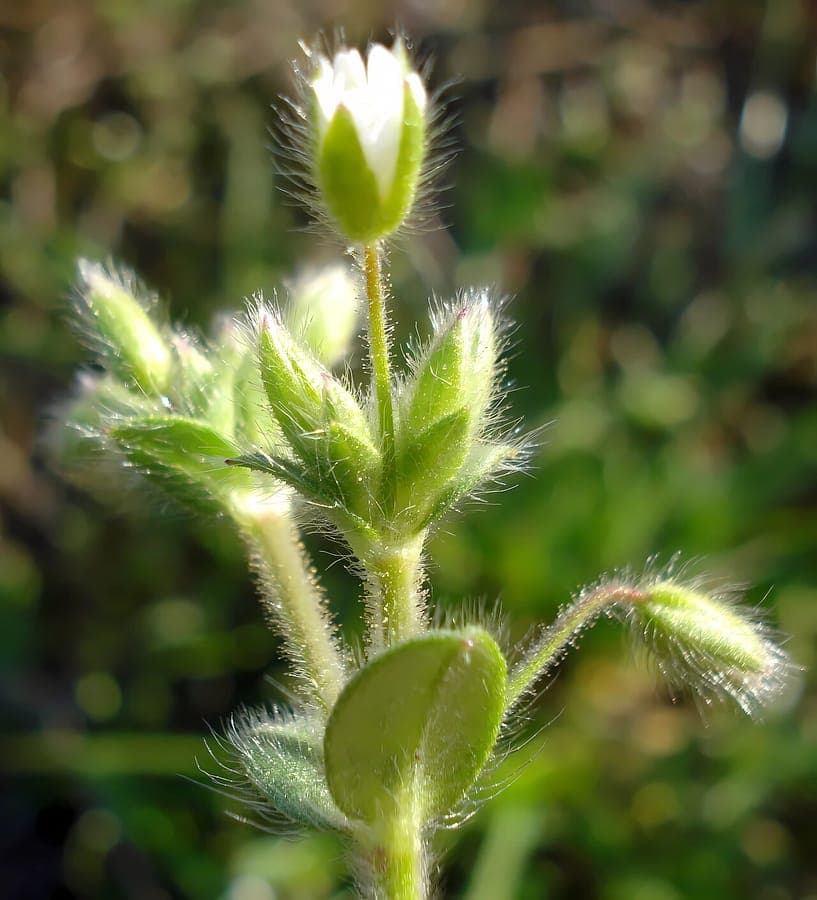
The bloom period runs from April through June, peaking in May. The flowers are small, white, and about 1–1.5 cm across, with five notched petals that give them a slightly frayed look. A fine, soft hair covers both the petals and stems, adding to the plant's gentle, fuzzy appearance. Flowers appear singly or in loose cymes at the stem tips.
Foliage is narrow, lance-shaped, and covered in fine white hairs, giving it a grayish cast-hence the common name. Leaves are 2–4 cm long and remain semi-evergreen through winter in milder zones. After flowering, the plant may look a bit tired, but a quick trim rejuvenates it and encourages denser growth.
Ideal location
Gray chickweed thrives in partial shade to full sun. In full sun, it stays compact and blooms more densely, while in light shade-such as under deciduous shrubs or at woodland edges-it remains healthy and still flowers well. It does poorly in deep, dense shade or in constantly wet soil.
Ideal for rock gardens, border fronts, or between stepping stones, this plant adds soft texture without overwhelming neighboring plants. It's especially effective in transitional zones between lawn and planting beds. Use gardenworld.app to visualize how Gray chickweed can flow between structural elements in your garden design.
Soil requirements
It prefers well-drained, moderately fertile soil with a neutral to slightly alkaline pH (6.5–7.8). It tolerates poor soils and does particularly well in calcareous or chalky conditions. Avoid heavy clay unless amended with grit or sand to improve drainage.
Don't over-fertilize-excess nutrients lead to floppy growth and fewer flowers. A light top-dressing of compost in early spring is sufficient. When planting, loosen the soil to 15 cm and mix in a handful of horticultural grit per plant to prevent root rot.
Free design
Want to see Gray chickweed: complete guide in your garden? Make a free design now.
Watering
Once established, Gray chickweed is moderately drought-tolerant. During the first growing season, water weekly if rainfall is less than 2.5 cm. After that, it relies mostly on natural precipitation.
In extended dry spells, especially in sandy soils, supplemental watering helps maintain vigor. Water at the base in the morning to reduce evaporation and prevent fungal issues. Avoid overhead watering once the plant is mature.
Pruning
No heavy pruning is needed, but cutting back by one-third after flowering (late June) keeps the plant tidy and promotes a neater habit. This can also trigger a light second flush in July, especially in cooler climates.
Use clean, sharp shears to avoid tearing stems. Remove any dead or damaged foliage in early spring to allow new growth to emerge unimpeded.
Maintenance calendar
- January: Dormant. Check for slugs under mulch.
- February: Remove old foliage if matted. Prepare soil for spring.
- March: Apply light compost. Monitor for early growth.
- April: Bloom begins. Watch for aphids.
- May: Peak bloom. Ensure even moisture.
- June: Finish blooming. Trim back by one-third.
- July: Possible second bloom. Water during drought.
- August: Dormant phase. No feeding.
- September: Reduce watering. Allow some seeds to drop.
- October: Let seedlings establish. Avoid disturbing soil.
- November: No pruning. Leave foliage for winter protection.
- December: Dormant. Ensure good drainage to prevent rot.
Winter hardiness
Hardy in USDA zones 5–8, Gray chickweed survives temperatures down to -20°C. Foliage often remains semi-evergreen in zones 6 and above. In colder areas, it dies back but re-emerges in spring.
The main threat in winter is wet soil, not cold. Ensure planting sites have sharp drainage. A light mulch of straw or leaf litter helps in zone 5, but avoid heavy cover that traps moisture.
Companion plants
Excellent companions include early bulbs like Siberian squill (Scilla siberica), wood anemone (Anemone nemorosa), and forget-me-nots (Myosotis). In sunnier spots, pair with catmint (Nepeta), creeping thyme, or alliums. The silvery foliage contrasts well with dark-leaved heucheras or purple ajuga.
Plant in groups of 5–7 for best effect. Spacing: 20–25 cm apart. Let it weave naturally between taller perennials like digitalis or campanula.
Closing
Gray chickweed is an underrated gem-low maintenance, ecologically valuable, and quietly beautiful. It supports early pollinators and fills gaps with grace. While not flashy, it brings texture and continuity to the spring garden.
Available at garden centres across the UK and US, including independents and chains, it's easy to source. Look for healthy plugs in spring or fall. With the right spot and minimal care, it will return reliably year after year, slowly expanding into a soft, living carpet.
Want to see Gray chickweed: complete guide in your garden? Make a free design now.
Upload a photo, pick a style, and get a photorealistic design with plant list in under a minute.
No credit card required


Similar plants
Dianthus karami: complete guide
Dianthus karami
Dianthus karami is a rare Lebanese mountain pink with fringed pink blooms on limestone cliffs, ideal for rock gardens and troughs.
Sicilian pink: complete guide
Dianthus siculus
Discover Dianthus siculus, an elegant purple bloomer from Sicily. Cultivation, June-September flowering and garden combinations.
Alpine mouse-ear chickweed: complete guide
Cerastium pedunculatum
Full growing guide for Cerastium pedunculatum: ideal location, soil, watering, winter hardiness, and companion plants for rock gardens.