
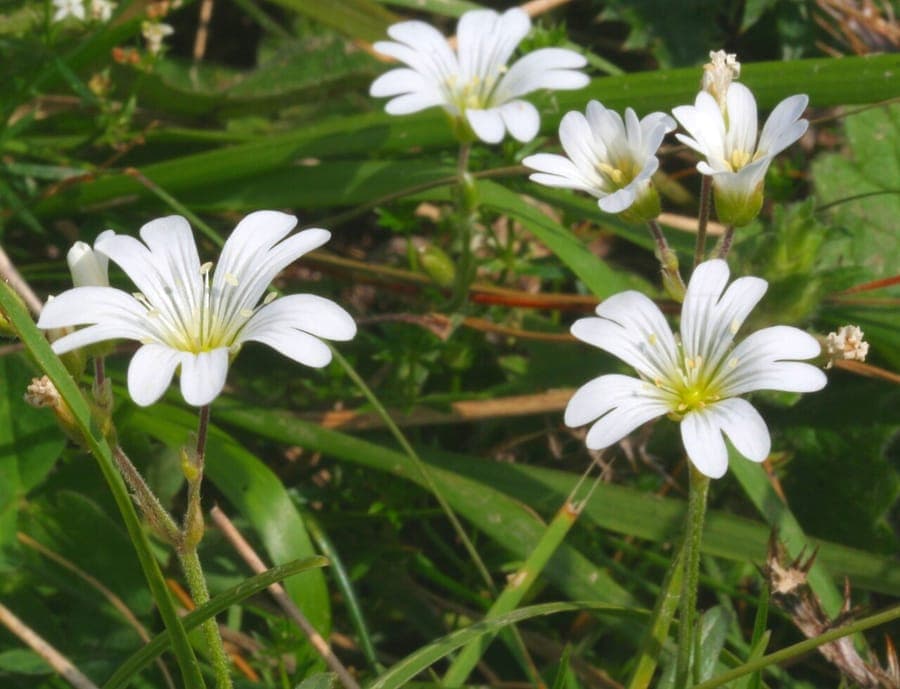
Enrico Blasutto / CC BY-SA 3.0, via Wikimedia Commons
Alpine mouse-ear: complete guide
Cerastium alpinum
Want to see Alpine mouse-ear: complete guide in your garden?
1 minute, no credit card
Overview
Cerastium alpinum, commonly known as alpine mouse-ear, is a low-growing, mat-forming perennial herb native to alpine regions across central and southern Europe, including the Alps, Carpathians, and parts of the British Isles. It thrives in rocky, well-drained environments and is particularly suited to rock gardens, crevices, and the front edges of borders. In the UK, it performs well in zones 3 to 7 (USDA), tolerating winter lows down to -40°C. Its compact form and silvery foliage make it a favourite among gardeners looking to add subtle texture. On gardenworld.app, you can design a garden layout that highlights this plant's natural spread and light requirements.
Appearance & bloom cycle
Alpine mouse-ear grows 5–10 cm tall with a spreading habit reaching up to 25 cm wide. The leaves are narrow, lance-shaped, and densely covered in fine, soft hairs, giving them a grey-green, felt-like appearance. This pubescence helps reduce water loss and protects against intense UV exposure. From June to August, clusters of small, star-shaped white flowers appear atop short stems. Each flower has five notched petals, creating a delicate, fringed look. Blooms last for several weeks, attracting small pollinators like hoverflies and solitary bees. After flowering, seed capsules form and release small black seeds by September. The plant maintains its foliage through winter in milder climates, adding year-round interest.
Ideal location
This plant demands full sun - rate it a 9/10 on the light scale. It needs at least 6–8 hours of direct sunlight daily. Choose south- or west-facing slopes, rock walls, or raised beds with excellent air circulation. Avoid shaded areas or spots under trees, as these promote leggy growth and poor flowering. It excels in alpine gardens, scree beds, or between paving stones. In the UK, it grows well in upland areas like the Lake District or Scottish Highlands, but also adapts to lowland gardens if drainage is optimal. Use gardenworld.app to visualise how this plant fits into a layered rock garden design.
Soil requirements
Alpine mouse-ear prefers lean, sharply drained soil with a pH between 6.5 and 7.0. It struggles in heavy clay or water-retentive soils. A mix of 2 parts loam, 1 part grit, and 1 part horticultural sand works well in containers or raised beds. Avoid organic-rich composts - they encourage excessive foliage at the expense of flowers and increase rot risk. If your soil is acidic (below pH 6.5), incorporate a small amount of garden lime to raise the pH. Test your soil with a simple pH kit available at most garden centres.
Free design
Want to see Alpine mouse-ear: complete guide in your garden? Make a free design now.
Watering
Once established, Cerastium alpinum is drought-tolerant and prefers dry to medium moisture conditions. Water only when the top 2–3 cm of soil feels dry - typically once a week during dry spells in May to August. Overhead watering should be avoided; use a watering can at soil level to prevent soaking the foliage. Morning watering reduces fungal risks. In containers, ensure pots have drainage holes and never let the plant sit in water.
Pruning
Pruning is minimal. After flowering, trim back spent stems with clean shears to maintain a tight, compact shape and discourage self-seeding. Avoid cutting into old wood, as regrowth is slow. Remove any damaged or diseased leaves promptly. If the plant becomes sparse, divide it in early spring and replant sections to rejuvenate growth.
Maintenance calendar
- January: Check for frost heave. No action needed.
- February: Inspect for signs of root rot in wet periods.
- March: Clear away old foliage. Prepare soil if replanting.
- April: Loosen surface soil gently. Watch for slugs.
- May: Begin light watering. Monitor for pests.
- June: Flowers emerge. No feeding required.
- July: Peak bloom. Avoid wetting leaves.
- August: Deadhead spent blooms. Divide if needed.
- September: Collect seeds. Reduce watering.
- October: Leave plant undisturbed.
- November: Remove dead debris. Prevent fungal buildup.
- December: Protect young plants with dry mulch if needed.
Winter hardiness
Alpine mouse-ear is hardy to USDA zone 3, making it suitable for most temperate climates, including the UK. It survives freezing temperatures without protection, though young plants may benefit from a light cover of straw or gravel in harsh winters. The main threat is winter wet - ensure the site drains well to prevent crown rot.
Companion plants
Pair it with other alpine or drought-tolerant species such as Saxifraga oppositifolia, Silene acaulis, or Campanula carpatica. These create a harmonious, textured planting scheme with staggered bloom times. Avoid vigorous spreaders like Aegopodium podagraria. On gardenworld.app, explore planting combinations that complement alpine mouse-ear's growth habit and light needs.
Closing
Cerastium alpinum is a reliable, attractive choice for gardeners seeking a low-maintenance, ornamental ground cover. Its silvery foliage and cheerful white flowers bring life to rockeries and borders without demanding much care. Purchase healthy plants from reputable garden centres across the UK. Use gardenworld.app to plan where it will thrive - with attention to sunlight, drainage, and plant companionship.
Want to see Alpine mouse-ear: complete guide in your garden? Make a free design now.
Upload a photo, pick a style, and get a photorealistic design with plant list in under a minute.
No credit card required


Similar plants
Dianthus karami: complete guide
Dianthus karami
Dianthus karami is a rare Lebanese mountain pink with fringed pink blooms on limestone cliffs, ideal for rock gardens and troughs.
Sicilian pink: complete guide
Dianthus siculus
Discover Dianthus siculus, an elegant purple bloomer from Sicily. Cultivation, June-September flowering and garden combinations.
Alpine mouse-ear chickweed: complete guide
Cerastium pedunculatum
Full growing guide for Cerastium pedunculatum: ideal location, soil, watering, winter hardiness, and companion plants for rock gardens.