
Christian Fischer / CC BY-SA 3.0, via Wikimedia Commons
Branched centaury: complete guide
Centaurium pulchellum
Want to see Branched centaury: complete guide in your garden?
1 minute, no credit card
Overview
Branched centaury (Centaurium pulchellum) is a delicate annual herb from the Gentianaceae family, native to dry grasslands across central and southern Europe. Growing 10–25 cm tall, it thrives in full sun and well-drained, nutrient-poor soils. This unassuming plant has become a favorite among gardeners seeking naturalistic, low-effort designs that still deliver visual interest from midsummer into early autumn.
In the wild, it pops up along gravel paths, rocky slopes, and old field margins-places where richer competitors can't take hold. In the garden, it fits seamlessly into rockeries, crevice gardens, or gravel beds. If you're planning a drought-tolerant layout, Branched centaury deserves a spot. On gardenworld.app, you can design a sun-exposed garden scheme tailored to plants like this, balancing bloom times and textures.
Appearance & bloom cycle
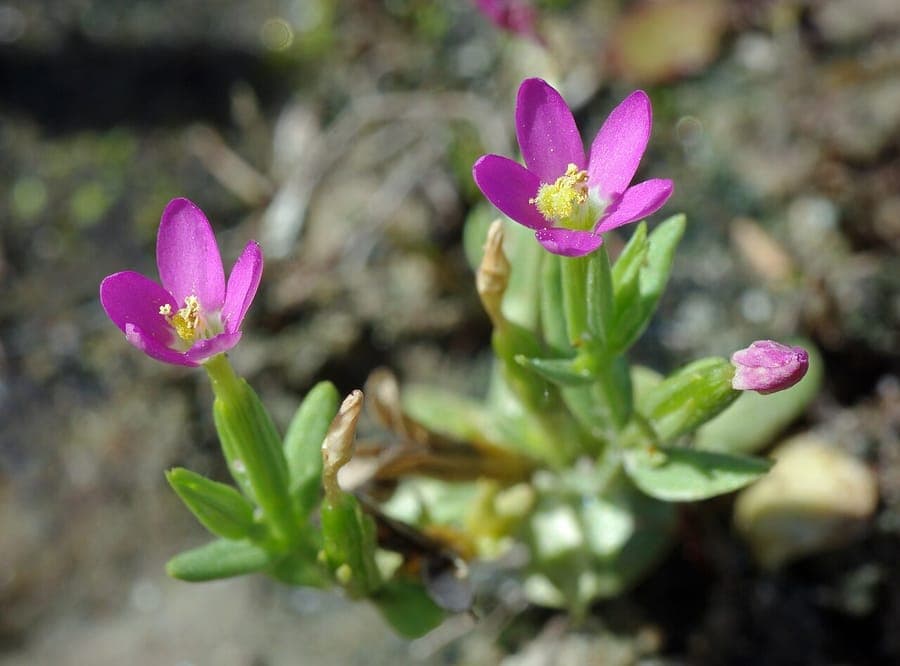
The plant forms slender, branching stems with narrow, opposite leaves in whorls of four. Its most striking feature is the clusters of small, five-petaled flowers that bloom from June to September, peaking in July and August. Each flower is about 1 cm wide, bright pink with deep red veining, and opens only in direct sunlight-closing at dusk or on overcast days. This photoperiodic response makes it a joy to observe.
The bloom is light and airy, not dense, giving the plant a floating quality above low groundcovers. After flowering, it produces tiny seed capsules that shatter easily, allowing natural reseeding in suitable spots. It's not aggressive, but expect occasional volunteers the following year if conditions are right.
Ideal location
Branched centaury needs full sun-rate it an 8 out of 10 for light exposure. It performs best in south- or southwest-facing areas where it gets uninterrupted daylight. Avoid shaded corners or sites under tree canopies; these lead to leggy growth and sparse flowering.
Great choices include rock gardens, dry stone walls, gravel pathways, or between stepping stones in a xeriscape design. It's also effective in wildflower meadows where mowing is minimal. Pair it with other sun-lovers like Bird's-foot trefoil (Lotus corniculatus) or Wild thyme (Thymus serpyllum) for a cohesive, natural look. Use gardenworld.app to map out how these plants interact over the season.
Soil requirements
It prefers lean, sandy, or gravelly soils with a pH between 6.5 and 7.0. Heavy clay or water-retentive substrates are a no-go-they promote root rot and weaken the plant. Amend dense soils with grit or perlite to improve drainage.
Crucially, do not enrich the soil with compost or fertilizer. This plant evolved in poor conditions, and too many nutrients result in floppy growth and fewer blooms. It thrives where other plants struggle-on old concrete rubble, sandy banks, or compacted pathways.
Free design
Want to see Branched centaury: complete guide in your garden? Make a free design now.
Watering
Once established, Branched centaury is drought-tolerant and rarely needs supplemental watering. During germination and early growth (first 4–6 weeks), keep the surface lightly moist-use a fine spray to avoid displacing seeds.
After that, rely on rainfall. Only water during prolonged dry spells lasting more than three weeks, especially in USDA hardiness zones 6–8. Overhead watering increases fungal risk, so water at the base if needed.
Pruning
No pruning is required. As an annual, it completes its lifecycle within one season. If you want to limit self-seeding, deadhead spent flowers before seeds form. Otherwise, let it go to seed-birds may feed on the capsules, and new plants will emerge naturally next spring.
Cut back any dead foliage in late autumn if desired, but leaving it over winter can protect soil and provide habitat for beneficial insects.
Maintenance calendar
- Jan: No action
- Feb: No action
- Mar: Check for early seedlings; start seeds indoors if desired
- Apr: Sow seeds directly in garden (late April ideal)
- May: Keep soil moist; protect seedlings from late frosts
- Jun: First blooms appear; monitor for aphids or mildew
- Jul: Peak flowering; ensure good air circulation
- Aug: Continue bloom; watch for new seedlings
- Sep: Flowering tapers off; collect seeds if saving
- Oct: Clear dead stems or leave for wildlife
- Nov: No action; watch for overwintering rosettes
- Dec: No action
Winter hardiness
Not a perennial-Branched centaury dies after setting seed. However, its seeds are cold-hardy and germinate reliably in spring when soil hits 10°C. In milder zones (USDA 7–8), you may see overwintering rosettes forming in autumn that bloom early the next year.
Avoid mulching heavily-the plant needs light and warmth to germinate. A thin layer of leaf litter is fine, but thick bark or straw can suffocate seedlings.
Companion plants
Choose low-growing, non-competitive companions: Selfheal (Prunella vulgaris), Mouse-ear hawkweed (Pilosella officinarum), or Sand pink (Dianthus deltoides). These share similar habitat needs and won't overshadow the centaury.
Avoid vigorous perennials like Echinacea or Rudbeckia, which demand rich soil and outcompete delicate annuals. Stick to plants that thrive in lean, dry conditions.
Closing
Branched centaury is a quiet performer with subtle charm. It won't dominate your garden, but it adds delicate color and movement where little else grows. Its ecological role-supporting small pollinators and reseeding naturally-makes it a smart pick for sustainable gardening.
You can find seeds or young plants at local garden centres, especially those focused on native or wild species. For best results, place it in a hot, dry spot and let it do its thing. On gardenworld.app, you can preview how it integrates with your existing plants, soil type, and sunlight patterns-making it easier to get the placement just right.
Want to see Branched centaury: complete guide in your garden? Make a free design now.
Upload a photo, pick a style, and get a photorealistic design with plant list in under a minute.
No credit card required


Similar plants
Branched gentianella: complete guide
Gentianella ramosa
Full growing guide for Gentianella ramosa, the branched Alpine gentianella of the SW Alps - location, soil, watering, winter care and companion plants.
Spiked centaury: complete guide
Schenkia spicata
Full growing guide for Schenkia spicata (spiked centaury): sunny position, dry soil, bloom season and garden companions.
Narrow-leaf gentian: complete guide
Gentiana angustifolia
Narrow-leaf gentian growing guide: intense blue trumpet flowers in May-July on well-drained limestone. Full cultivation tips.