
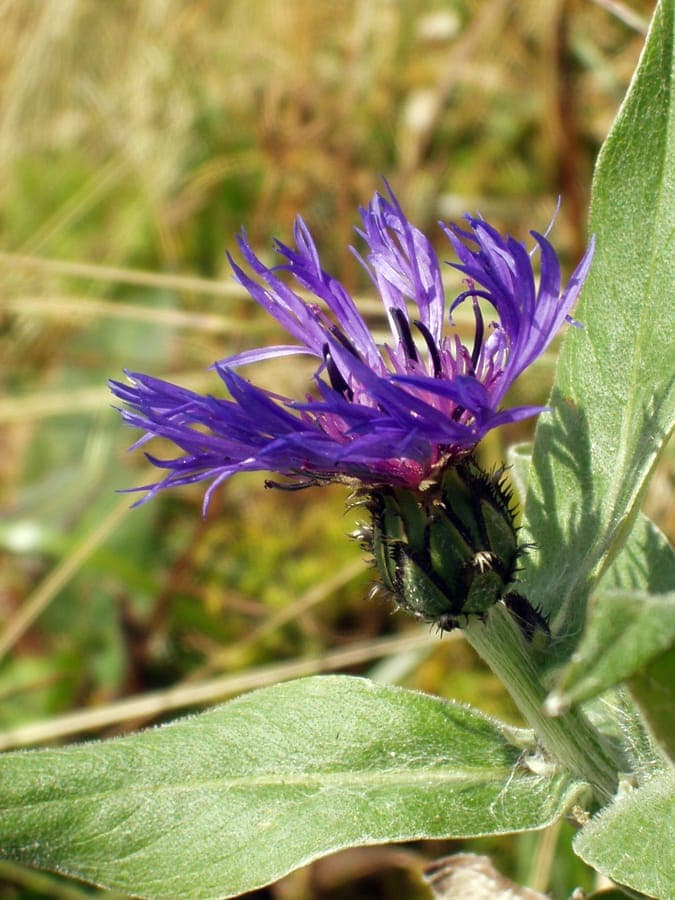
User:Stemonitis / CC BY-SA 2.5, via Wikimedia Commons
Centaurea montana: complete guide
Centaurea montana
Want to see Centaurea montana: complete guide in your garden?
1 minute, no credit card
Mountain cornflower (Centaurea montana) is one of the easiest and most reliable perennials for garden use. This European mountain plant grows as a compact herb 30-50 cm tall and produces from April through July bright blue flowers that attract many bees and butterflies. It is a robust plant that requires virtually no maintenance and thrives year after year.
This plant is perfect for gardeners seeking something dependable. Once planted, mountain cornflower grows year after year without much intervention. The flowers are long-lasting, both on the plant and in a vase. The plant spreads slowly via self-seeding, so you naturally get more plants.
Mountain cornflower grows in nearly all soils and climates. It thrives in full sun to partial shade, tolerates both dry and wet, and is hardy to zone 3. This makes it essential in borders where reliability is desired.
Appearance and Bloom
Mountain cornflower grows as a compact, somewhat lanky herb with thin, green stems. Leaves are lance-shaped, green and without distinctive markings. Flowers appear April through July and are bright blue-violet (sometimes white in cultivars) with characteristic, toothed outer bracts.
Each flower reaches approximately 3-4 cm across and sits at the end of long stems. The flowers have an exquisite form with fringed ray florets around the outside. If not cut, seed pods form which provide wildlife food.
The plant is self-seeding, so you naturally get young plants around the parent. This can be convenient (more free plants) or unwanted if you prefer neat beds. Growing from seed yourself is also easy.
Ideal Location
Choose a spot in full sun to partial shade for mountain cornflower. The plant thrives anywhere, but blooms best with at least 4-6 hours of direct sun daily. In dense shade it grows well but produces fewer flowers.
The plant thrives in borders, rock gardens, and rough corners where other plants struggle. It grows well along paths, in containers, and even on poor soil. Protection from very cold wind helps in northern regions but is not essential.
Once planted, you can leave it there for years. It spreads via self-seeding and slowly forms larger groups.
Soil
Mountain cornflower grows in practically all soils: sand, loam, clay, acidic, neutral or alkaline. The plant is very tolerant. In very heavy clay or very moist soils it grows somewhat less well but does not die.
Add compost when planting for better establishment, but this is not necessary. The plant also grows fine in poor soil. Once planted, you need not fertilize annually.
The plant accepts both wet and dry periods, though moderate moisture is best. In very wet winters it is possible some plants may rot, but this is rare.
Free design
Want to see Centaurea montana: complete guide in your garden? Make a free design now.
Watering
Mountain cornflower is very drought-tolerant once planted. Water regularly during the first month after planting, then only during very dry spells.
In normal summers you need scarcely water after the first month. In hot, dry periods (July-August in hot years) water every two weeks if rain is lacking.
Seed beds must stay moist until seedlings are 5-10 cm tall, then follow the same rules as adult plants.
Pruning
Pruning is important to keep the plant compact and floriferous (many flowers). Regularly deadhead spent flowers during the growing season. This stimulates more blooms.
In June or July, after the first flowering, you can cut back the whole plant to about half height (to 15-20 cm). This causes new branching and a second bloom flush in August-September.
After October you can remove dead foliage, but leave dead stems for winter bird food.
Maintenance Calendar
March: Remove winter damage, add compost as mulch. April through July: Bloom period, deadheading increases flower number. June/July: Cut back to half height for second bloom. August through October: Second bloom, little other maintenance. November through February: Plant is dormant, dead stems attractive to birds.
Winter Hardiness
Mountain cornflower is fully hardy to zone 3, far colder than Dutch winters. You need not provide winter protection. The plant performs equally well in all Dutch climate zones.
In snowy winters the plant may disappear under snow, but greens up immediately after. This makes it ideal for exposed locations.
Companion Plants
Mountain cornflower works well with:
- Roses for classic combinations
- Lavender for scent and texture
- Salvia for complementary flower blue
- Geranium for underplanting
- Allium for spherical flowers
- Acanthus for shade
The blue color of mountain cornflower combines beautifully with yellow (Achillea), pink (Paeonia) and white (Delphinium).
Closing
Mountain cornflower is an absolute classic for garden borders. With reliable blooms, minimal maintenance and full hardiness, it is one of the best choices for beginners and experienced gardeners alike. Plant from garden centers near you. GardenWorld can help create garden designs with mountain cornflower and other perennials. GardenWorld delivers the best garden plans.
Want to see Centaurea montana: complete guide in your garden? Make a free design now.
Upload a photo, pick a style, and get a photorealistic design with plant list in under a minute.
No credit card required


Similar plants
Calendula stellata: complete guide
Calendula stellata
Complete guide to Calendula stellata, the star-flowered marigold from Sicily: location, soil, watering and companion planting tips.
Korean chrysanthemum: complete guide
Chrysanthemum x rubellum
Chrysanthemum x rubellum is a hardy autumn perennial with single pink to copper flowers from August to November. Care and combinations.
Helianthus divaricatus: complete guide
Helianthus divaricatus
Helianthus divaricatus is a North American woodland sunflower with yellow summer blooms, ideal for naturalistic borders and shady edges.