
Kenraiz / CC BY-SA 4.0, via Wikimedia Commons
Dune sandbur grass: complete guide
Cenchrus longispinus
Want to see Dune sandbur grass: complete guide in your garden?
1 minute, no credit card
Cenchrus longispinus, also known as dune sandbur, gentle Annie, long-spine sandbur, or mat sandbur grass, is a North American native grass species from the Poaceae family (grass family). This plant grows naturally across much of the West and South of North America, from Texas to Quebec, and is present in dry dunes, sandy fields, and desert margins. In gardens, it offers decorative, fine texture with interesting seed structures. Though sometimes considered a weed because the seed cylinders are spiky, when properly placed it provides a durable, low-maintenance grass species for dry gardens.
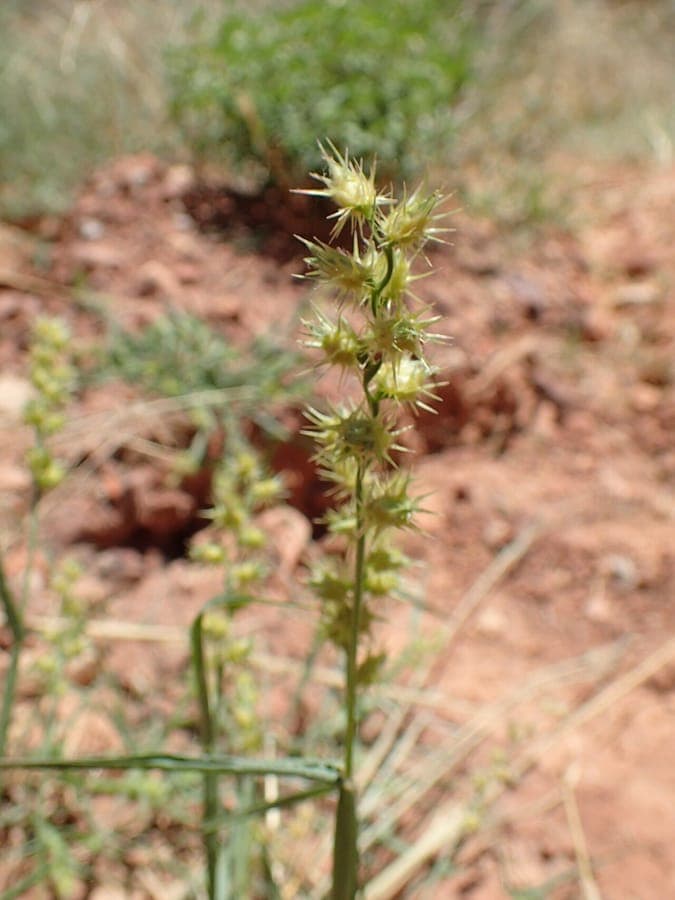
The growth of Cenchrus longispinus is moderate. The plant reaches 40 to 70 centimeters in height and forms dense, tufted clumps. The blades are fine, linear, green to grayish-green, providing subtle, grassy texture. Bloom occurs from July through October, with inconspicuous green-yellow flowers on slender spikes. The actual attraction is the seed structure: long, cylindrical seed heads covered with long, fine spines. These are initially green to yellow, later becoming brownish and persisting long on the plant.
Ideal location: Cenchrus longispinus grows best in full sun with at least 6 to 8 hours of direct sunlight daily. It can grow in partial shade but will be less compact and weaker. The plant thrives in dry to very dry locations and is suitable for gardens in USDA zones 5 to 10, though it performs better in zones 7 to 10. It is ideal for coastal, desert, sand-dune, and desert-edge gardens. It grows well in containers.
Soil requirements: Cenchrus longispinus prefers sandy, lean soils and tolerates poor drainage poorly. The plant grows on virtually all soils provided they are well-drained. Sandy loams, gravelly soils, and pure sand are ideal. The pH can range from acidic to neutral (pH 5.5 to 7.5). The plant tolerates very poor nutrient content; indeed, rich soils can lead to reduced vigor. No rich amendments needed.
Watering: Cenchrus longispinus is highly drought-tolerant once established. After planting, water for the first 4 to 6 weeks until well-rooted. Thereafter, minimal watering. During the growing season (May through October), water only if extreme drought occurs. The plant prefers dry conditions. In winter, no water needed; excessive moisture in winter can be problematic.
Pruning: Cenchrus longispinus requires no pruning. The plant naturally forms a beautiful shape. In April, you may remove last year's dead grass material by pulling it manually from the clump or trimming with pruning shears. This stimulates new, green blade growth. Be careful with long spikes; wear gloves.
Maintenance calendar: April: Remove dead grass material. May to June: Plant begins active growth; water only after planting. July to September: Continued growth and bloom; enjoy seed structures. October to March: Minimal care; seed heads remain attractive through winter; remove deteriorated material in April.
Winter hardiness: Cenchrus longispinus is hardy to USDA zone 5, though it performs better in zones 7 to 10. In zones 5 to 6, foliage may suffer frost damage, but roots usually survive. In very cold winters, the plant can die entirely. In zones 7 and higher, however, it is very durable. In zone 5 gardens, you can reseed annually or treat as an annual.
Seed heads: The spiky seed heads are double-edged: aesthetically attractive but potentially troublesome. The spines catch on clothing and animal fur. Plant it away from paths and seating areas. Let seed ripen and allow natural dispersal, or cut seed heads before they fully mature if you want to prevent self-seeding.
Companion plants: Cenchrus longispinus pairs beautifully with other drought-tolerant grasses and plants such as buffalograss, silky thread grass, Artemisia, and various sedums. In wildflower gardens, it forms natural associations with prairie flowers. The seed heads attract birds and contribute to ecological value. Plant in groups of 3 to 5 for maximum texture effect.
Conclusion: Cenchrus longispinus offers a durable, low-maintenance grass species for dry, sunny gardens. With fine blades, interesting seed heads, and extreme drought tolerance, it quickly becomes a favorite for xeriscaping and low-water gardens. Low-maintenance and natural, it provides elegance and ecological benefit to warm-dry gardens.
Want to see Dune sandbur grass: complete guide in your garden? Make a free design now.
Upload a photo, pick a style, and get a photorealistic design with plant list in under a minute.
No credit card required


Similar plants
Sporobolus pungens: complete guide
Sporobolus pungens
Sporobolus pungens is a stoloniferous Mediterranean coastal grass with outstanding salt and drought tolerance, perfect for seaside and dry gardens.
Mediterranean aegilops: complete guide
Aegilops biuncialis
Everything about Aegilops biuncialis, a Mediterranean annual grass with ornamental spikes and outstanding drought tolerance for dry gardens.
Silver bluestem: complete guide
Bothriochloa saccharoides
Full guide to Bothriochloa saccharoides (silver bluestem): site, soil, watering, winter hardiness, pruning, and garden companions.