
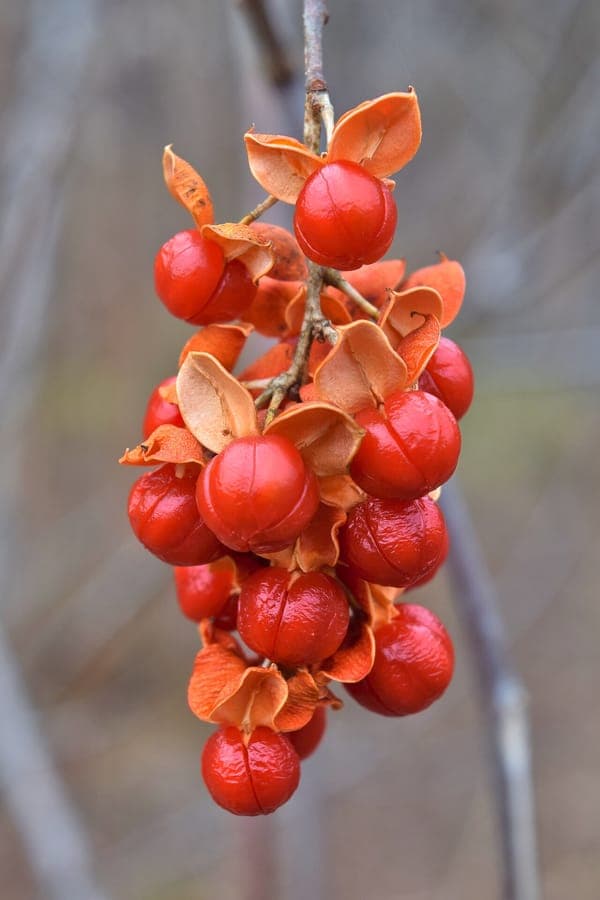
The Cosmonaut / CC BY-SA 2.5 ca, via Wikimedia Commons
American bittersweet: complete guide
Celastrus scandens
Want to see American bittersweet: complete guide in your garden?
1 minute, no credit card
Overview
American bittersweet (Celastrus scandens) is a hardy, deciduous vine native to eastern North America, thriving from Alabama to Iowa and as far north as Connecticut. Unlike its invasive cousin, Oriental bittersweet, this species is non-aggressive and makes an excellent choice for wildlife gardens and naturalistic designs. It's a vigorous climber, reaching up to 30 feet (9–10 meters) when given support. What sets it apart is its stunning autumn display: bright orange capsules splitting open to reveal glossy red berries that persist into winter. It's a favorite among gardeners looking to add seasonal drama without sacrificing ecological balance.
On gardenworld.app, you can design a seasonal planting scheme that integrates American bittersweet with complementary perennials and shrubs, ensuring your garden has structure and color from spring to deep winter.
Appearance & bloom cycle
This vine features slender, twining stems that spiral clockwise around supports. The leaves are alternate, oval-shaped, and 2–5 inches (5–12 cm) long, with finely toothed edges. They emerge bright green in spring, darken in summer, and turn a brilliant golden yellow in fall. In late spring (May to early June), small clusters of inconspicuous greenish-white flowers appear in the leaf axils. These are followed by round green fruits that mature into the iconic orange, three-valved capsules by mid-September. Each capsule opens to expose a cluster of vivid red arils (seed coverings), which remain on the vine well into December or even February in mild winters.
Note: all parts of the plant, especially the berries, are toxic to humans and pets if ingested. However, birds such as grosbeaks and woodpeckers feed on them, making American bittersweet a valuable addition to bird-friendly gardens.
Ideal location
Plant American bittersweet in full sun to partial shade. Maximum fruit production occurs in full sun (at least 6 hours of direct light). In shadier spots, the vine may grow but will produce fewer flowers and berries. Provide a sturdy support structure - this vine doesn't cling on its own and needs something to twine around. Wooden trellises, pergolas, or cedar posts work best. Avoid letting it climb thin saplings or weak shrubs; while it won't strangle large trees, it can girdle and weaken young ones over time.
Never plant near structures made of vinyl or lightweight metal - the vine's weight and twisting growth can cause damage. Plan ahead: on gardenworld.app, you can visualize how the vine will cover your structure over the next 5 years, helping you avoid costly mistakes.
Soil requirements
American bittersweet is adaptable to a wide range of soils as long as drainage is good. It grows well in sandy loam, clay-loam, and even rocky soils, provided they're not waterlogged. The ideal pH range is 5.0 to 7.5 - slightly acidic to neutral. Avoid overly rich or heavily fertilized soils; excess nitrogen promotes leafy growth at the expense of flowering. A light top-dressing of compost at planting is sufficient - no ongoing fertilization needed.
Free design
Want to see American bittersweet: complete guide in your garden? Make a free design now.
Watering
Keep the soil consistently moist during the first growing season. Water deeply once a week (about 10–15 liters) during dry spells. After the first year, the plant becomes moderately drought-tolerant but performs best with occasional deep watering during prolonged dry periods. Use soaker hoses or drip irrigation to keep moisture at root level and reduce fungal issues. Avoid overhead watering, especially in humid climates.
Pruning
Prune in late winter or early spring before new growth begins. Since it flowers on previous season's wood, pruning in summer or fall removes next year's blooms. Remove dead, damaged, or tangled vines. To encourage fruiting, cut back strong stems to 2–3 buds. Remember: American bittersweet is dioecious - you need both male and female plants for fruit production. Plant them within 15 meters (50 feet) of each other. Label your plants at purchase, or opt for named cultivars like 'Autumn Revolution' that are self-fertile.
Maintenance calendar
- Jan: inspect structure, prune if needed
- Feb: final pruning window
- Mar: monitor for early shoots
- Apr: no action required
- May: flowering begins
- Jun: check for aphids or scale
- Jul: water during droughts
- Aug: rapid vine extension
- Sep: fruit capsules begin to color
- Oct: peak display of orange and red
- Nov: leave fruit for winter interest
- Dec: enjoy structure and berries
Winter hardiness
American bittersweet is hardy in USDA zones 3b to 8a, meaning it survives winter temperatures as low as -34°C (-30°F). In colder zones, young plants may benefit from a thick layer of mulch around the base to protect the crown. The vine dies back to the ground in extreme cold but regrows from the roots in spring. Mature plants lose their leaves in late fall, but the bare stems with persistent fruit add architectural interest to winter gardens.
Companion plants
Pair American bittersweet with late-season bloomers like Aster novae-angliae or Echinacea purpurea to extend garden color. Plant evergreens like juniper or yew nearby for year-round structure. Underplant with low-growers such as Carex vulpinoidea or Tiarella cordifolia to cover bare soil without competing. Avoid invasive vines like English ivy or oriental bittersweet - they can smother your native vine. Use spacing wisely; give the base at least 1 meter of clearance from other perennials.
Closing
American bittersweet is a reliable, low-maintenance vine that delivers high impact in the garden, especially in autumn and winter. With proper support, sun exposure, and a male-female pair, you'll enjoy years of vibrant color and wildlife activity. It's not just ornamental - it's a functional native plant that supports biodiversity. Look for healthy, labelled plants at garden centres in spring. Trusted retailers often carry it, but verify the species - some sell the invasive Celastrus orbiculatus by mistake. When in doubt, check plant tags carefully or consult gardenworld.app for vetted planting combinations.
Want to see American bittersweet: complete guide in your garden? Make a free design now.
Upload a photo, pick a style, and get a photorealistic design with plant list in under a minute.
No credit card required


Similar plants
Fringed grass of Parnassus: complete guide
Parnassia fimbriata
Everything about Fringed grass of Parnassus (Parnassia fimbriata): growing, soil, watering and care. A delicate mountain perennial with white fringed flowers.
Euonymus cornutus: complete guide
Euonymus cornutus
Horned spindle is an intriguing shrub from central China with distinctive winged seed capsules. Learn how to grow this unique plant.
Large-Winged Spindle: complete guide to this Far Eastern shrub
Euonymus macropterus Rupr.
Discover Large-Winged Spindle (Euonymus macropterus), an elegant Japanese shrub prized for spectacular winged fruits. Perfect for Asian gardens and woodland plantings.