
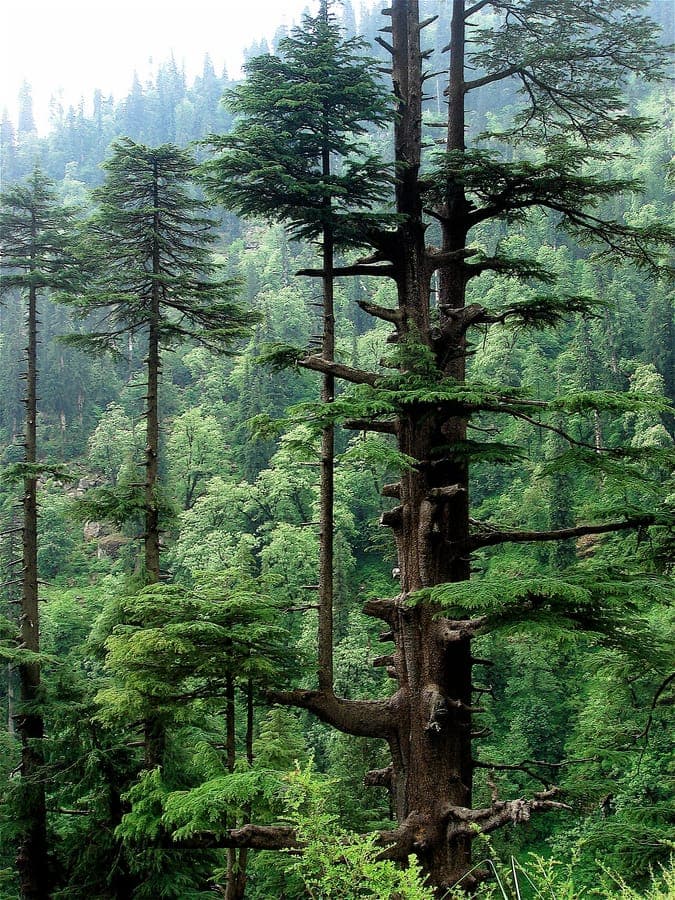
Paul Evans from London, United Kingdom / CC BY 2.0, via Wikimedia Commons
Deodar: complete guide
Cedrus deodara
Want to see Deodar: complete guide in your garden?
1 minute, no credit card
Overview
Cedrus deodara, commonly known as the Deodar cedar, is a stately evergreen tree native to the western Himalayas, including parts of Afghanistan, northern India, Nepal, Pakistan and Tibet. It thrives in temperate climates and is suitable for large gardens across USDA hardiness zones 7 to 9 (-17°C to -7°C). In cultivation, it typically reaches 30–50 meters in height with a spread of 10–15 meters, making it unsuitable for small urban yards but ideal for estates, parks or spacious rural landscapes. The tree develops a pyramidal shape when young, gradually maturing into a broad, open crown with gracefully drooping branch tips. Its elegant form and fine-textured foliage make it a standout specimen in any landscape.
On gardenworld.app, you can design a garden layout that incorporates the Deodar's expansive growth pattern and long-term shade projection.
Appearance & bloom cycle
The Deodar cedar features soft, needle-like leaves that are 3–5 cm long and display a silvery-green hue. These needles grow in dense clusters of 20–30 on short spurs along the branches and remain on the tree for up to three years. In late spring (May to June), the tree produces small yellow male flowers that release pollen, while the female cones start out purplish and develop into upright, barrel-shaped cones 7–10 cm long. These mature over two years, turning from bluish to brown before releasing seeds in autumn. Unlike many conifers, the cones do not disintegrate upon maturity but may remain on the tree for several years, adding visual interest.
Ideal location
Choose a full sun site for optimal growth-ideally receiving at least 6 hours of direct sunlight daily. While the Deodar can tolerate partial shade, it develops best in open, unobstructed areas. Allow at least 8 meters of clearance from buildings or other trees to accommodate its wide-spreading canopy. Young trees benefit from protection against harsh, drying winds, especially from the east. This species adapts well to urban conditions and moderate air pollution but performs best in well-ventilated, rural or semi-rural settings. Avoid planting in confined spaces or near underground utilities.
Soil requirements
The Deodar prefers deep, well-drained loamy soil with a pH between 6.0 and 7.5. It tolerates a range of soil types but struggles in waterlogged conditions, which can lead to root rot. Heavy clay soils should be amended with sand and organic matter to improve drainage. Sandy soils are acceptable as long as they retain some moisture and nutrients. When planting, mix in compost or well-rotted manure into the planting hole, but avoid high-nitrogen fertilizers that promote weak growth.
Free design
Want to see Deodar: complete guide in your garden? Make a free design now.
Watering
Young trees need consistent moisture during the first 2–3 years. Water deeply once a week during dry spells, especially in summer. Use drip irrigation or a soaker hose to deliver water slowly to the root zone. Established trees are highly drought-tolerant and rarely need supplemental watering, except during prolonged dry periods in their first five years. Overhead watering should be avoided to prevent fungal issues on the foliage.
Pruning
Pruning is rarely necessary. The tree's natural form is attractive and self-sustaining. Remove only dead, damaged or diseased wood, preferably in late winter before new growth begins. Avoid cutting back into old wood, as Cedrus species do not regenerate from bare branches. Use clean, sterilized tools to prevent the spread of pathogens.
Maintenance calendar
- Jan: Check for snow load; gently shake off heavy accumulations.
- Feb: Inspect for signs of animal damage; apply tree guards if needed.
- Mar: Ideal time to plant young trees before bud break.
- Apr: Monitor for aphids or scale; treat with horticultural oil if infested.
- May: Male flowers appear; no maintenance required.
- Jun: Provide extra water during dry spells.
- Jul: Continue monitoring young trees for drought stress.
- Aug: Minimal care; water only in extreme drought.
- Sep: Clear debris and weeds from the base to prevent moisture retention.
- Oct: Do not fertilize; allow leaf litter to form a protective layer.
- Nov: Keep mulch away from the trunk to prevent rot.
- Dec: Protect young trunks from rabbits and rodents with wire mesh.
Winter hardiness
Hardy to USDA zone 7, the Deodar withstands winter temperatures down to -17°C. In milder zones like 8 and 9, it thrives with little to no winter protection. Young trees may suffer tip dieback in severe winters, so consider wrapping the leader with burlap in exposed sites. Mature trees are resilient and handle snow and ice well due to their flexible branches.
Companion plants
Underplant with shade-tolerant, low-maintenance species such as Hellebores, Heuchera, or Epimedium. Avoid aggressive spreaders like English ivy or mint. Ornamental grasses like Carex or Hakonechloa add texture without competing for resources. Use gardenworld.app to visualize plant layering and spacing under a mature Deodar canopy.
Closing
The Deodar cedar is a long-term investment in your landscape. It demands space and patience but rewards with unmatched beauty and presence. Start with a healthy sapling from reputable garden centres, plant it wisely, and let it grow into a living landmark. Over decades, it becomes more than a tree-it becomes part of the land's story.
Want to see Deodar: complete guide in your garden? Make a free design now.
Upload a photo, pick a style, and get a photorealistic design with plant list in under a minute.
No credit card required


Similar plants
Abies delavayi: complete guide
Abies delavayi
Delavayi fir is an elegant, medium-sized coniferous tree from the Pinaceae family with dark green needles. This Asian evergreen is perfect for alpine gardens and large landscapes.
Taiwan fir: complete guide
Abies kawakamii
Discover the magnificent Taiwan fir, a rare evergreen conifer from Taiwan's mountain regions. Learn growth requirements, care tips, and why this beautiful tree is perfect for collectors of unique garden specimens.
Farges fir: complete guide
Abies fargesii
Discover the majestic Farges fir, an impressive conifer from China's mountains with elegant foliage and columnar form. Ideal for large gardens.