
Wikimedia Commons / CC BY-SA 3.0, via Wikimedia Commons
Atlas cedar: complete guide
Cedrus atlantica
Want to see Atlas cedar: complete guide in your garden?
1 minute, no credit card
Overview
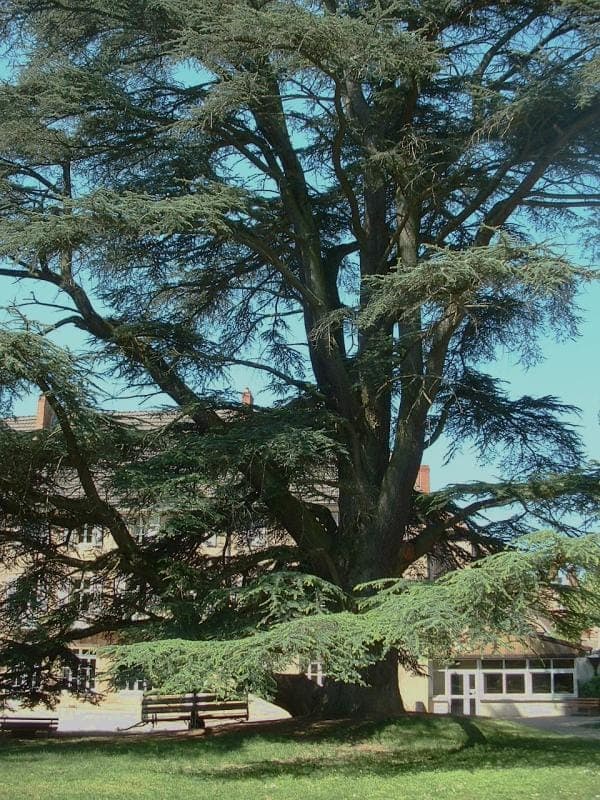
The Atlas cedar (Cedrus atlantica) is a stately conifer native to the high mountains of Algeria and Morocco. It grows slowly but steadily, eventually reaching heights of 20 to 30 meters with a spread of 10 to 15 meters. This makes it ideal for spacious gardens, estates, or parkland settings. In the UK and northern Europe, it's valued for its hardiness, striking blue-green foliage, and architectural presence. It's not a tree for small urban plots - it needs room to develop its wide-spreading crown. On gardenworld.app you can design a garden plan that accommodates this tree's long-term growth and spatial needs.
Appearance & bloom cycle
Young Atlas cedars have a neat pyramidal shape, maturing into a broad, flat-topped crown with horizontal branches that sweep slightly upward. The needles are stiff, 2–3 cm long, and densely packed, giving the tree a full, feathery look. The popular 'Glauca' cultivar shows off a vivid silvery-blue hue, especially in full sun. In autumn, male flowers appear as small yellow clusters, mostly inconspicuous. Female cones take 18 months to mature, standing upright on upper branches. They are ovoid, 6–8 cm long, and turn from green to brown as they ripen. Seeds are released in late autumn or early winter.
Ideal location
Plant your Atlas cedar in full sun - aim for a light level of 8 or higher. It tolerates light shade but will grow more loosely and with less vibrant color. Give it plenty of space: at least 5 meters from buildings, fences, or underground utilities. It thrives in open, airy locations like slopes, large lawns, or woodland edges. Young trees may benefit from staking in exposed, windy areas. Avoid planting near swimming pools or patios where falling needles could create mess. Use gardenworld.app to visualise spacing and shadow patterns before planting.
Soil requirements
The Atlas cedar prefers well-drained, sandy loam to loamy soils. It's adaptable to a range of soil types but struggles in heavy, waterlogged clay. The ideal pH is neutral to slightly alkaline (7.0–7.5). If your soil is acidic, consider amending it with lime. For poor drainage, raise the planting area with a mix of compost, grit, and topsoil. A gravel mulch helps suppress weeds and improves moisture control around the root zone.
Watering
Young trees need consistent watering for the first 2–3 years, especially during dry spells. Water deeply once a week in summer, applying 10–15 liters per tree. Established trees are highly drought-tolerant thanks to their deep root system. Only irrigate during prolonged droughts (4+ weeks without rain). Overwatering is a bigger threat than underwatering - saturated soil leads to root rot, the main cause of decline in young cedars.
Free design
Want to see Atlas cedar: complete guide in your garden? Make a free design now.
Pruning
Pruning is rarely needed. The Atlas cedar naturally forms a balanced crown. Only remove dead, damaged, or crossing branches, preferably in late winter or early spring. Never cut the central leader - this ruins the tree's natural shape. Use sharp, clean tools to prevent disease. If you must shape it, do so lightly and never remove more than 20% of the canopy in a single season.
Maintenance calendar
- Jan: Check for snow damage. Brush off heavy snow to prevent branch breakage.
- Feb: Light pruning of dead wood if needed.
- Mar: Plant new trees once soil has thawed. Apply slow-release fertiliser.
- Apr: Monitor for aphids or fungal issues. Water young trees if spring is dry.
- May: Keep soil moist during warm spells.
- Jun: Watch for drought stress. No fertilising needed.
- Jul: Deep water young trees during heatwaves.
- Aug: Continue monitoring moisture levels.
- Sep: Needle drop is normal - don't worry.
- Oct: Collect cones for propagation or leave for wildlife.
- Nov: Protect young trunks from rodents with guards.
- Dec: Inspect for winter hardiness and structural stability.
Winter hardiness
Hardy to USDA zones 6b (-20°C), possibly 6a (-23°C) in sheltered spots. In the UK and northern Europe, it generally survives winters without issue. Young trees may suffer tip dieback in harsh, exposed conditions. Use horticultural fleece on the leader in the first few winters if needed. The tree handles snow well - branches are flexible and rarely break under load.
Companion plants
Choose drought-tolerant, low-growing plants that won't compete for moisture. Good options include lavender (Lavandula), ornamental grasses like Festuca glauca, or yarrow (Achillea). Avoid dense groundcovers like ivy or periwinkle, which can smother roots. Planting with other conifers like pines or firs creates a woodland feel, but give the cedar breathing room. It's a statement tree - let it shine.
Closing
The Atlas cedar isn't for every garden, but for those with space, it's a lifetime investment. Its slow growth pays off in resilience and beauty. With the right site and care, it becomes a focal point for decades. Look for healthy specimens at garden centres or online retailers. On gardenworld.app you can explore design ideas, companion plants, and layout options to make the most of this majestic tree. Plant it right, step back, and let nature take its course.
Want to see Atlas cedar: complete guide in your garden? Make a free design now.
Upload a photo, pick a style, and get a photorealistic design with plant list in under a minute.
No credit card required


Similar plants
Abies delavayi: complete guide
Abies delavayi
Delavayi fir is an elegant, medium-sized coniferous tree from the Pinaceae family with dark green needles. This Asian evergreen is perfect for alpine gardens and large landscapes.
Taiwan fir: complete guide
Abies kawakamii
Discover the magnificent Taiwan fir, a rare evergreen conifer from Taiwan's mountain regions. Learn growth requirements, care tips, and why this beautiful tree is perfect for collectors of unique garden specimens.
Farges fir: complete guide
Abies fargesii
Discover the majestic Farges fir, an impressive conifer from China's mountains with elegant foliage and columnar form. Ideal for large gardens.