
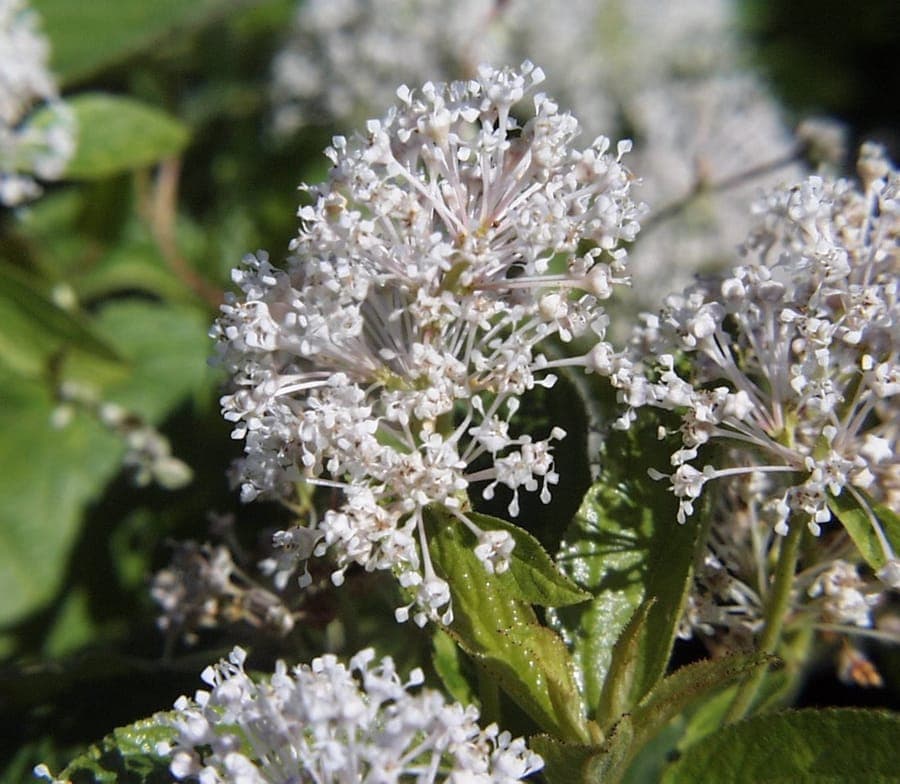
unknown author, USFWS / Public domain, via Wikimedia Commons
Ceanothus americanus: complete guide
Ceanothus americanus
Want to see Ceanothus americanus: complete guide in your garden?
1 minute, no credit card
Overview
Ceanothus americanus, commonly known as New Jersey tea or Jersey tea, is a charming North American shrub native to the eastern United States and Canada. Historically, indigenous peoples and American colonists brewed its leaves into a caffeine-free tea. Today, it remains a valued choice for low-maintenance gardens, offering both ornamental appeal and wildlife benefits.
This shrub naturally inhabits woodland edges and hillsides from southeastern Canada to central Texas. In gardens, it grows slowly, typically reaching heights under two meters. The plant is prized for its abundant spring blooms that appear as tiny, fragrant white flowers clustered in impressive panicles.
Appearance and bloom
New Jersey tea is a deciduous shrub with a naturally rounded, compact habit. Its leaves are finely serrated, slightly wrinkled, and measure approximately 2-4 centimeters long. During April and May, distinctive snow-white flower clusters emerge - composed of numerous tiny flowers arranged in pyramidal panicles.
After flowering, small three-chambered seed capsules develop, providing food for various bird species. The bark takes on a graceful gray tone, especially visible in winter. Fall foliage often transitions to a lemon-yellow hue.
Ideal location
Place your New Jersey tea in full sun or partial shade. This shrub performs best on dry to moderately moist soil. In the garden, it works well in border plantings and among other low-maintenance shrubs. The plant integrates beautifully into native plant gardens and woodland understory plantings.
Its elegant flowers and modest size make it perfect for small to medium-sized gardens. The blooms attract bees and other beneficial pollinators, enhancing garden ecology.
Soil
New Jersey tea is not fussy about soil composition and thrives on poor to moderately fertile ground. It prefers slightly acidic to neutral soil (pH 6.5-8). Ensure well-draining soil - waterlogging is not tolerated. Sandy and loamy soils are ideal. On clay soils, improve drainage before planting.
Avoid adding thick layers of compost when planting. This shrub actually performs better on leaner soils with minimal fertility.
Free design
Want to see Ceanothus americanus: complete guide in your garden? Make a free design now.
Watering
Once established, New Jersey tea is quite drought-tolerant and requires minimal water. During the growing season (April-May), water regularly, especially during extremely dry periods. Young plants (first two years) require more attention to watering.
During hot summers, occasional watering is beneficial, but ensure the soil does not remain waterlogged for extended periods. Autumn and winter require almost no supplemental irrigation.
Pruning
New Jersey tea requires minimal pruning. The shrub grows compactly and naturally. Remove dead or damaged branches in spring after flowering. If you prefer a more compact shape, prune lightly after blooming, though this is not strictly necessary.
Cleaning out old branches promotes continued vigor. Excessive pruning can reduce flowering in subsequent seasons.
Maintenance calendar
March: Check plant health and remove deadwood. April-May: Enjoy the blooms, water occasionally during drought. June-September: Minimal maintenance, no supplemental feeding needed. October: Prepare the plant for winter. November-February: Winter dormancy, no maintenance required.
Winter hardiness
Ceanothus americanus is hardy to zones 4-5. This means it thrives throughout most of Europe. The plant tolerates temperatures down to approximately -25 degrees Celsius. In severe winters, young shoots may freeze back, but the plant survives.
Companion plants
Pair New Jersey tea with other drought-tolerant shrubs such as lilac, spirea, or dwarf birch. Combine it with perennials like lavender and roses. In woodland gardens, it pairs well with other native plants. Sunflowers and wild marigolds make excellent underplantings.
With thoughtful combinations, you create a low-maintenance, landscapically attractive garden.
Conclusion
New Jersey tea is an ideal choice for those seeking a bird-friendly, drought-tolerant shrub with striking spring blooms. With minimal maintenance and maximum natural appeal, this North American native deserves a place in many modern gardens. Look forward to its snow-white flowers this spring.
For purchasing options and garden design ideas, consult online retailers and gardenworld.app for insights into native plant garden design.
Want to see Ceanothus americanus: complete guide in your garden? Make a free design now.
Upload a photo, pick a style, and get a photorealistic design with plant list in under a minute.
No credit card required


Similar plants
Point Reyes ceanothus: complete guide
Ceanothus gloriosus
The Point Reyes ceanothus is an evergreen Californian groundcover with blue flowers. Location, soil and pruning explained in detail.
Santa Barbara ceanothus: complete guide
Ceanothus impressus
Ceanothus impressus rewards a sunny wall with deep blue flowers in March-May. Location, soil, pruning and winter protection explained.
Redstem ceanothus: complete guide
Ceanothus sanguineus
Ceanothus sanguineus is a hardy, deciduous shrub with reddish stems and creamy white flower clusters in June. Care and companions.