
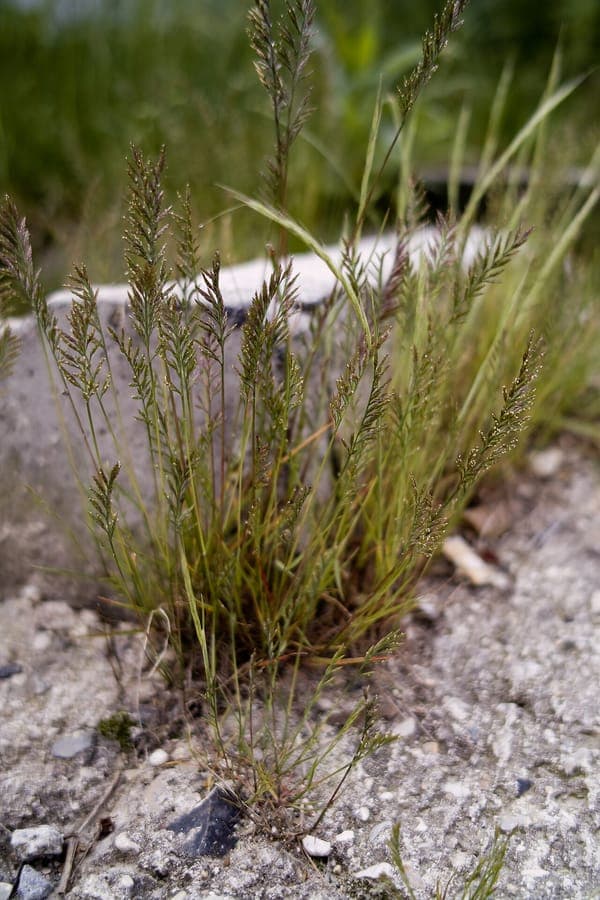
AudreyMuratet / CC BY-SA 4.0, via Wikimedia Commons
Fern grass: complete guide
Catapodium rigidum
Want to see Fern grass: complete guide in your garden?
1 minute, no credit card
Overview
Fern grass, or Catapodium rigidum, is a wiry, upright grass that brings subtle elegance to dry, exposed gardens. Though not widely known in mainstream gardening, it's a quiet performer for those who appreciate texture and movement over bold color. Native to the Mediterranean Basin, Canary Islands, and parts of North Africa, it thrives in hot, arid conditions and is surprisingly adaptable in temperate climates with well-drained soils.
This graminoid typically grows as an annual or short-lived perennial, depending on winter severity. It's not a showstopper like miscanthus or pampas, but it earns its place with resilience and fine structure. Perfect for naturalistic planting schemes, rock gardens, or gravel beds where low water use is a priority.
On gardenworld.app, you can design a drought-smart garden layout that features fern grass as a key textural element, especially in zones with limited rainfall. Its airy form contrasts beautifully with bolder foliage plants.
Appearance & bloom cycle
Fern grass reaches 30–60 cm in height, with narrow, stiff, bright green leaves that stand upright. From May through July, it produces delicate green flower spikes that rise just above the foliage. These aren't flashy-they're subtle, with a soft, feathery look that catches the light in early morning and late afternoon.
As summer progresses, the inflorescences fade to a warm beige or light tan, adding winter interest even after the plant has gone dormant. Though often short-lived, it self-seeds readily in warm, sunny spots with little competition. The overall effect is light, breezy, and natural.
Ideal location
Full sun is essential-aim for at least 6–8 hours of direct sunlight daily. Fern grass loves heat and performs best on south-facing slopes, gravel paths, dry borders, or between stepping stones. Avoid shady or damp areas; it won't survive long in those conditions.
It fits perfectly in Mediterranean, steppe, or xeriscape-style gardens. Pair it with silver-foliaged herbs like lavender or santolina for contrast. If you're designing a low-water garden, use gardenworld.app to map out ideal microclimates where fern grass can thrive without irrigation.
Soil requirements
This grass isn't fussy about soil richness. In fact, it prefers poor, sandy, or gravelly soils with low organic content. Too much fertility leads to floppy growth and weak stems. The ideal pH range is 6.0 to 7.5-slightly acidic to slightly alkaline.
The key is drainage. Heavy clay soils need amending with grit or coarse sand to prevent waterlogging. Fern grass will rot in wet winter conditions, especially in compacted soil.
Free design
Want to see Fern grass: complete guide in your garden? Make a free design now.
Watering
Once established, fern grass needs little to no supplemental watering. It's highly drought-tolerant and adapted to long dry spells. Water young plants lightly during their first spring if rainfall is scarce, but avoid overhead irrigation-wet foliage encourages fungal issues.
Water at the base if needed, and only during prolonged drought. Overwatering is the fastest way to kill this plant. Let nature do the work.
Pruning
No pruning is required. Allow the plant to complete its natural cycle. In late winter or early spring (February–March), cut back old growth to about 10 cm above ground level to make way for fresh shoots.
If you want to limit self-seeding, deadhead the flower spikes before seeds mature. Otherwise, let them disperse naturally-this is how the plant colonizes dry corners over time.
Maintenance calendar
- Jan: Dormant; check for rot in wet areas
- Feb: Cut back old foliage if desired
- Mar: Clear debris, prepare soil for new growth
- Apr: Monitor young shoots, no watering needed
- May: Blooming begins, no feeding
- Jun: Peak bloom, watch for rare pests
- Jul: Flowering ends, seed heads form
- Aug: No maintenance, fully droughted
- Sep: Growth slows, reduce any watering
- Oct: Leave seed heads for winter interest or remove
- Nov: Observe self-seeding patterns
- Dec: Protect from waterlogged conditions
Winter hardiness
Fern grass is marginally hardy. In USDA zones 8–10, it may return as a short-lived perennial. In colder zones (7 and below), it typically behaves as an annual but often reseeds successfully in spring. Good drainage is critical for survival.
No winter protection is needed. Leaving the dry stems in place offers minimal insulation and adds visual texture to the winter garden.
Companion plants
Pair with drought-tolerant perennials: Echinacea, Sedum 'Autumn Joy', Thymus, or Artemisia. Low-growing lavender cultivars like 'Hidcote' or 'Munstead' complement its airy form. Avoid vigorous spreaders that might smother it.
In gravel gardens or rockeries, fern grass works well with succulents like Sempervivum or small alliums. Its fine texture contrasts nicely with broader leaves or spiky forms.
Closing
Fern grass isn't flashy, but it's dependable. It asks for little and gives back with movement, texture, and quiet beauty. As climate conditions shift toward hotter, drier summers, plants like Catapodium rigidum become increasingly valuable.
You won't find it at every garden centre, but check specialty nurseries or online suppliers. In the UK and US, look for it at independent garden centres or Mediterranean plant specialists. Give it a sunny, dry spot-it might just surprise you with its quiet charm.
Want to see Fern grass: complete guide in your garden? Make a free design now.
Upload a photo, pick a style, and get a photorealistic design with plant list in under a minute.
No credit card required


Similar plants
Sporobolus pungens: complete guide
Sporobolus pungens
Sporobolus pungens is a stoloniferous Mediterranean coastal grass with outstanding salt and drought tolerance, perfect for seaside and dry gardens.
Mediterranean aegilops: complete guide
Aegilops biuncialis
Everything about Aegilops biuncialis, a Mediterranean annual grass with ornamental spikes and outstanding drought tolerance for dry gardens.
Silver bluestem: complete guide
Bothriochloa saccharoides
Full guide to Bothriochloa saccharoides (silver bluestem): site, soil, watering, winter hardiness, pruning, and garden companions.