
Stan Shebs / CC BY-SA 3.0, via Wikimedia Commons
Northwestern Indian paintbrush: complete guide
Castilleja angustifolia
Want to see Northwestern Indian paintbrush: complete guide in your garden?
1 minute, no credit card
Overview
Castilleja angustifolia, the northwestern Indian paintbrush, is one of the most striking wildflowers of the American West. A member of the Orobanchaceae family, it grows natively across the dry, rocky grasslands and open mountain slopes of Oregon, Idaho, Montana, Wyoming, Colorado, Utah, Nevada, and South Dakota. What makes this species genuinely remarkable is its lifestyle as a hemiparasite: the plant carries out photosynthesis on its own but simultaneously taps into the roots of neighbouring host plants to extract water and mineral nutrients. Without suitable host plants in close proximity, Castilleja angustifolia grows poorly or fails altogether. This biological dependency makes it one of the most fascinating - and genuinely demanding - subjects for any gardener willing to invest in understanding its needs. Explore gardenworld.app for garden design concepts that incorporate authentic native wildflower communities.
Appearance and bloom cycle
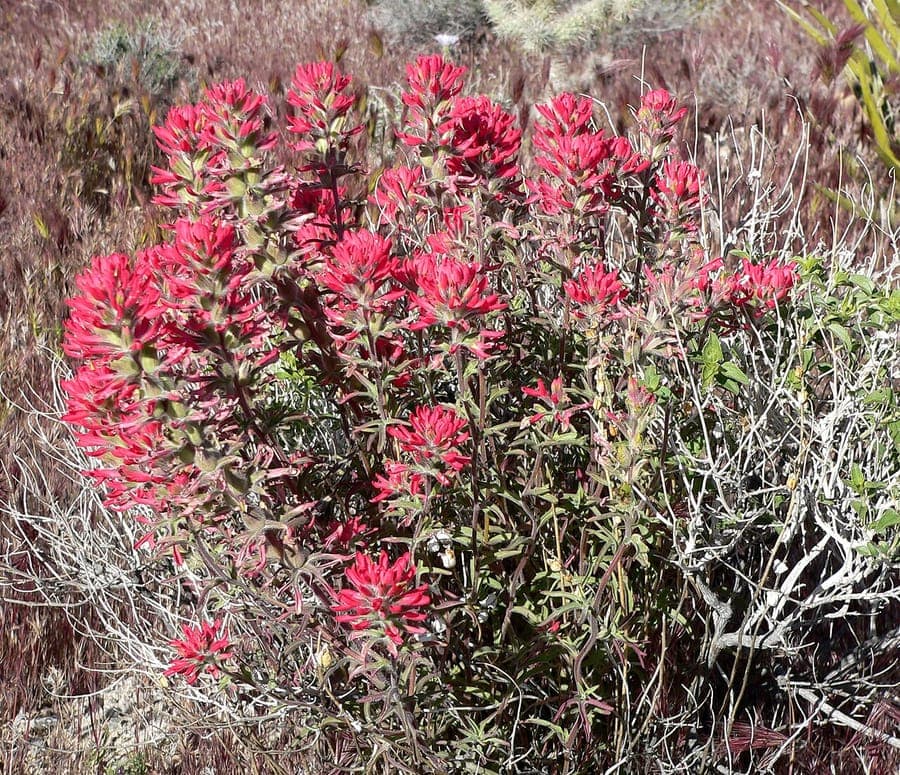
Castilleja angustifolia is a perennial forb or subshrub with fine-textured foliage. The stems are erect and clad with narrow, linear leaves - the species name angustifolia means "narrow-leaved," a direct reference to this trait. The true flowers are small and greenish, tucked within the inflorescence; what commands attention are the brilliant red bracts (modified leaves) that surround them, giving the plant the vivid brushstroke appearance that earned it the "paintbrush" name. Bloom time falls from late spring through early summer, typically April through July depending on elevation and local conditions. The floral display attracts hummingbirds as well as native bees and butterfly species, giving the plant genuine ecological value beyond its ornamental appeal.
Ideal location
In its natural range Castilleja angustifolia occupies open, sunny exposures with a dry to moderately moist climate. Full sun is essential - at least six hours of direct sunlight per day. The plant thrives in rock gardens, dry slopes, and prairie-style plantings where competition from vigorous spreading species is kept in check. Because it depends on host plant roots, careful siting is critical: plant it near suitable companion species such as native bunchgrasses (Festuca, Bouteloua) or drought-tolerant perennials with non-aggressive root systems. Heavily shaded or overly fertile sites are strongly counterproductive. This species excels in an ecological garden, a dry stone garden, or a prairie-inspired scheme.
Soil
Castilleja angustifolia demands very little from soil fertility - in fact, excessively rich ground works against it by favouring competing vegetation. The preferred pH range is 5.6 to 7.3. Drainage is the key factor: the soil must be free-draining and lean. Adding grit or gravel to clay soils dramatically improves drainage. Rocky substrates and stony slopes mimic the plant's natural habitat most closely. Avoid fresh compost or heavily amended garden soil directly around the roots. A dry, open, low-nutrient substrate consistently gives the best results for long-term establishment.
Watering
As a plant of naturally dry regions, Castilleja angustifolia is well adapted to drought once established. Supplementary irrigation is rarely needed - and in many cases actively harmful. Excess moisture encourages root rot and weakens the plant considerably. Water newly established plants moderately during the first growing season to help them build a strong root network, then shift to a mostly dry regime. The winter and early spring rainfall typical of the western US largely satisfies the plant's moisture needs. During very dry summers a light, occasional soak is acceptable, but consistently saturated soil must be avoided at all times.
Free design
Want to see Northwestern Indian paintbrush: complete guide in your garden? Make a free design now.
Pruning
Castilleja angustifolia requires no traditional pruning. After the flowers fade, you can leave the spent flowerheads standing for birds and seed dispersal, or remove them carefully. Cutting stems back to just above the basal rosette after blooming gives the plant a chance to consolidate energy for the following season. Remove any dead foliage from the previous year in early spring. Heavy pruning is neither necessary nor advisable; this species responds much better to minimal intervention than to dramatic cutting back, and its own seasonal rhythm should largely be respected.
Maintenance calendar
March: clear dead stems and foliage from the previous season; verify that host plants are healthy and well positioned. April: new growth begins; watch for emerging shoots and the first colourful bracts. May-June: peak flowering period; hummingbirds and native bees visit frequently; welcome rainfall but avoid overwatering. July: the display gradually fades; seed capsules begin to develop. August: allow seed capsules to ripen if you want to collect seed or encourage natural self-seeding nearby. September: further reduce any supplementary watering; the plant enters a quieter phase. October-November: top growth may die back partially; this is normal and the roots overwinter safely. December-February: full dormancy; minimal care required.
Winter hardiness
Castilleja angustifolia comes from areas with cold, dry winters and is therefore more cold-hardy than its delicate appearance suggests. The species tolerates temperatures down to USDA zone 4 or 5, equivalent to minimum temperatures of around -34 to -26 degrees Celsius. In northern Europe, which generally falls in USDA zones 7 to 9, winter cold is rarely a limiting factor. The real danger is winter-wet conditions: roots sitting in cold, waterlogged soil through the dormant season are far more likely to cause plant loss than frost alone. Ensure impeccable drainage, and consider placing coarse grit or gravel around the crown to shed water rapidly during wet winters.
Companion plants
Because Castilleja angustifolia depends on host plant roots for part of its nutrition, companion selection is not merely aesthetic - it is ecologically essential. Proven host plant companions include Festuca idahoensis, Bouteloua gracilis, Penstemon strictus, and other drought-tolerant native prairie or mountain species with extensive but non-aggressive root systems. Artemisia species and Liatris spicata have also been recorded as suitable hosts in wildflower garden settings. Avoid vigorous, spreading species that could outcompete the host plants' root zones. Visit gardenworld.app for inspiration on composing cohesive dry prairie or rock garden plantings that accommodate hemiparasitic species alongside their hosts.
Closing
Castilleja angustifolia is not a plant for the casual gardener looking for a low-maintenance splash of colour. Its dependence on host plants means it rewards only those who take the time to understand its biological needs and design its setting accordingly. For those willing to do so, the return is extraordinary: blazing red bracts rising from an open steppe, a reliable draw for hummingbirds and native pollinators, and the deep satisfaction of cultivating one of the most ecologically authentic plants the North American West has to offer.
Want to see Northwestern Indian paintbrush: complete guide in your garden? Make a free design now.
Upload a photo, pick a style, and get a photorealistic design with plant list in under a minute.
10,000+ gardens designed already
No credit card required


Similar plants
Wavyleaf Indian paintbrush: complete guide
Castilleja applegatei
Everything about Castilleja applegatei, the wavyleaf paintbrush from Oregon and California. Host plants, care, location, and garden use covered.
Purple sage: complete guide
Salvia dorrii
Salvia dorrii is a drought-tolerant groundcover from western North America. Learn planting methods, maintenance, and design tips for this hardy desert shrub.