
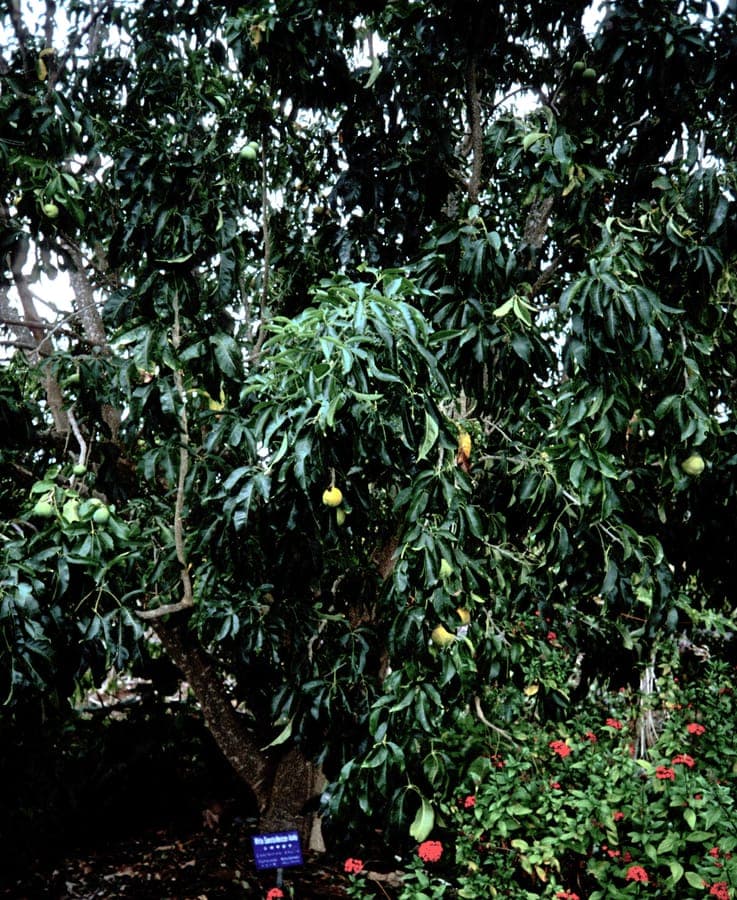
Forest & Kim Starr / CC BY 3.0, via Wikimedia Commons
White Sapote: complete guide
Casimiroa edulis
Want to see White Sapote: complete guide in your garden?
1 minute, no credit card
Overview
The White Sapote (Casimiroa edulis), also known as matasano or Mexican apple, is a medium to large fruit tree from Central America and Mexico. With its attractive foliage and subtle, sweet fruits, it is a fascinating addition to warm gardens. The tree produces inconspicuous blooms in early spring and delivers refined, sweet fruits in autumn that possess hints of banana and melon.
Appearance and Bloom
White sapote trees grow to 10-15 meters tall, with a broad, dense canopy. The compound leaves consist of 5-9 elliptic leaflets and give the tree a festive, airy appearance. Flowers are small, yellowish-green, inconspicuous, but highly fragrant. They appear from late winter through early spring. Fruits ripen in autumn, are approximately 7-10 centimeters in diameter, greenish to yellow-green, with white, creamy flesh tasting of subtle banana and melon.
Ideal Location
White sapote trees grow best in full sun to partial shade. In hot climates, some afternoon shade may be beneficial. Ensure the tree receives at least 4-5 hours of sunlight daily for regular fruit set. Protect from strong winds, which can promote flower drop.
Soil
White sapote trees grow well in well-draining sandy-loam soils. They are adaptable and grow in heavier loam soils if drainage is adequate. A pH range of 6-7.5 is preferred. The tree is tolerant of lower nutrient levels than many fruit trees but thrives in soils with regular nutrient input.
Watering
White sapote trees require regular watering until fully established. Water well after planting, approximately 2-3 centimeters per week during the growing season. Once established, they tolerate some drought but grow better with regular watering. In very rainy regions, they may need less water.
Free design
Want to see White Sapote: complete guide in your garden? Make a free design now.
Pruning
White sapote trees require minimal pruning. Young trees can be lightly pruned to build strong, central trunk structure. Remove dead or crossing branches. Excessive pruning can reduce fruiting, so keep this minimal.
Maintenance Calendar
January-February: Light pruning, add compost to base March-April: Bloom appears, regular watering May-June: Young fruits develop, consistent watering July-August: Fruit growth progresses, occasional deep watering September-October: Fruits ripen, harvest when yellow-green November-December: Tree rests, minimal care
Winter Hardiness
White sapote trees are frost-sensitive. They tolerate temperatures of approximately -2 to -5 degrees Celsius, but significant flower and fruit drop can occur with frost. In cold regions, they are better grown in containers that can be moved indoors in winter, or in warm, protected microclimates.
Companion Plants
White sapote trees can be complemented with: Mango (mango) Avocado (avocado) Guava (guava) Passiflora (passion fruit) Banana (banana) Cocos (coconut palm) Plumeria (frangipani)
Closing Remarks
The white sapote is an appealing choice for gardeners in warm climates seeking something exotic and nutritious. With its mild, subtle fruits, refined foliage, and relatively low-maintenance character, it brings adventure to the fruit garden. For best results in cold climates, plant in full sun in a protected spot, or grow in containers. GardenWorld.app helps you find the perfect warm location for this nutritious tropical wonder.
Want to see White Sapote: complete guide in your garden? Make a free design now.
Upload a photo, pick a style, and get a photorealistic design with plant list in under a minute.
No credit card required


Similar plants
Thamnosma montana: complete guide
Thamnosma montana
Everything about Thamnosma montana, the aromatic turpentine broom from the Mojave Desert. Location, soil, care and companion planting explained.
Narrow-leaved fringed rue: complete guide
Ruta angustifolia
Everything about Ruta angustifolia: location, soil, watering, pruning and winter care for this Mediterranean subshrub.
Mountain rue: complete guide
Ruta montana
A complete guide to Ruta montana: best location, soil, watering, pruning and overwintering of this aromatic Mediterranean subshrub.