
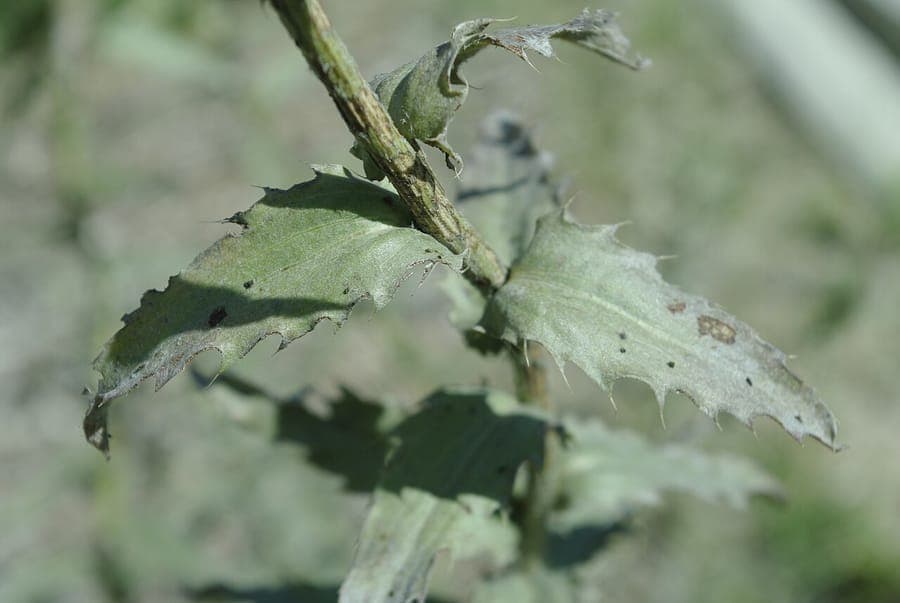
Jardí Botànic de Barcelona / CC BY-SA 3.0, via Wikimedia Commons
Blue Thistle: complete guide
Carthamus caeruleus
Want to see Blue Thistle: complete guide in your garden?
1 minute, no credit card
Overview
Blue Thistle (Carthamus caeruleus) is a striking thistle species celebrated for its rare blue flowers. Native to the Mediterranean region, from North Africa through Southern Europe, it thrives in warm, dry climates. With compact growth and extended bloom periods, it is excellent for cut flowers and dry gardens.
Appearance and Bloom
Blue Thistle typically reaches 30 to 60 centimeters tall depending on growing conditions. The plant has stiff, gray-green stems covered with notably sharp spines. Leaves are deeply incised, almost feathery, giving the plant a fine, airy appearance. Flowers are the showstopper feature: intense cobalt blue flower heads appear from April through June. They come in clusters and attract significant pollinating insects.
Ideal Location
Blue Thistle loves full sun. Plant in a location receiving at least 6 hours of direct sunlight daily. This helps the plant build sturdy, flower-rich growth. While it tolerates shade, the plant becomes more gangly and produces fewer flowers in partial shade. In hot climates, some afternoon shade may help prevent drying out.
Soil
The plant grows best in well-draining soil. Sandy, loamy soils are ideal. Heavy clay soils should be amended with sand and organic matter to improve drainage. The pH range is quite flexible, from slightly acidic to neutral to moderately alkaline (pH 5.5-7.5). The plant is moderately demanding for nutrients and thrives in lean soils.
Watering
Once established, Blue Thistle is highly drought-tolerant. Water regularly after planting to encourage strong root formation, typically once per week. After 3-4 weeks, reduce watering to only during dry periods. Mature plants need virtually no additional water and thrive in dry weather. Excess water can cause root rot, so allow the soil to dry between waterings.
Free design
Want to see Blue Thistle: complete guide in your garden? Make a free design now.
Pruning
Blue Thistle requires minimal maintenance regarding pruning. Remove spent flowers to encourage further blooming and maintain a compact shape. Cut stems back to about one third their length after flowering to maintain a full form. In early spring, remove dead or damaged stems.
Maintenance Calendar
March: Prune back in early spring April: Begin bloom, water as needed May-June: Peak bloom time, deadhead spent flowers regularly July: Bloom typically stops, reduce watering August-October: Dry period, no watering needed for established plants November-February: Dormancy, no maintenance needed in mild climates
Winter Hardiness
Blue Thistle is reasonably hardy in temperate to warm climates. It tolerates temperatures down to about -8 degrees Celsius, especially when soil is dry. In cold climates, it is better treated as an annual. Mulch around the base in autumn for extra protection in harsh winters.
Companion Plants
Blue Thistle pairs well with other Mediterranean drought-tolerant plants: Lavandula (lavender) Salvia (sage) Rosmarinus (rosemary) Anthemis (chamomile) Achillea (yarrow) Pulsatilla (pasque flower) Echinops (globe thistle)
Closing Remarks
Blue Thistle is an outstanding choice for gardeners seeking a surprisingly colorful, low-maintenance plant. As a drought-tolerant, visually striking thistle, it demands minimal input while delivering maximum beauty. The intensely blue flowers are the plant's trump card, so ensure optimal sun exposure for the best blooms. Try it in dry borders, rock gardens, or Mediterranean garden schemes. GardenWorld.app can help you locate the perfect full-sun spot in your garden for this stunning specimen.
Want to see Blue Thistle: complete guide in your garden? Make a free design now.
Upload a photo, pick a style, and get a photorealistic design with plant list in under a minute.
No credit card required


Similar plants
Calendula stellata: complete guide
Calendula stellata
Complete guide to Calendula stellata, the star-flowered marigold from Sicily: location, soil, watering and companion planting tips.
Korean chrysanthemum: complete guide
Chrysanthemum x rubellum
Chrysanthemum x rubellum is a hardy autumn perennial with single pink to copper flowers from August to November. Care and combinations.
Helianthus divaricatus: complete guide
Helianthus divaricatus
Helianthus divaricatus is a North American woodland sunflower with yellow summer blooms, ideal for naturalistic borders and shady edges.