
No machine-readable author provided. Dlanglois assumed (based on copyright claims). / CC BY-SA 3.0, via Wikimedia Commons
Carpobrotus glaucescens: complete guide
Carpobrotus glaucescens
Want to see Carpobrotus glaucescens: complete guide in your garden?
1 minute, no credit card
Overview
Carpobrotus glaucescens, commonly known as pigface, angular sea-fig, or angular pigface, is a succulent from the Aizoaceae family (ice plant family). Originally from Australia (New South Wales, Queensland, Victoria, and Norfolk Island), this is a robust choice for coastal gardens and dry conditions. The plant adds tropical beauty with minimal effort.
Appearance and Bloom
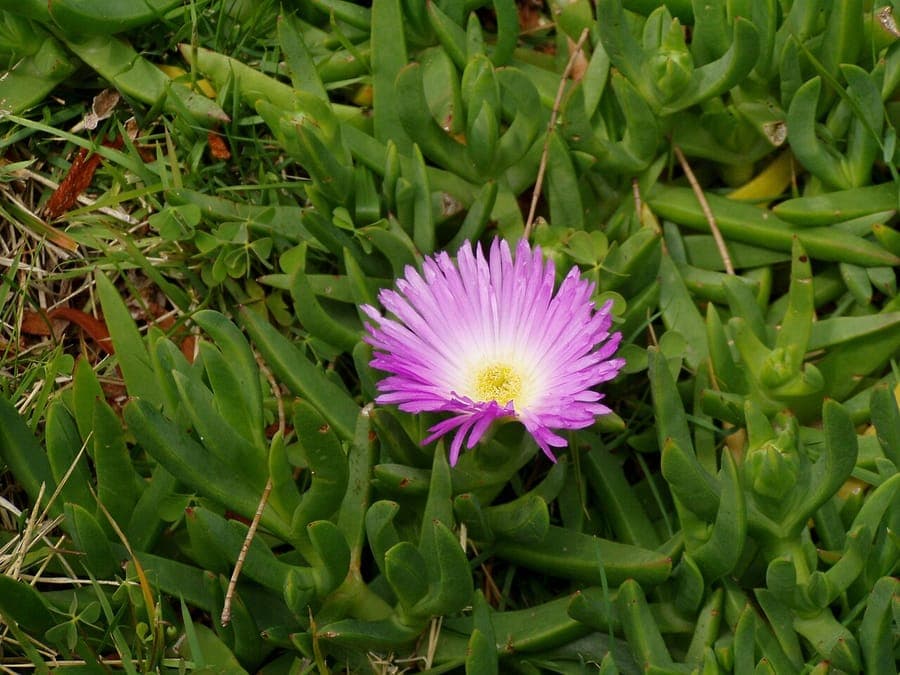
Pigface forms sprawling, very thick mats reaching 10-20 centimeters high but extending much further laterally. The stems are thick, juicy, and green to gray-green in color. The leaves are extremely thick, almost triangular in shape, and green to blue-green.
The flowers are small, bright yellow to pink, appearing in April-May in temperate climates. The flowers are hermaphroditic and open in sunlight. Each flower lasts only one day. Following bloom, large fleshy fruits form and ripen in October.
Ideal Location
Pigface grows best in full sun. The plant requires at least six hours direct sunlight daily. In warm climates, some afternoon shade helps. The plant thrives in coastal conditions where salty wind prevails - it tolerates salt much better than most plants.
The plant also grows in containers on sunny balconies, patios, or roofs.
Soil
Carpobrotus glaucescens requires well-draining, sandy or gravelly soil. The plant accepts acidic, neutral, and slightly alkaline soils (pH 5.5-8.0). Add sand, perlite, or gravel to heavy garden soil. For containers use 50% standard potting soil and 50% sand or perlite.
The plant is very tolerant of poor soil. In fact, rich soil leads to poor growth. In coastal gardens it accepts salt well.
Free design
Want to see Carpobrotus glaucescens: complete guide in your garden? Make a free design now.
Watering
Pigface is very drought-tolerant once established. During the first growing year, water regularly (weekly). Once established, the plant can tolerate two weeks without water. In winter reduce watering to minimal - only water if leaves begin to shrivel.
Avoid waterlogged soil. This causes root rot, which quickly leads to plant death.
Pruning
Pigface tolerates minimal pruning. The plant forms itself. Remove only dead or damaged leaves or stems. If the plant becomes too voluminous, you can carefully cut stems and replant them as cuttings.
Do not remove spent flowers - they add visual interest.
Maintenance Calendar
March-April: Inspect for winter damage. Water cautiously.
May-July: Water regularly during growing period. Monitor for bloom.
August-October: Gradually reduce watering.
November-February: Winter phase; very minimal watering.
Winter Hardiness
Pigface is hardy to about -5 degrees Celsius. In regions with harder winters, the plant must be brought indoors in November and remain outdoors from May. In mild coastal zones it can remain outdoors, protected by a wall.
Special Care
Mealybug and spider mites can occur, especially indoors. Spray with insecticide or neem oil if discovered. Fungal diseases are rare thanks to good drainage.
The plant is not toxic to humans or animals, though some may experience mild skin irritation after prolonged contact.
Companion Plants
Combine pigface with other Mediterranean or South African succulents such as aeonium, sempervivum, and echeveria. In coastal gardens, it works well alongside armeria, senecio, and other salt-tolerant plants.
Conclusion
Carpobrotus glaucescens is a valuable member of succulent gardens. With its drought resistance, salt tolerance, and low maintenance, it provides years of garden enjoyment. Consider planting pigface as an investment in effortless succulent gardening.
Want to see Carpobrotus glaucescens: complete guide in your garden? Make a free design now.
Upload a photo, pick a style, and get a photorealistic design with plant list in under a minute.
No credit card required


Similar plants
Delosperma nubigenum: complete guide
Delosperma nubigenum
Everything about Delosperma nubigenum: a prolific-flowering succulent from South Africa with orange blooms. Growing tips, care and design ideas for your garden.
Crocea Iceplant: complete guide
Malephora crocea
Discover Crocea Iceplant (Malephora crocea), a South African succulent with coppery-orange flowers. Perfect for dry, sunny gardens and rock gardens.
Hairy dewflower: complete guide
Drosanthemum hispidum
Drosanthemum hispidum, also called hairy dewflower, is a fascinating succulent from South Africa. Discover everything about this hardy succulent: cultivation, maintenance, watering and tips for creating a dry landscape garden.