
Σ64 / CC BY 3.0, via Wikimedia Commons
Sawa hornbeam: complete guide
Carpinus cordata
Want to see Sawa hornbeam: complete guide in your garden?
1 minute, no credit card
Overview
Carpinus cordata, commonly known as sawa hornbeam, is a graceful deciduous tree in the Betulaceae family that brings understated elegance to temperate gardens. Native to forested regions across Japan, Korea, northern and central China, and parts of eastern Russia, this species thrives in cool, moist environments with partial shade. Unlike the more common European hornbeam (Carpinus betulus), the sawa hornbeam has a looser, more open canopy and distinctive heart-shaped leaves that set it apart visually. It typically reaches 6–10 meters in height with a spread of 4–6 meters, making it suitable for medium to large gardens but also manageable in smaller spaces with proper planning.
What makes this tree special is its adaptability and year-round interest. On gardenworld.app, you can design a planting scheme that positions Carpinus cordata to complement understory plants and create gentle transitions between shaded and open areas of your yard.
Appearance & bloom cycle
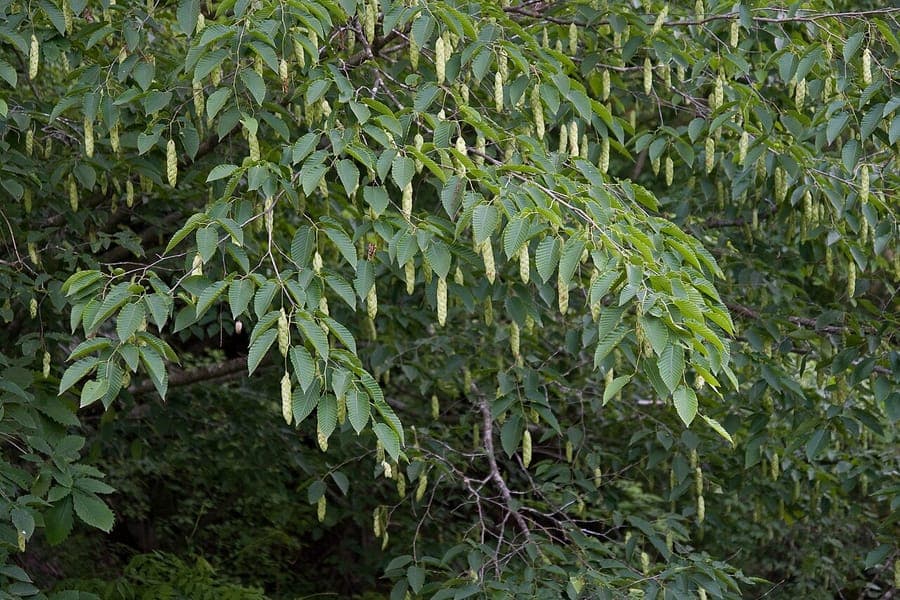
The most striking feature of Carpinus cordata is its foliage - heart-shaped leaves, 4–8 cm across, with finely serrated edges and a bright green hue in spring that deepens to a rich medium green by midsummer. The leaves have a slightly glossy upper surface and a soft texture, giving the crown a delicate, airy feel. In autumn, the color transitions to warm shades of yellow and golden-orange, persisting longer than many other small trees.
Flowering occurs in April to May. The flowers are inconspicuous catkins - greenish and wind-pollinated - that emerge with the new leaves. Male and female catkins appear on the same tree. After pollination, small nutlets with three-lobed bracts develop and may persist into early winter, providing subtle visual interest and food for birds.
The bark is smooth and gray, becoming slightly fissured with age, but never as rugged as some other hornbeams. The branching pattern is upright in youth, then gradually spreads into a broad oval or slightly pyramidal form.
Ideal location
Sawa hornbeam prefers partial shade - especially dappled light under taller trees - but tolerates full sun if soil moisture is consistent. In hot, dry climates or exposed sites, full sun may lead to leaf scorch, particularly in young trees. A spot with morning sun and afternoon shade is ideal, especially in USDA zones 6 and 7.
It's a great choice for woodland gardens, shaded corners, or as a standalone feature near patios. Avoid planting too close to structures; maintain at least 2.5 meters from buildings or paved areas to allow for root development and airflow. This tree also works well in group plantings or as part of a mixed hedge with other shade-tolerant species.
Soil requirements
Carpinus cordata grows best in moist, well-drained loam or clay-loam soils with a slightly acidic to neutral pH (5.5–7.0). It does not tolerate prolonged waterlogging or compacted, heavy clay unless amended. When planting, mix in generous amounts of compost or well-rotted leaf mold - at least 30% of the backfill soil - to improve structure and moisture retention.
Poor sandy soils need organic enrichment to prevent rapid drying. A 5–10 cm mulch layer of wood chips or compost applied in autumn helps maintain root zone moisture and suppresses weeds.
On gardenworld.app, use the soil analysis tool to assess your garden's pH and texture, and get custom recommendations for preparing the planting hole for Carpinus cordata.
Free design
Want to see Sawa hornbeam: complete guide in your garden? Make a free design now.
Watering
Young trees require regular watering for the first 2–3 years. Aim for 10–15 liters per week during dry spells, ideally delivered slowly to encourage deep root growth. Use a soaker hose or watering spike to direct water below the surface. Once established, the tree shows moderate drought tolerance but performs best with consistent soil moisture.
Avoid overwatering - stagnant water leads to root rot. During extended droughts in summer, especially in zones 6–7, supplemental watering helps prevent stress and leaf drop.
Pruning
Pruning is rarely needed. The natural form is attractive and self-supporting. If required, perform light corrective pruning in late winter (February) to remove dead, damaged, or crossing branches. Cut just outside the branch collar to prevent decay.
Do not top or heavily prune - this disrupts the tree's form and can invite disease. Unlike Carpinus betulus, this species is not suited for tightly clipped hedges, though it can be used in informal groupings with light shaping to encourage density.
Maintenance calendar
- January: Inspect for winter damage. Check bark for rodent chewing.
- February: Light pruning if needed. Apply compost around the base.
- March: Monitor soil moisture. Begin watering if dry.
- April: Watch for leaf emergence. No fertilizing required.
- May: Check for aphids or powdery mildew. Water during dry weeks.
- June–July: Maintain consistent moisture. Avoid pruning.
- August: Reduce watering frequency if rains return.
- September: Replenish mulch. Stop fertilizing.
- October: Observe leaf color change. Allow fallen leaves to decompose under the canopy.
- November: Final inspection. Protect young trunks from deer or rodents.
- December: Ensure mulch layer is intact. No active care needed.
Winter hardiness
Hardy in USDA zones 5–7 (down to -23°C). In zone 5, young trees may benefit from a thick mulch layer (10 cm) and a tree wrap to prevent frost cracking. Mature trees are fully cold hardy and require no special protection. Leaf drop is complete by late autumn, and buds remain dormant until spring.
Companion plants
Choose plants that thrive in similar conditions: partial shade, moist, humus-rich soil. Good companions include:
- Hosta species (for foliage contrast)
- Polystichum acrostichoides (Christmas fern)
- Helleborus orientalis (Lenten rose)
- Carex cultivars (ornamental sedges)
- Hydrangea serrata (for summer blooms in shade)
Avoid aggressive spreaders like Buddleja davidii or Rhus typhina, which may compete for resources. The sawa hornbeam grows slowly and needs space to establish.
Closing
Carpinus cordata is a quiet standout - not flashy, but deeply satisfying for gardeners who appreciate subtle beauty and long-term structure. Its heart-shaped leaves, elegant form, and reliable performance in shade make it a valuable addition. While not commonly stocked in every garden center, it's increasingly available through specialty nurseries.
In the UK and US, check larger garden centres or online retailers in spring. Use gardenworld.app to track availability and get planting reminders based on your local climate. With minimal care, this hornbeam will grow into a graceful, long-lived feature of your garden for decades.
Want to see Sawa hornbeam: complete guide in your garden? Make a free design now.
Upload a photo, pick a style, and get a photorealistic design with plant list in under a minute.
No credit card required


Similar plants
Heart-leaf birch: complete guide
Betula cordifolia
Heart-leaf birch is an attractive North American birch tree for large gardens. Discover growth, white papery bark and winter hardiness.
Tropical hornbeam: complete guide
Carpinus tropicalis
Everything about Carpinus tropicalis, the tropical hornbeam from Central America. Growing tips, location, care, and garden use explained.
Japanese Alder (Alnus firma): complete guide
Alnus firma
Learn everything about Japanese Alder in our complete guide. Discover care, growth, and applications for larger gardens.