
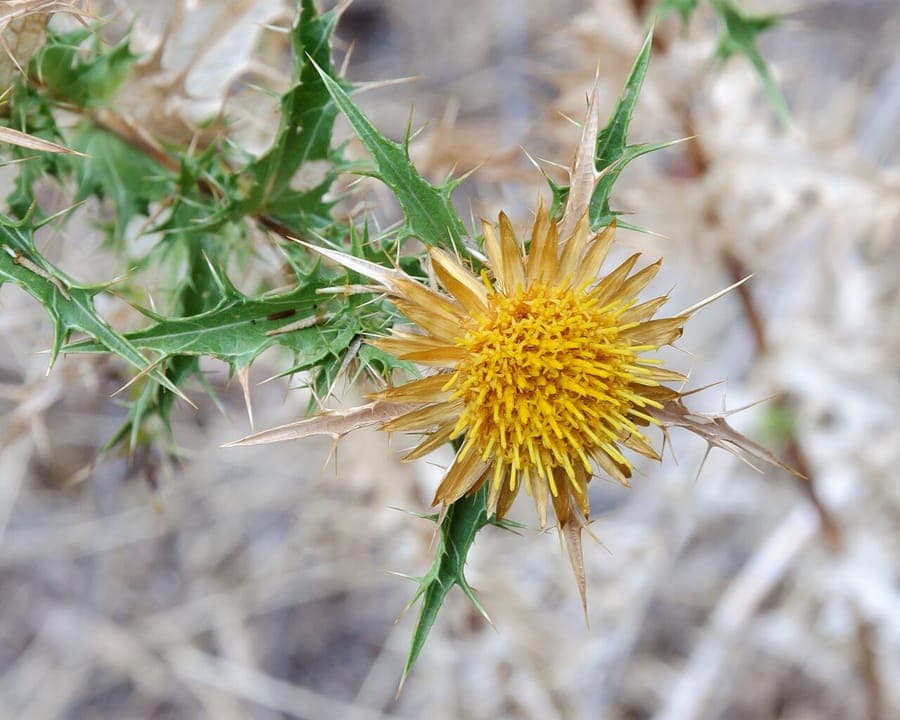
Myrabella / CC BY-SA 3.0, via Wikimedia Commons
Carlina corymbosa: complete guide
Carlina corymbosa
Want to see Carlina corymbosa: complete guide in your garden?
1 minute, no credit card
Carlina corymbosa, also known as Corymbose Carline-thistle or Carline in corymbe (French), is a fascinating Mediterranean plant from the daisy/Asteraceae family. This plant grows naturally across southern Europe to Turkey, thriving on dry slopes, rocky outcrops, and open ground. In gardens, it offers a unique aesthetic: golden-yellow, decorative flowers on strong, grey-green stems that bloom in late season (July through October). This is a plant for gardeners who love dramatic, unusual bloom displays and drought-tolerant plantings.
The growth of Carlina corymbosa is moderate. The plant reaches 60 to 120 centimeters in height and forms a loose, branching structure. The flowers are spectacular: golden-yellow to orange-yellow disc-like florets arranged in dense, cluster-like formations (corymbs, hence the name). In full bloom, 3 to 5 flower heads may open simultaneously. The stem angles are strong, stiff, and armed with sharp spines, so handle carefully. After bloom, flower heads produce silvery seed parachutes that remain decorative well into the year.
Ideal location: Carlina corymbosa thrives best in full sun with at least 6 to 8 hours of direct sunlight daily. The plant can grow in partial shade, but will be less compact and flower less freely. It does best in warm, dry spots. Ideally, it grows on sloping terrain or raised beds where water drains quickly. It is well-suited to USDA zones 6 to 10, so even temperate zones can enjoy it during warm seasons, though it will not overwinter in very cold areas. In warmer regions (zones 8 to 10), it can grow as a returning perennial.
Soil requirements: Carlina corymbosa grows on virtually all soils provided drainage is excellent. Sandy, lean soils are ideal. Rich, heavy clay soil leads to lush foliage and sparse blooming. pH can range from acidic to neutral (up to pH 7.5). The plant is drought-resistant and tolerates poor soil nutrition; indeed, adding nutrients can result in more foliage and less bloom. Gravel or coarse, sharp sand beneath roots improves drainage in wetter climates.
Watering: After establishment, Carlina corymbosa requires very little supplemental water. Water for the first 4 to 6 weeks after planting, then minimize. During the growing season (April through October), water if soil becomes extremely dry, but the plant prefers dry conditions. In winter, minimize water input; excessive moisture in winter can cause root rot, especially in cold areas.
Pruning: Carlina corymbosa requires no pruning. The plant naturally forms a beautiful shape. You may remove spent flowers (deadheading) to prolong blooming. After bloom, leave seed heads for added winter interest, or remove them in March. You may also remove last year's dead stem remnants in April.
Maintenance calendar: March: Remove dead stem remnants from last year; no pruning needed. April to May: Plant begins active growth; ensure drainage. June to August: Enjoy bloom. August to October: Continued bloom; deadhead spent flowers for extended flowering. October to March: Minimal care; keep dry.
Winter hardiness: Carlina corymbosa is winter-hardy to USDA zone 6, though it prefers zone 7 and higher. Very cold winters can kill the plant. In zones 6 to 7, treat as an annual or tender perennial. In zone 8 and higher, it can overwinter and bloom for multiple years. In areas with harsh winters, reseed annually.
Companion plants: Carlina corymbosa pairs beautifully with other Mediterranean, drought-tolerant plants such as lavender, santolina, oregano, thyme, salvias, and various sedums. Combine with silvery-foliaged plants (artemisia, dusty miller) for color contrast. In wildflower gardens, it works alongside grassy elements. Bees and butterflies love it, adding ecological value.
Conclusion: Carlina corymbosa offers an unusual, Mediterranean character for sunny, dry gardens. With golden-yellow flowers, fine botanical form, and drought tolerance, it quickly becomes a favorite for gardeners seeking something different. Both annual and perennial depending on climate, it offers flexibility and extended bloom in warm conditions.
Want to see Carlina corymbosa: complete guide in your garden? Make a free design now.
Upload a photo, pick a style, and get a photorealistic design with plant list in under a minute.
No credit card required


Similar plants
Calendula stellata: complete guide
Calendula stellata
Complete guide to Calendula stellata, the star-flowered marigold from Sicily: location, soil, watering and companion planting tips.
Korean chrysanthemum: complete guide
Chrysanthemum x rubellum
Chrysanthemum x rubellum is a hardy autumn perennial with single pink to copper flowers from August to November. Care and combinations.
Helianthus divaricatus: complete guide
Helianthus divaricatus
Helianthus divaricatus is a North American woodland sunflower with yellow summer blooms, ideal for naturalistic borders and shady edges.