
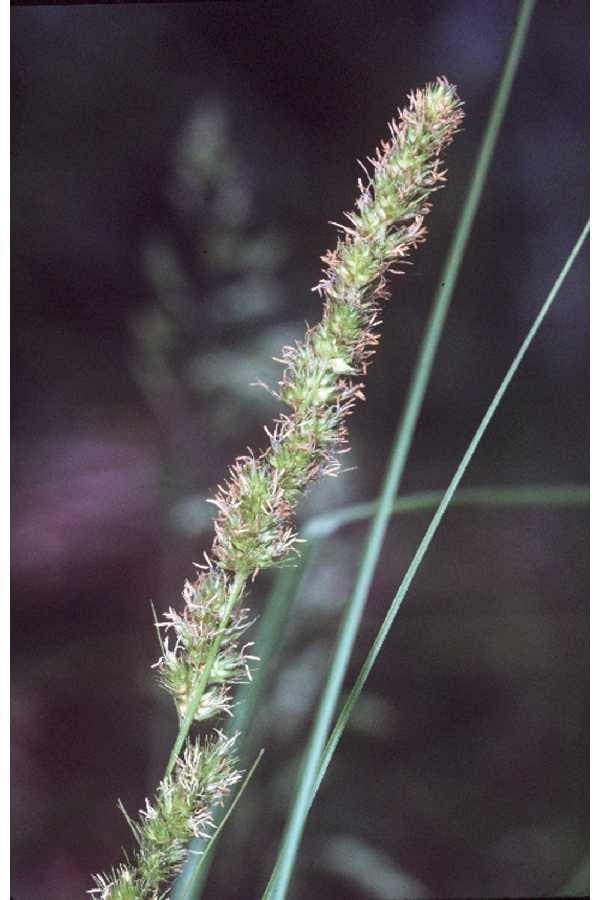
Robert H. Mohlenbrock / Public domain, via Wikimedia Commons
American fox sedge: complete guide
Carex vulpinoidea
Want to see American fox sedge: complete guide in your garden?
1 minute, no credit card
Overview
American fox sedge (Carex vulpinoidea) is a graceful, grass-like perennial native to much of North America, from Alabama to British Columbia. It thrives in moist to wet soils and is perfect for rain gardens, pond edges, and damp borders. Hardy in USDA zones 5 through 9, this sedge grows 2 to 3 feet tall and forms dense, upright clumps that add texture and movement to the garden year-round.
Unlike many sedges that spread aggressively, Carex vulpinoidea grows in neat, non-invasive clumps. Its soft, arching foliage and fluffy flower spikes give it a light, airy appearance, making it a favorite among designers seeking naturalistic planting schemes. Whether you're restoring a wetland edge or designing a modern urban garden, this plant brings resilience and beauty. On gardenworld.app, you can create a planting plan that aligns with the moisture and light needs of American fox sedge.
Appearance & bloom cycle
The plant features narrow, bright green leaves, 3–5 mm wide, growing up to 90 cm long. In early summer, from June to August, upright stems rise above the foliage, bearing soft, cylindrical flower spikes that resemble fox tails - hence the name. These spikes start pale green, mature to creamy white, and eventually fade to a warm tan by late summer.
The blooms are not showy in a traditional sense, but their texture and form add subtle interest. Even in winter, the dried seed heads persist, providing structural contrast and food for small birds and overwintering insects. Mature clumps reach 50–70 cm in spread, forming a tidy mound that doesn't flop or sprawl.
Ideal location
Plant American fox sedge in full sun to partial shade. It performs best with at least 4–6 hours of direct sunlight daily, but tolerates light shade, especially in hotter climates. In full sun, consistent moisture is essential to prevent leaf scorch.
Ideal spots include the margins of rain gardens, damp woodland edges, or along stream banks. It's also effective in bioswales or low-lying areas where water collects after rain. If you're unsure whether your garden has enough moisture or sun exposure, use gardenworld.app to map microclimates and plan accordingly.
Soil requirements
This sedge prefers moist, well-drained loam or clay-loam soils rich in organic matter. It tolerates a wide pH range from 6.8 to 8.9 - slightly acidic to moderately alkaline. While it can survive short periods of flooding, it does not tolerate dry, sandy soils without supplemental irrigation.
Before planting, amend the soil with compost to improve moisture retention and fertility. Avoid compacted soils, as poor aeration can lead to root rot over time.
Free design
Want to see American fox sedge: complete guide in your garden? Make a free design now.
Watering
Keep the soil consistently moist, especially during the first growing season. Once established, it's moderately drought-tolerant for short periods but performs best with regular moisture. In dry summers, water weekly or more often if planted in full sun.
Avoid letting the root zone dry out completely. Mulching with shredded bark or leaf compost helps retain moisture and suppress weeds.
Pruning
Minimal pruning is needed. The plant maintains a neat appearance without intervention. In late winter or early spring (February to March), trim back any dead or damaged foliage to make way for new growth. Use sharp shears and cut to about 15 cm above the crown.
Leave the flower spikes over winter - they add visual interest and support wildlife. Heavy pruning isn't recommended, as it can delay spring emergence.
Maintenance calendar
- January: No action needed. Monitor for frost damage.
- February: Cut back old foliage if desired. Apply compost around base.
- March: Final cleanup. Watch for new shoots.
- April: Active growth begins. Water if dry.
- May: Rapid leaf development. Check for competing weeds.
- June: Flower spikes emerge. Maintain soil moisture.
- July: Peak bloom. Spikes are creamy and soft.
- August: Blooms fade. Seed heads turn tan.
- September: Reduce watering as rains return. No pruning.
- October: Plant enters dormancy. Leave standing.
- November: No maintenance. Prepare for winter.
- December: Dormant. Structure adds winter interest.
Winter hardiness
American fox sedge is hardy in USDA zones 5–9 (-23°C to -1°C). In zone 5, it may die back more completely, but the roots survive and re-sprout reliably in spring. Even in milder zones, it retains some green foliage, offering year-round presence.
No winter protection is needed. The plant withstands snow, ice, and freeze-thaw cycles without damage. Mulch is optional but can help in exposed sites.
Companion plants
Pair American fox sedge with other moisture-loving perennials like Joe-Pye weed (Eutrochium maculatum), blue flag iris (Iris versicolor), or cardinal flower (Lobelia cardinalis). For texture contrast, combine with fine-leaved grasses like Panicum virgatum or Deschampsia cespitosa.
In mixed borders, it works well behind shorter bloomers such as Rudbeckia or Echinacea. For a naturalized look, mass plantings with Carex vulpinoidea create flowing drifts that move with the wind.
Closing
American fox sedge is a versatile, low-maintenance plant that excels in challenging wet areas. Its elegant form, wildlife value, and adaptability make it a smart choice for ecological landscaping. Whether you're tackling a soggy backyard corner or designing a sustainable rain garden, this sedge delivers.
You can find Carex vulpinoidea at garden centres across the US and Canada. Plan your planting layout with gardenworld.app to ensure proper spacing and companion choices.
Want to see American fox sedge: complete guide in your garden? Make a free design now.
Upload a photo, pick a style, and get a photorealistic design with plant list in under a minute.
No credit card required


Similar plants
Flat-stemmed club-rush: complete guide
Bolboschoenus planiculmis
Everything about Bolboschoenus planiculmis: growing conditions, watering, care, and use as a pond margin or wetland plant in garden design.
Great Plains flatsedge: complete guide
Cyperus lupulinus
Everything about Great Plains flatsedge (Cyperus lupulinus): growing conditions, care, garden uses, and ecological value. Tips for pond margins and dry sandy soils.
Golden beak sedge: complete guide
Rhynchospora corymbosa
Everything about golden beak sedge (Rhynchospora corymbosa): a dramatic tropical marginal for pond edges, bog gardens, and wet habitats.