
Daderot / CC0, via Wikimedia Commons
True fox sedge: complete guide
Carex vulpina
Want to see True fox sedge: complete guide in your garden?
1 minute, no credit card
Overview
Carex vulpina, commonly known as true fox sedge, is a quiet achiever in the garden world. It doesn't shout for attention with bright flowers or bold foliage, but its graceful form and resilience in damp conditions make it indispensable for certain garden settings. Native to moist meadows and woodland edges across central and eastern Europe, this sedge thrives where many other plants struggle. If you're working with a boggy corner or a shaded, wet border, true fox sedge could be your new best friend. And with gardenworld.app, you can design a planting scheme that makes the most of its natural elegance.
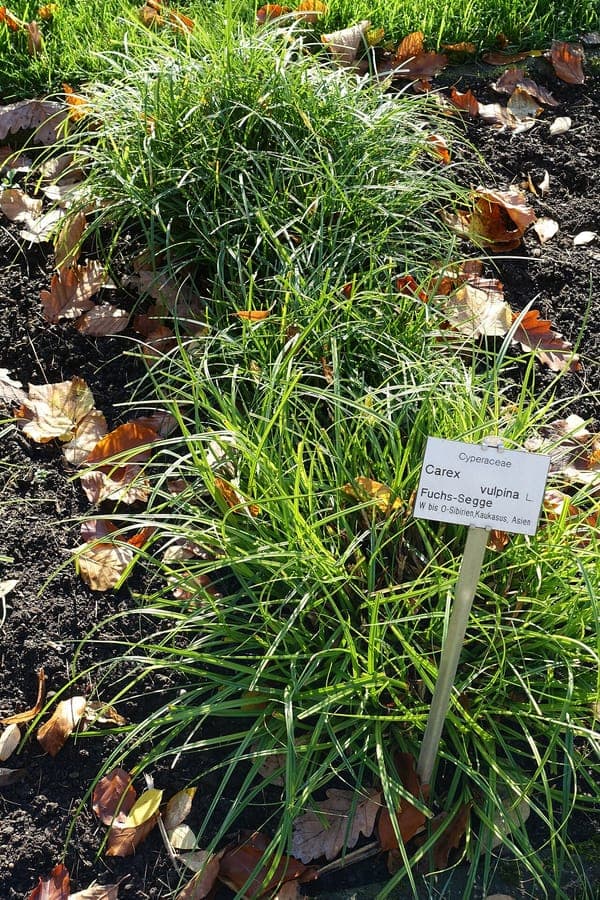
The plant forms neat, evergreen tussocks reaching 40–60 cm in height and spreading 30–50 cm wide. Unlike aggressive spreaders, it slowly fills in, creating structure without chaos. It's a long-lived perennial, hardy in USDA zones 5–8, and reliable year after year with minimal effort.
Appearance & bloom cycle
True fox sedge has narrow, glossy green leaves that grow upright, forming a soft, rounded mound. The foliage is typically 2–4 mm wide and up to 50 cm long, with a fine texture that contrasts beautifully with coarser plants. In spring, slender flower spikes emerge-delicate, fox-tail-like structures in light to olive brown. These rise above the foliage from April to June, depending on local climate.
While the flowers aren't showy, they're ecologically valuable, attracting small pollinators like hoverflies and midges. After flowering, the seed heads persist well into autumn, adding subtle structure to the garden. In milder winters, the plant remains mostly green, offering rare evergreen interest in damp areas.
Ideal location
This sedge prefers partial to full shade, especially in hotter climates. In full sun, it requires consistently moist soil or it will scorch and dry out. The best spots are under open-canopy trees, along pond margins, or in shaded, damp borders. Think of it as a plant for quiet, overlooked corners where moisture collects.
Avoid planting it in areas with heavy competition from grasses or vigorous perennials. True fox sedge isn't a fighter; it's a steady grower that needs space and consistent conditions. Use gardenworld.app to map your garden's microclimates and find the perfect spot for this sedge.
Soil requirements
The key to success with Carex vulpina is soil that stays moist but isn't waterlogged. It prefers loamy, organically rich soils with good water retention. A pH between 5.5 and 7.0 is ideal. If your soil is sandy, amend it with well-rotted compost or leaf mould to improve moisture-holding capacity.
Heavy clay can work, but only if it drains adequately. Avoid completely stagnant water-while the plant tolerates brief flooding, prolonged submersion leads to root rot. A 5 cm mulch layer in spring helps retain moisture and keeps roots cool.
Free design
Want to see True fox sedge: complete guide in your garden? Make a free design now.
Watering
Once established, true fox sedge is fairly drought-tolerant for short periods, but it performs best with consistent moisture. In dry summers, especially during the first two growing seasons, water deeply once a week. Aim for 8–10 litres per plant during dry spells.
Water in the early morning or evening to reduce evaporation. Avoid wetting the foliage to prevent fungal issues. If you have a drip irrigation system, use it on low settings-it's perfect for this plant's needs.
Pruning
Pruning is minimal. In early spring, before new growth emerges, remove any damaged, dead, or tattered leaves. Use sharp, clean secateurs and cut back to about 10 cm above the crown. Never cut into the crown itself, as this can damage or kill the plant.
In mild climates, you can tidy up in late winter. Leave the seed heads through winter for visual interest and habitat value-they provide shelter for overwintering insects.
Maintenance calendar
- January: Light inspection, remove any severely damaged foliage
- February: Begin cleanup, watch for crown rot in wet conditions
- March: Apply compost around base, check soil moisture
- April: Flower spikes appear, no feeding needed
- May: Peak bloom period, monitor for pests
- June: Flowers fade, seed heads mature
- July: Minimal care, water if drought persists
- August: Check for stress, water deeply if needed
- September: Growth slows, prepare for dormancy
- October: Leave plant standing, no pruning
- November: No action required
- December: Final check, apply mulch if harsh winter expected
Winter hardiness
True fox sedge is reliably hardy down to -20°C (USDA zone 5). In zone 4, protect with a light mulch to prevent frost heave. The plant stays evergreen in milder areas, providing structure when little else does. In colder zones, foliage may brown but will rebound in spring.
Avoid piling mulch directly on the crown-this can encourage rot. Use leaf mould or compost instead of wood chips, which can dry out the soil.
Companion plants
Pair Carex vulpina with other moisture-loving plants like Filipendula ulmaria, Iris sibirica, or Ligularia. For texture contrast, try ferns such as Matteuccia struthiopteris or Osmunda regalis. Hostas, especially variegated types, add visual punch without competing for resources.
Avoid drought-tolerant plants like lavender or ornamental grasses that prefer dry feet. Stick to species that share its need for cool, moist roots.
Closing
True fox sedge won't win any beauty contests, but it's a workhorse in damp, shady areas. Its quiet beauty, low maintenance, and ecological role make it a smart choice for thoughtful gardeners. You won't find it in every garden centre, but look for it at specialist nurseries or larger outlets like OBI or Hornbach in Germany, Truffaut in France, or well-stocked garden centres in the UK. And remember: with gardenworld.app, you can visualize how this sedge fits into your garden's ecosystem before you even plant it.
Want to see True fox sedge: complete guide in your garden? Make a free design now.
Upload a photo, pick a style, and get a photorealistic design with plant list in under a minute.
No credit card required


Similar plants
Flat-stemmed club-rush: complete guide
Bolboschoenus planiculmis
Everything about Bolboschoenus planiculmis: growing conditions, watering, care, and use as a pond margin or wetland plant in garden design.
Great Plains flatsedge: complete guide
Cyperus lupulinus
Everything about Great Plains flatsedge (Cyperus lupulinus): growing conditions, care, garden uses, and ecological value. Tips for pond margins and dry sandy soils.
Golden beak sedge: complete guide
Rhynchospora corymbosa
Everything about golden beak sedge (Rhynchospora corymbosa): a dramatic tropical marginal for pond edges, bog gardens, and wet habitats.