
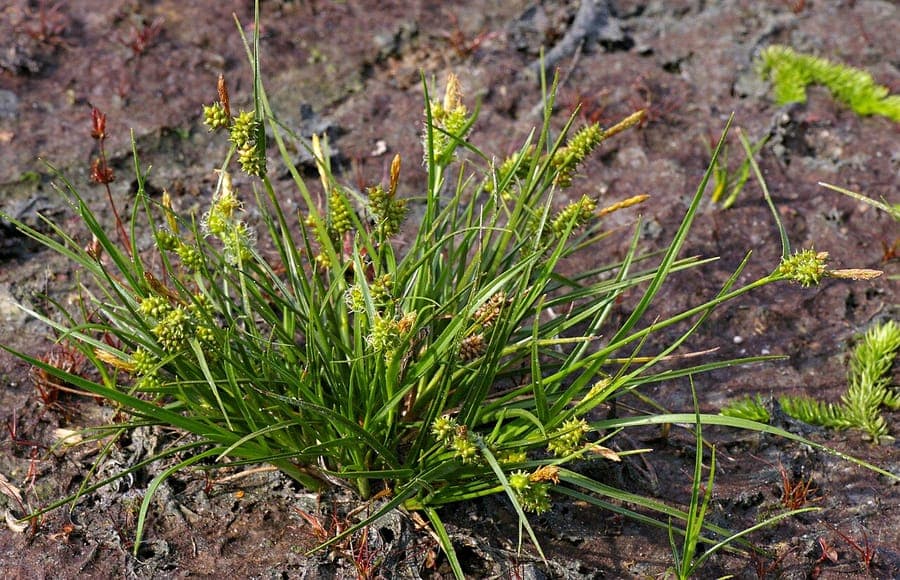
Christian Fischer / CC BY-SA 3.0, via Wikimedia Commons
Little green sedge: complete guide
Carex viridula
Want to see Little green sedge: complete guide in your garden?
1 minute, no credit card
Overview
Carex viridula, commonly known as Little green sedge, is a modest yet valuable addition to any garden that embraces moisture and natural aesthetics. This low-growing member of the Cyperaceae family thrives where many other plants struggle-on wet, poorly drained soils, and in partial shade. Standing between 15 and 30 cm tall, it doesn't shout for attention, but its quiet persistence and soft texture make it a gardener's secret weapon for cohesion in damp corners.
Native to European wetlands, bogs, and moist woodland edges, this sedge prefers environments that mimic its natural habitat. While not a staple at every garden centre, it's increasingly available through specialist nurseries and online suppliers. In the UK and Ireland, check with local garden centres during spring for potted divisions. It's perfect for wildlife gardens, rain gardens, or the margins of ponds where soil stays damp but not submerged.
Using gardenworld.app, you can visualise how Little green sedge fits into your garden plan, especially when combined with other moisture-loving perennials. It's not just about placement-it's about creating balance in texture and water needs.
Appearance & bloom cycle
Little green sedge forms neat tussocks of narrow, arching leaves that are bright green in spring, deepening slightly in summer. The blades are typically 2–4 mm wide and up to 30 cm long, giving a fine, grass-like appearance without the toughness of true grasses. In late spring to early summer (May to June), it sends up slender flowering stems that rise just above the foliage. The inflorescences are small, greenish-brown spikes-unassuming but ecologically functional, providing early-season structure for insects.
Unlike showy ornamental grasses, Carex viridula doesn't offer dramatic autumn colour, but it remains largely evergreen in mild climates. In colder zones, the tips may brown slightly over winter but rebound quickly in spring. Its value lies in reliability and texture, not flashiness.
Ideal location
This sedge thrives in full sun to partial shade. However, in full sun, consistent moisture is non-negotiable. Without it, the plant will dry out and decline. The sweet spot is dappled shade-under deciduous shrubs, alongside a stream, or at the edge of a bog garden. It also performs well in low-lying areas where water naturally collects.
If your garden has a damp, neglected corner that's hard to plant, Little green sedge might be the answer. It's particularly effective in naturalistic designs, where its soft form blends seamlessly with ferns, hostas, and other shade-tolerant perennials. Use gardenworld.app to test different planting schemes and see how this sedge complements taller moisture-loving plants.
Free design
Want to see Little green sedge: complete guide in your garden? Make a free design now.
Soil requirements
Carex viridula prefers moist, humus-rich soils with good water retention. A mix of loam, compost, and a bit of sand works well. It tolerates slightly acidic to neutral pH (5.5–7.0) and performs best in soils that stay damp but don't stagnate. Avoid heavy clay unless amended with organic matter for drainage.
When planting, enrich the hole with well-rotted compost. This not only boosts moisture retention but also gives young roots a nutrient boost. Space plants 25–30 cm apart to allow for slow spreading via short rhizomes.
Watering
Keep the soil consistently moist, especially during the growing season (March to October). In dry spells, water deeply once or twice a week. Never let the root zone dry out completely. Overhead watering is fine, as the foliage tolerates splashing. However, avoid prolonged waterlogging, which can lead to root rot.
If planted near a pond, ensure it's on the damp bank, not in standing water. It likes wet feet, not swimming.
Pruning
Pruning is minimal. In late winter or early spring (February–March), remove any dead or damaged foliage with sharp secateurs. Cut back lightly to encourage fresh growth, but avoid cutting into the crown. The plant will naturally shed old leaves as new ones emerge.
There's no need to cut back spent flower spikes-they decompose on their own and add organic matter to the soil.
Maintenance calendar
- January: Check for winter damage. Minimal activity.
- February: Trim old growth. Prepare for spring.
- March: New shoots appear. Light compost application.
- April–June: Bloom period. Maintain moisture.
- July–August: Monitor for drought. Water regularly.
- September: Gradually reduce watering.
- October: Leave foliage for winter insulation.
- November–December: Dormant phase. No action needed.
Winter hardiness
Little green sedge is hardy in USDA zones 5–8 (down to -20°C). In milder areas, it stays green year-round. In colder zones, foliage may turn brown but regenerates quickly in spring. No mulch is typically required, but in exposed sites, a light layer of leaf litter can help protect the crown.
Companion plants
Pair Carex viridula with plants that share its moisture needs:
- Carex vulpinoidea – for fluffy green flower heads
- Astilbe spp. – for feathery plumes and shade tolerance
- Tellima grandiflora – for delicate bell-shaped flowers
- Iris versicolor – for bold purple blooms in wet soils
- Eutrochium maculatum – for late-season nectar and height
Avoid aggressive spreaders like bamboo or mint, which can overwhelm this gentle sedge.
Closing
Little green sedge won't win any beauty contests, but it's a workhorse in the right setting. For gardeners aiming to restore ecological balance, manage damp areas, or create a serene, natural look, Carex viridula is indispensable. It asks for moisture and a bit of space, and in return, it delivers year-round texture and quiet resilience. With gardenworld.app, you can design a planting scheme that highlights its strengths and ensures it thrives where other plants falter.
Want to see Little green sedge: complete guide in your garden? Make a free design now.
Upload a photo, pick a style, and get a photorealistic design with plant list in under a minute.
No credit card required


Similar plants
Flat-stemmed club-rush: complete guide
Bolboschoenus planiculmis
Everything about Bolboschoenus planiculmis: growing conditions, watering, care, and use as a pond margin or wetland plant in garden design.
Great Plains flatsedge: complete guide
Cyperus lupulinus
Everything about Great Plains flatsedge (Cyperus lupulinus): growing conditions, care, garden uses, and ecological value. Tips for pond margins and dry sandy soils.
Golden beak sedge: complete guide
Rhynchospora corymbosa
Everything about golden beak sedge (Rhynchospora corymbosa): a dramatic tropical marginal for pond edges, bog gardens, and wet habitats.