
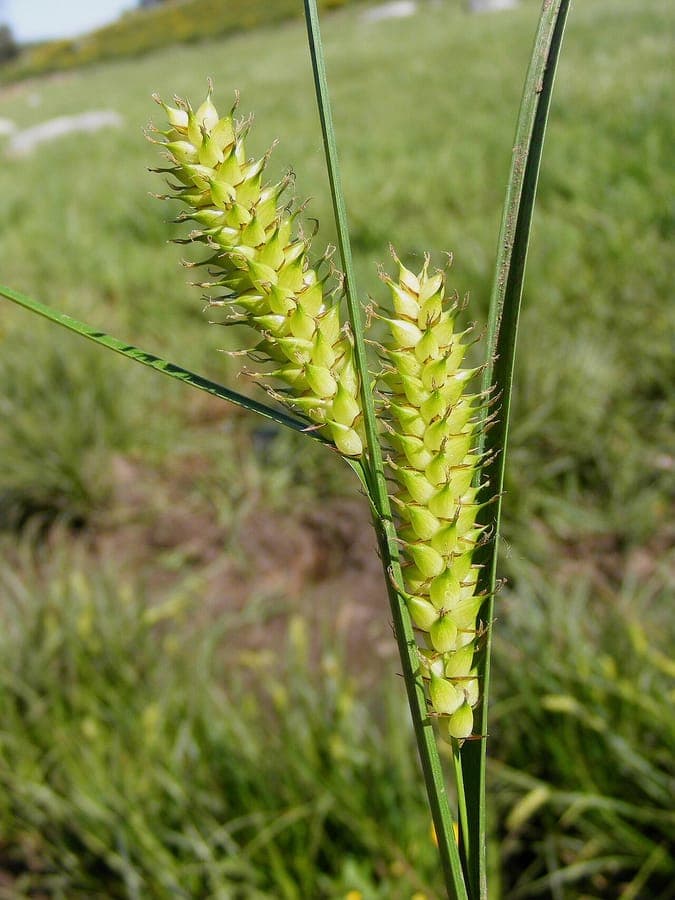
Jean-Claude CALAIS / CC BY-SA 2.0 fr, via Wikimedia Commons
Bladder sedge: complete guide
Carex vesicaria
Want to see Bladder sedge: complete guide in your garden?
1 minute, no credit card
Overview
Carex vesicaria, commonly known as bladder sedge, is a tough and adaptable ornamental grass that thrives in consistently moist to wet conditions. A member of the Cyperaceae family, it's native to wet woodlands, marshes, and streambanks across Europe, northern Asia, and North America. In the UK and across temperate zones, you'll often spot it in damp meadows, along ditches, or in poorly drained garden corners. It's not a flashy bloomer, but its year-round texture, resilience, and ability to stabilise wet soil make it a quiet hero in sustainable landscaping.
Gardeners value bladder sedge for its reliability in tough spots-places where other plants quickly yellow and die. It spreads steadily via underground rhizomes, forming dense, grassy clumps that suppress weeds and handle occasional flooding. On gardenworld.app, you can design a planting scheme tailored to wet areas, using bladder sedge as a structural anchor in rain gardens or bog borders.
Appearance & bloom cycle
Bladder sedge forms upright to arching clumps reaching 50–80 cm in height, depending on moisture levels. Its leaves are flat, 4–8 mm wide, and a blue-green to grey-green hue, with a rough edge and a tapering tip. From May to July, triangular flower spikes emerge-typically three to five per stem. The central spike is female and develops distinctive, inflated, bladder-like utricles that give the plant its name. These pale green to brownish sacs persist into winter, adding visual interest long after flowering.
The plant spreads slowly, forming colonies over time. It doesn't die back completely in winter; instead, the foliage turns tan and remains upright, providing shelter for overwintering insects. This persistent structure is a bonus in naturalistic gardens.
Ideal location
Bladder sedge performs best in full sun to partial shade, scoring a 7 out of 10 for light preference. In full sun (6–8 hours daily), it grows denser and flowers more reliably. It tolerates partial shade if soil moisture is consistent. Ideal spots include pond margins, rain gardens, damp borders, or low-lying areas prone to seasonal flooding. It's excellent for wildlife gardens, wetland restoration, or as ground cover in shaded, wet zones.
Use gardenworld.app to visualise how bladder sedge fits into a moisture-rich planting plan. The app helps determine spacing-30–40 cm apart for full coverage in 2–3 years-and companion pairings.
Soil requirements
This sedge prefers moist, humus-rich, loamy to clay soils with a pH range of 4.5–7.5. It tolerates brief submersion and heavy clay but fails in dry, sandy soils. Improve drainage-poor areas with compost to boost organic content. Avoid highly calcareous soils unless amended with peat or leaf mould. It's not fussy about fertility-no feeding required.
Free design
Want to see Bladder sedge: complete guide in your garden? Make a free design now.
Watering
Consistent moisture is critical, especially in the first growing season. Water weekly during dry spells, more often in full sun. Established plants withstand short dry periods but may brown at the tips. In a rain garden or near a pond, supplemental watering is rarely needed. Use rainwater when possible, as bladder sedge dislikes high calcium levels in tap water.
Pruning
No pruning is needed for flowering, but you can cut back old foliage in late winter (February–March). Trim to 10–15 cm above ground to encourage fresh growth and prevent matting. Use shears or a grass trimmer on low speed. Leave some stems intact over winter to support beneficial insects.
Maintenance calendar
- Jan: Check for frost heave; leave old growth for habitat
- Feb: Begin light pruning if weather permits
- Mar: Cut back fully; divide if clumps get too dense
- Apr: New growth emerges; no feeding needed
- May: Flower spikes appear; monitor soil moisture
- Jun: Utricle development; maintain wet soil
- Jul: Peak visual interest; no extra care
- Aug: Seed dispersal begins; watch for slugs
- Sep: Growth slows; avoid cutting now
- Oct: Let foliage stand for winter structure
- Nov: Protect young shoots in exposed sites
- Dec: Dormant period; check for rodent activity
Winter hardiness
Bladder sedge is hardy in USDA zones 4–8 (down to -34°C). In the UK and most of the US, it requires no winter protection. Foliage browns but remains standing, adding texture to winter borders. In areas with heavy ice or prolonged flooding, rhizomes may shift but usually recover in spring.
Companion plants
Pair with moisture-loving plants like Iris versicolor, Eutrochium fistulosum, Filipendula rubra, or Molinia caerulea. For contrast, use taller grasses like Calamagrostis or rushes like Juncus effusus. In wilder settings, combine with alders (Alnus spp.) or willows (Salix spp.).
Avoid drought-tolerant species like lavender or sedum. Use gardenworld.app to test plant height, spread, and seasonal interest in combination.
Closing
Bladder sedge won't win a beauty contest, but it's a dependable workhorse for wet soils. It asks for little-just consistent moisture and a bit of space-and gives back with texture, habitat value, and erosion control. Buy it from garden centres in 1–2 litre pots, often available bare-root in spring. Once established, it demands almost no maintenance. Whether you're tackling a soggy corner or designing a naturalistic wetland garden, bladder sedge is a smart, sustainable choice. Find planting inspiration and layout tools on gardenworld.app.
Want to see Bladder sedge: complete guide in your garden? Make a free design now.
Upload a photo, pick a style, and get a photorealistic design with plant list in under a minute.
No credit card required


Similar plants
Flat-stemmed club-rush: complete guide
Bolboschoenus planiculmis
Everything about Bolboschoenus planiculmis: growing conditions, watering, care, and use as a pond margin or wetland plant in garden design.
Great Plains flatsedge: complete guide
Cyperus lupulinus
Everything about Great Plains flatsedge (Cyperus lupulinus): growing conditions, care, garden uses, and ecological value. Tips for pond margins and dry sandy soils.
Golden beak sedge: complete guide
Rhynchospora corymbosa
Everything about golden beak sedge (Rhynchospora corymbosa): a dramatic tropical marginal for pond edges, bog gardens, and wet habitats.