
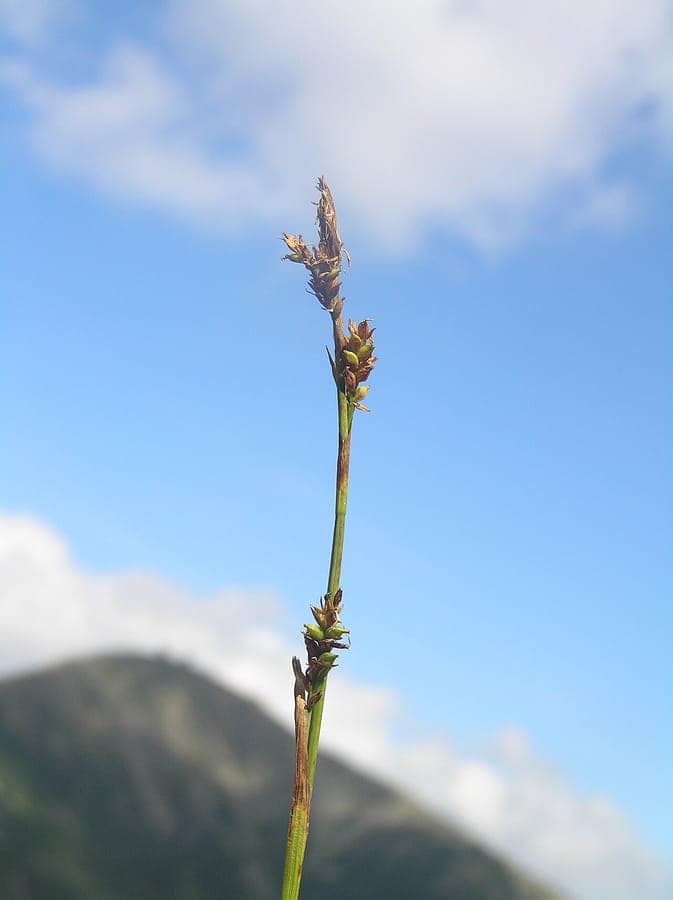
Petr Filippov / CC BY 3.0, via Wikimedia Commons
Sheathed sedge: complete guide
Carex vaginata
Want to see Sheathed sedge: complete guide in your garden?
1 minute, no credit card
Overview
Carex vaginata, commonly known as Sheathed sedge, is a quiet performer that thrives in cool, moist corners of the garden. Native to boreal and temperate regions from Alaska to the Baltic States, it naturally grows in damp woodlands, forest edges, and wet meadows. In the UK and US, it's a smart choice for woodland gardens, rain gardens, or shaded areas near ponds. On gardenworld.app, you can design a planting scheme that mimics its natural habitat, pairing it with moisture-loving companions and organic soil mixes.
What sets this sedge apart is its clumping growth habit-no invasive runners. It stays where you plant it, forming neat tufts 30 to 40 cm wide over time. It's not flashy, but it brings texture, stability, and year-round interest to shaded beds.
Appearance & bloom cycle
Sheathed sedge has narrow, strap-like leaves that reach 25 to 40 cm in length and 4 to 6 mm in width. The foliage is bright green to slightly glossy, emerging fresh in March and maintaining density through summer. The plant gets its name from the sheathing leaf bases-each leaf base wraps around the next, creating a smooth, almost seamless look.
Flowering occurs from April to June. The inflorescences are subtle: pale brown to greyish spikes, 10 to 15 cm tall, rising just above the foliage. They're not showy, but they add structure and attract curious pollinators. By late summer, the flowers fade, but the plant remains visually present thanks to its evergreen to semi-evergreen foliage.
In milder climates (USDA zones 7-8), it keeps most of its color through winter. In colder zones, tips may brown, but new growth pushes through in early spring without issue.
Ideal location
Sheathed sedge prefers partial to full shade. It does best under deciduous trees, along north-facing fences, or in damp woodland borders. Full sun is only acceptable if the soil is consistently moist-think rain gardens or irrigated beds. In dry, sunny spots, it will struggle and thin out.
Plant in groups of 5 or more for visual impact. Space plants 30 to 40 cm apart. This spacing allows for even coverage within two growing seasons while preventing overcrowding.
On gardenworld.app, you can map out your shaded zones and test different plant densities before you start digging. It's a practical way to visualise how Carex vaginata fills space alongside ferns or hostas.
Soil requirements
This sedge likes moist, humus-rich soil with a pH between 5.5 and 7.0. It tolerates slightly acidic conditions better than alkaline ones. The soil should retain moisture but not become waterlogged-avoid heavy clay unless amended with compost or leaf mold.
If your soil is sandy or fast-draining, mix in organic matter like composted bark or well-rotted manure. A 5 cm mulch layer in spring helps retain moisture and suppress weeds.
Free design
Want to see Sheathed sedge: complete guide in your garden? Make a free design now.
Watering
Consistent moisture is non-negotiable. The soil should never dry out completely, especially during the first year after planting. In summer (June to August), water weekly during dry spells. Use rainwater if possible-it's softer and better suited to acid-loving plants.
Reduce watering in autumn when rainfall increases, but don't let the root zone dry out for extended periods. Standing water, however, can lead to root rot, so drainage is key.
Pruning
Pruning is minimal. In early spring (March), remove any dead, damaged, or browned leaves with clean scissors. Cut close to the base but avoid disturbing the crown. Don't cut back the entire plant-this can delay spring growth.
Leave old flower spikes through winter; they provide structure and protect new buds from late frosts.
Maintenance calendar
- January: Check for winter damage, no action needed
- February: Loosen mulch slightly, inspect crowns
- March: Trim dead leaves, check for new growth
- April: Monitor moisture, control weeds
- May: Peak growth phase, keep soil damp
- June: Flowering begins, inspect for pests
- July-August: Water during droughts, no feeding
- September: Reduce watering, check for slugs
- October: Leave foliage intact, add mulch if needed
- November: Let plant go dormant, no pruning
- December: Final check, protect from compaction
Winter hardiness
Sheathed sedge is hardy to -25°C (USDA zone 5). In zones 6 to 8, it remains evergreen or semi-evergreen with little to no dieback. Mulching isn't required, but a light leaf litter layer can help insulate roots in exposed areas.
Companion plants
Pair Carex vaginata with plants that share its moisture and shade preferences:
- Athyrium filix-femina (Lady Fern)
- Hosta spp. (Plantain Lily)
- Tiarella cordifolia (Foamflower)
- Polygonatum odoratum (Solomon's Seal)
- Heuchera spp. (Coral Bells)
These combinations create layered interest-ferns add height, hostas provide bold foliage, and the sedge acts as a soft groundcover.
Closing
Sheathed sedge isn't the kind of plant that draws gasps at garden shows. But it's the one that keeps your shade garden looking full, fresh, and natural from spring to winter. It asks for little: just moisture, shade, and a bit of spring cleanup.
If you're designing a low-maintenance, ecologically sound garden, this sedge earns its place. For layout ideas, visit gardenworld.app and explore how Carex vaginata integrates into modern native planting schemes. You'll find it at most garden centres in spring, especially those with strong native plant sections.
Want to see Sheathed sedge: complete guide in your garden? Make a free design now.
Upload a photo, pick a style, and get a photorealistic design with plant list in under a minute.
No credit card required


Similar plants
Flat-stemmed club-rush: complete guide
Bolboschoenus planiculmis
Everything about Bolboschoenus planiculmis: growing conditions, watering, care, and use as a pond margin or wetland plant in garden design.
Great Plains flatsedge: complete guide
Cyperus lupulinus
Everything about Great Plains flatsedge (Cyperus lupulinus): growing conditions, care, garden uses, and ecological value. Tips for pond margins and dry sandy soils.
Golden beak sedge: complete guide
Rhynchospora corymbosa
Everything about golden beak sedge (Rhynchospora corymbosa): a dramatic tropical marginal for pond edges, bog gardens, and wet habitats.